1-Click Clawdbot Vulnerability Enable Malicious Remote Code Execution Attacks
Unpacking the 1-Click Clawdbot Vulnerability: A Critical RCE Threat to OpenClaw
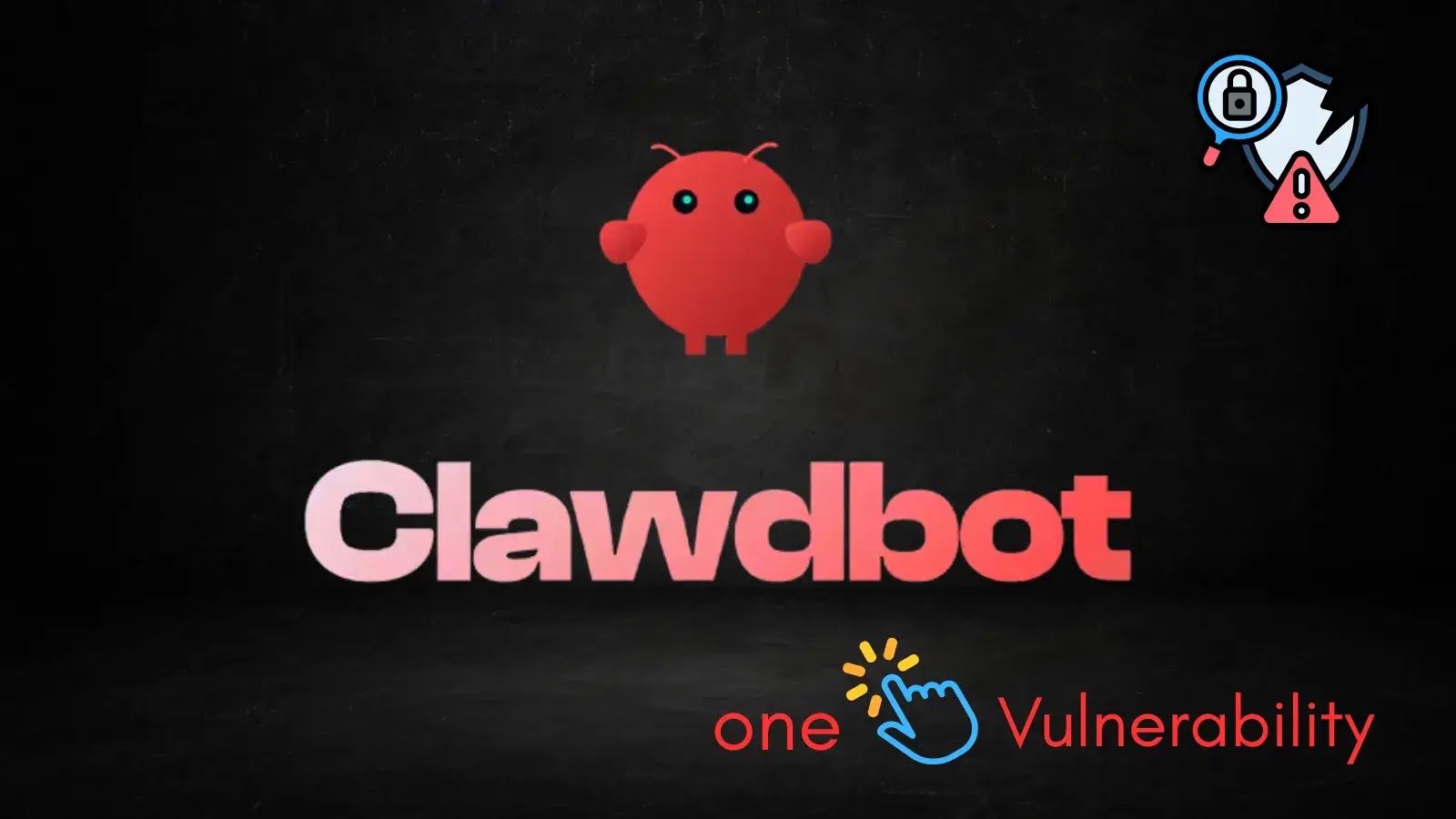
A disturbing discovery has sent ripples through the developer community: a critical vulnerability, dubbed “Clawdbot,” has been weaponized into a one-click remote code execution (RCE) exploit targeting OpenClaw. This open-source AI personal assistant, trusted by over 100,000 developers, is now at high risk from an attack that could grant malicious actors complete control over affected systems. This isn’t just another security advisory; it’s a stark reminder of the interconnectedness of software ecosystems and the cascading effects of logic flaws.
The Genesis of Clawdbot: A Chain Reaction of Vulnerabilities
Security researchers at depthfirst General Security Intelligence unearthed the flaw that underpins the Clawdbot exploit. Their investigation revealed a complex logic error within OpenClaw that, while seemingly innocuous on its own, becomes devastating when combined with other, unspecified vulnerabilities. This combination creates a critical chain reaction, ultimately enabling attackers to achieve full remote code execution. The precise technical details of this vulnerability chain are currently under wraps to prevent further exploitation, but the impact is clear: a single, malicious interaction can compromise a system running OpenClaw.
Understanding Remote Code Execution (RCE) Attacks
Remote Code Execution (RCE) is one of the most severe types of vulnerabilities an application can face. It allows an attacker to execute arbitrary code on a remote system, effectively giving them full control over the compromised machine. In the context of the Clawdbot vulnerability, this means an attacker could:
- Install malware or ransomware.
- Exfiltrate sensitive data.
- Establish persistent backdoors.
- Pivot to other systems within a network.
The “one-click” nature of this exploit makes it particularly dangerous, drastically lowering the barrier to entry for attackers and increasing the likelihood of widespread compromise.
The Impact on OpenClaw Developers and Users
Given OpenClaw’s significant user base of over 100,000 developers, the Clawdbot vulnerability presents a substantial threat. Developers who have integrated OpenClaw into their projects or rely on it for their AI personal assistant needs could be unwittingly exposing themselves and their users to RCE attacks. The trust placed in open-source projects, while generally well-deserved, is predicated on rapid identification and remediation of such critical flaws. The weaponization of this vulnerability into an exploit means that active attacks are possible and likely already occurring or imminent.
Remediation Actions and Mitigations
Immediate action is crucial to protect against the Clawdbot RCE vulnerability. While a specific CVE ID has not yet been publicly assigned to this particular exploit chain (the article mentions “other vulnerabilities” without specifying CVEs), the following general remediation strategies should be adopted:
- Monitor Official OpenClaw Channels: Developers should vigilantly watch OpenClaw’s official GitHub repository, mailing lists, and security advisories for patches and updates. Apply these patches as soon as they are released.
- Isolate OpenClaw Deployments: If immediate patching is not possible, consider isolating OpenClaw instances on dedicated networks or virtual machines to limit potential lateral movement by attackers.
- Implement Least Privilege: Ensure that the OpenClaw service runs with the absolute minimum necessary privileges. This can help limit the extent of compromise even if an RCE occurs.
- Network Segmentation and Firewalls: Use network segmentation to prevent direct external access to systems running OpenClaw unless absolutely necessary. Configure firewalls to restrict inbound and outbound connections.
- Regular Security Audits: Conduct frequent security audits and penetration tests on systems that integrate or utilize OpenClaw to identify and address other potential weaknesses that could contribute to similar exploit chains.
- Intrusion Detection/Prevention Systems (IDS/IPS): Deploy and configure IDS/IPS solutions to monitor for suspicious activity, particularly execution of unusual commands or network connections originating from OpenClaw processes.
Relevant Tools and Resources
To aid in detecting potential exploitation and strengthening defenses, consider leveraging the following types of tools:
| Tool Name | Purpose | Link |
|---|---|---|
| Snort / Suricata | Network Intrusion Detection/Prevention Systems (NIDS/NIPS) for anomaly detection and signature-based threat detection. | https://www.snort.org/ https://suricata-ids.org/ |
| OWASP ZAP | Dynamic Application Security Testing (DAST) tool for finding vulnerabilities in running web applications. | https://www.zaproxy.org/ |
| OpenVAS/Greenbone Vulnerability Manager | Vulnerability scanner to identify known vulnerabilities (including those that might chain with logic flaws). | http://www.openvas.org/ |
| Security Information and Event Management (SIEM) Solutions | Centralized logging and security event monitoring to detect suspicious activities and correlation of events. | (Various commercial and open-source options) |
Looking Ahead: The Persistence of Logic Flaws
The Clawdbot vulnerability underscores the persistent challenge of logic flaws in software development. Unlike traditional buffer overflows or SQL injection flaws, logic errors can be subtle and difficult to detect through automated scanning alone. They often require a deep understanding of application flow and interaction between different components. As AI assistants become more integrated into our digital infrastructure, the security of their underlying codebases will be paramount. This incident serves as a critical reminder for developers and security teams alike to prioritize thorough code reviews, threat modeling, and robust security testing throughout the entire software development lifecycle.