10 Best Fraud Detection Tools in 2026
In the relentless digital landscape, organizations face an escalating tide of sophisticated fraudulent activities. Proactive fraud management isn’t merely a best practice; it’s an imperative for safeguarding assets, maintaining trust, and ensuring operational continuity. This entails not only identifying potential threats but also establishing robust preventative measures and effectively mitigating the impact of successful breaches.
The core of effective fraud management lies in sophisticated fraud detection software. These solutions are engineered to meticulously analyze vast datasets, identifying anomalies, patterns, and behaviors indicative of fraudulent intent. Without these advanced tools, businesses remain vulnerable to financial losses, reputational damage, and regulatory penalties. This article delves into the top fraud detection tools poised to define the security landscape in 2026, offering a critical look at their capabilities and how they empower organizations to stay ahead of malicious actors.
What is Fraud Management?
Fraud management encompasses the comprehensive set of strategies and processes an organization employs to detect, prevent, and respond to fraudulent activities. It involves a multi-layered approach, beginning with the identification of potential fraud risks, followed by the implementation of stringent preventative controls, and culminating in effective response mechanisms to minimize damage and recover losses when fraud does occur. Key elements include:
- Risk Assessment: Identifying vulnerabilities and potential fraud vectors within an organization’s operations.
- Preventative Controls: Implementing measures such as strong authentication, transaction limits, and data encryption to deter fraudulent attempts.
- Detection Mechanisms: Employing software and analytical techniques to identify suspicious patterns and anomalies in real-time or near real-time.
- Response Protocols: Establishing clear procedures for investigating fraud incidents, reporting to authorities, and recovering compromised funds or data.
- Continuous Improvement: Regularly reviewing and updating fraud management strategies to adapt to evolving threat landscapes.
The Role of Fraud Detection Software
Fraud detection software is the technological backbone of modern fraud management. These platforms leverage advanced analytics, machine learning, and artificial intelligence to scrutinize transactional data, user behavior, network activity, and other relevant information streams. Their primary objective is to pinpoint irregular or suspicious activities that deviate from established norms, thereby signaling potential fraud.
Unlike traditional, rule-based systems that often struggle to keep pace with evolving fraud tactics, contemporary fraud detection tools are designed to adapt and learn. They can identify emerging fraud patterns, often before human analysts, and significantly reduce false positives through sophisticated algorithmic refinement. This proactive stance is crucial in mitigating the financial and reputational fallout from sophisticated attacks like those exploiting vulnerabilities such as CVE-2023-38408, which could be leveraged in complex fraud schemes.
Key Features of Advanced Fraud Detection Tools in 2026
As fraud tactics become more sophisticated, so too do the capabilities of the tools designed to combat them. In 2026, leading fraud detection software will invariably feature:
- Real-time Anomaly Detection: The ability to identify and flag suspicious transactions or behaviors as they occur, minimizing the window for fraudulent activity.
- Machine Learning and AI-driven Analytics: Leveraging predictive models to learn from historical data, identify subtle patterns, and forecast potential fraud risks with high accuracy.
- Behavioral Biometrics: Analyzing unique user interaction patterns (e.g., typing speed, mouse movements) to verify identity and detect account takeover attempts.
- Adaptive Risk Scoring: Dynamically assigning risk scores to transactions and user activities, enabling focused investigation and automated intervention.
- Network Analysis: Mapping relationships between entities, accounts, and transactions to uncover complex fraud rings and sophisticated attack vectors.
- Integration Capabilities: Seamless integration with existing CRM, ERP, payment gateways, and security information and event management (SIEM) systems for a holistic view of operations.
- Case Management and Reporting: Tools for streamlined investigation workflows, evidence collection, and comprehensive reporting to meet compliance and regulatory requirements.
10 Best Fraud Detection Tools in 2026
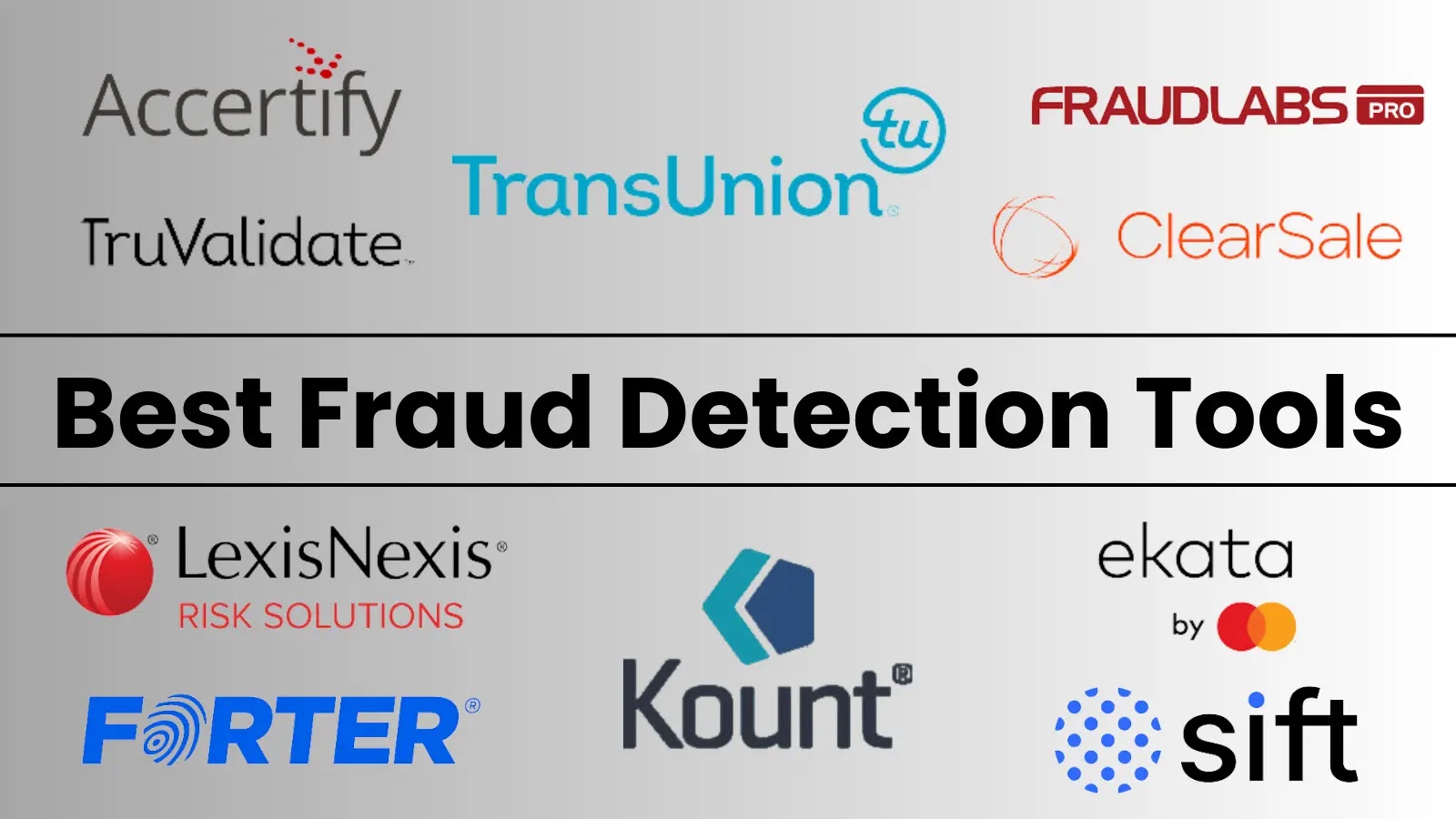
Based on their projected capabilities, market presence, and technological innovation, the following tools are set to be frontrunners in fraud detection in 2026. While specific rankings may shift, their underlying technologies represent the cutting edge.
- Riskified: Renowned for its AI-powered platform focusing on e-commerce fraud prevention, particularly in preventing chargebacks. Riskified offers sophisticated behavioral analytics and machine learning to distinguish legitimate customers from fraudsters.
- Sift: A comprehensive digital trust and safety platform that utilizes real-time machine learning to detect and prevent fraud across various industries, including e-commerce, fintech, and travel. Sift’s layered approach helps protect against payment fraud, account takeovers, and content abuse.
- Forter: Specializes in providing real-time, fully automated fraud prevention for online merchants, guaranteeing approval rates and chargeback protection. Forter’s platform uses a blend of behavioral analytics, identity verification, and machine learning.
- Feedzai: An enterprise-grade platform offering end-to-end risk management and fraud prevention solutions for financial institutions. Feedzai’s AI-powered engine processes vast amounts of data to detect and prevent financial crime, including payment fraud and money laundering.
- LexisNexis Risk Solutions: Provides a suite of fraud and identity management solutions, leveraging extensive public and proprietary data to verify identities, assess risk, and detect sophisticated fraud schemes across various sectors.
- Signifyd: Offers a guaranteed fraud protection solution for e-commerce, taking on the financial liability for approved orders that turn out to be fraudulent. Signifyd uses machine learning to assess transaction risk in real-time.
- Fraud.net: A complete fraud detection and prevention platform that combines AI and collective intelligence to protect businesses from various types of fraud, including payment fraud, identity theft, and account takeovers.
- Stripe Radar: Integrated directly into the Stripe payment platform, Radar uses machine learning trained on data from millions of global businesses to detect and block fraudulent payments proactively.
- Kount: Provides an AI-driven fraud prevention platform that integrates with payment service providers and online businesses to offer real-time fraud detection, leveraging a global network of fraud data.
- iovation (a TransUnion company): Focuses on device intelligence and authentication, using a global consortium of fraud data to identify and deter suspicious devices and user behavior across multiple industries.
Remediation Actions for Fraud Incidents
Even with the most advanced detection tools, fraud can occasionally bypass defenses. Rapid and effective remediation is critical. Organizations should implement a clear incident response plan that includes:
- Isolate and Contain: Immediately isolate affected systems or accounts to prevent further compromise. For example, if an account takeover is detected, lock the account and invalidate session tokens.
- Investigate and Analyze: Conduct a thorough forensic investigation to understand the full scope, method, and impact of the fraud. This might involve analyzing logs, transaction histories, and user behavior data. Tools like those mentioned above can provide crucial data points for this analysis.
- Eradicate: Remove the root cause of the fraudulent activity, which could involve patching vulnerabilities (e.g., addressing weaknesses identified by CVE-2023-2825), strengthening authentication mechanisms, or revising business processes.
- Recover and Restore: Restore affected systems and data from secure backups. For financial fraud, initiate chargeback procedures or work with financial institutions for fund recovery.
- Post-Incident Review: Analyze the incident to identify lessons learned, update fraud detection rules, strengthen existing controls, and refine the incident response plan.
- Communicate: Notify affected parties, law enforcement, and regulatory bodies as required, adhering to legal and compliance obligations.
Fraud Detection Tools Comparison
Below is a comparative overview of some prominent fraud detection tools, highlighting their primary purpose and general approach.
| Tool Name | Primary Purpose | Link |
|---|---|---|
| Riskified | E-commerce fraud prevention, chargeback protection | https://www.riskified.com/ |
| Sift | Digital trust & safety, AI-powered fraud prevention | https://sift.com/ |
| Forter | Real-time autonomous fraud prevention | https://www.forter.com/ |
| Feedzai | AI for financial crime and risk management | https://feedzai.com/ |
| LexisNexis Risk Solutions | Identity verification, risk assessment, fraud detection | https://risk.lexisnexis.com/ |
| Signifyd | Guaranteed e-commerce fraud protection | https://www.signifyd.com/ |
| Fraud.net | Comprehensive AI & collective intelligence fraud platform | https://fraud.net/ |
| Stripe Radar | Machine learning-based payment fraud protection | https://stripe.com/radar |
| Kount | AI-driven fraud prevention and digital identity trust | https://www.kount.com/ |
| iovation (TransUnion) | Device intelligence and authentication for fraud prevention | https://www.transunion.com/product/iovation-fraud-and-abuse-prevention |
Conclusion
Effective fraud detection and management are non-negotiable in the current threat landscape. As cybercriminals evolve their tactics, organizations must leverage cutting-edge tools to protect their assets and maintain customer trust. The solutions highlighted in this article, powered by advanced AI and machine learning, offer robust capabilities to identify, prevent, and respond to fraudulent activities. Implementing these technologies, combined with a strong incident response plan, is paramount for any organization serious about securing its digital future.