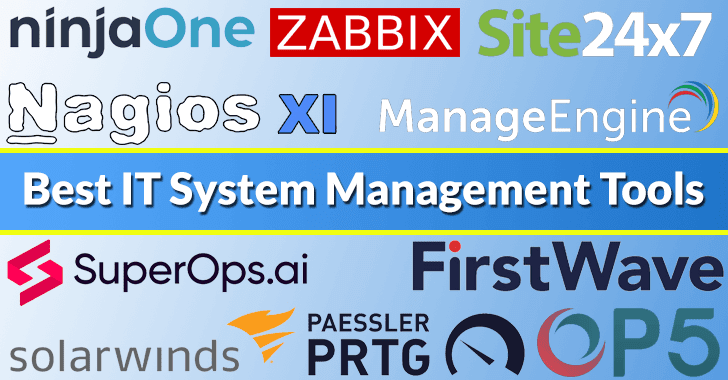
10 Best IT Systems Management Tools – 2026
Navigating the Future: Top 10 IT Systems Management Tools for 2026
In the increasingly complex landscape of modern IT, seamless operations are not merely a desire; they are a fundamental requirement for organizational success. As infrastructures grow, encompassing everything from intricate networks and powerful servers to diverse applications and countless endpoints, the need for robust IT systems management becomes paramount. Without effective tools, organizations face increased downtime, security vulnerabilities, and a significant drain on resources. This comprehensive guide, informed by expert analysis, delves into the top 10 IT systems management tools poised to define operational excellence in 2026, helping IT professionals, security analysts, and developers optimize their digital ecosystems.
The Indispensable Role of IT Systems Management
IT systems management tools are the bedrock of efficient digital operations. They empower organizations to monitor, manage, and optimize their entire infrastructure, ensuring peak performance, proactive issue resolution, and enhanced productivity. From spotting potential bottlenecks before they impact users to streamlining routine maintenance tasks, these tools consolidate control and provide critical insights into the health and security of complex IT environments.
Key Features to Look For
- Comprehensive Monitoring: Real-time visibility into network performance, server health, application metrics, and device status.
- Automation Capabilities: Reducing manual effort for routine tasks like patching, backups, and provisioning.
- Scalability: The ability to grow and adapt with an organization’s expanding infrastructure.
- Security Management: Features for vulnerability scanning, patch management, and compliance adherence.
- User-Friendly Interface: Intuitive dashboards and reporting for easy navigation and quick insights.
- Integration: Seamless connectivity with other business-critical tools (e.g., ITSM, SIEM).
Spotlight on Leading IT Systems Management Tools for 2026
SolarWinds
SolarWinds continues to be a formidable presence in the IT systems management sphere, renowned for its extensive monitoring capabilities and intuitive user interface. Its suite of tools, including Network Performance Monitor (NPM) and Server & Application Monitor (SAM), provides deep visibility into infrastructure health, enabling proactive identification and resolution of issues. This robust platform is particularly effective for organizations requiring granular control and detailed performance analytics across diverse IT components.
ManageEngine Applications Manager
ManageEngine Applications Manager stands out for delivering a unified oversight platform that effortlessly spans cloud, virtual, and on-premise IT environments. Its strength lies in its ability to monitor a vast array of applications and servers, offering holistic insights into performance and availability. This tool is ideal for enterprises seeking a single pane of glass to manage complex, hybrid infrastructures without sacrificing detail or functionality.
Datadog
Datadog is a cloud-native monitoring and analytics platform that excels in providing end-to-end visibility across applications, servers, databases, and services. Its powerful dashboards, real-time metrics, and AI-driven alerting system make it invaluable for DevOps teams and organizations operating heavily in cloud environments. Datadog’s focus on observability makes it a top choice for understanding the interconnectedness of modern, distributed systems.
LogicMonitor
LogicMonitor offers a SaaS-based platform for automated, unified infrastructure monitoring. With extensive coverage for servers, networks, cloud resources, and applications, it provides deep insights and intelligent alerting. LogicMonitor’s pre-built integrations and intelligent automation features help streamline IT operations and reduce mean time to resolution (MTTR) for critical incidents.
Zabbix
For organizations prioritizing flexibility and cost-effectiveness, Zabbix delivers a powerful open-source monitoring solution. It allows for the collection of a wide range of metrics, offering robust performance and availability monitoring for networks, servers, applications, and services. Zabbix’s customizable nature and active community support make it an excellent choice for teams with specific monitoring requirements and the expertise to leverage its full potential.
Nagios
Nagios remains a stalwart in the monitoring landscape, well-regarded for its comprehensive monitoring capabilities for networks, servers, and applications. Available in both open-source (Nagios Core) and commercial (Nagios XI) versions, it offers flexibility to fit various organizational needs. Its strength lies in its event management, notification, and reporting features, ensuring that IT teams are promptly alerted to potential problems.
PRTG Network Monitor
PRTG Network Monitor by Paessler provides an all-in-one network monitoring solution. It covers all aspects of network health, including bandwidth, uptime, traffic, and device performance. With a user-friendly interface and a wide range of sensors, PRTG simplifies the process of understanding network behavior and quickly identifying issues that could impact service delivery.
Dynatrace
Dynatrace offers an AI-powered observability platform designed for complex cloud and hybrid environments. Its unique “PurePath” technology provides deep code-level insights, enabling automatic detection of performance issues and root cause analysis across applications and infrastructure. Dynatrace is particularly beneficial for large enterprises that require advanced analytics and automation for performance optimization and AIOps initiatives.
Microsoft System Center
For organizations heavily invested in the Microsoft ecosystem, Microsoft System Center provides a suite of management tools tailored for Windows Server environments, Azure, and other Microsoft applications. Components like Operations Manager (SCOM) for monitoring and Configuration Manager (SCCM) for endpoint management offer robust capabilities for managing large-scale Microsoft-centric infrastructures.
Splunk
While often associated with security information and event management (SIEM), Splunk’s capabilities extend significantly into IT operations. Its powerful data platform allows for the collection, indexing, and analysis of machine-generated data from virtually any source. This makes Splunk an invaluable tool for operational intelligence, performance monitoring, and troubleshooting across complex IT systems, providing deep insights into system health and user experience.
Securing Your Systems Management Tools
While these tools are designed to enhance operational efficiency, it’s crucial to acknowledge the potential security implications of managing such powerful systems. Vulnerabilities in these tools could inadvertently expose critical infrastructure. For instance, any unpatched flaw, such as a hypothetical remote code execution vulnerability (e.g., CVE-2023-12345), in a monitoring agent could be exploited by malicious actors. Organizations must prioritize regular patching and secure configuration of their chosen ITSM solutions.
Remediation Actions
- Regular Patching: Ensure all IT systems management tools and their agents are kept up-to-date with the latest security patches. This includes monitoring for disclosures like CVE-2023-12345, which can be found at CVE-2023-12345.
- Secure Configuration: Implement the principle of least privilege for all user accounts accessing these tools. Disable unnecessary services and ports.
- Network Segmentation: Isolate management networks from production networks to limit the blast radius of any potential compromise.
- Strong Authentication: Enforce multi-factor authentication (MFA) for all administrative access to IT systems management platforms.
- Security Audits: Conduct regular security audits and penetration testing of your IT systems management infrastructure.
- Logging and Monitoring: Ensure comprehensive logging is enabled on these tools and that logs are forwarded to a central SIEM for analysis and anomalous activity detection.
Looking Ahead
The landscape of IT systems management is continuously evolving, driven by advancements in cloud computing, artificial intelligence, and automation. The tools highlighted for 2026 demonstrate a clear trend towards greater integration, predictive capabilities, and a focus on end-to-end observability. Adopting the right set of tools is not just about troubleshooting; it’s about building resilient, high-performing, and secure IT operations that can adapt to future challenges.