10 Best Open-Source Blue Team Tools – 2026
In the relentless cat-and-mouse game of cybersecurity, defense is not a passive stance; it’s an active, analytical, and highly specialized discipline. While Red Teams probe organizational weaknesses through simulated attacks, the unsung heroes of the digital realm are the Blue Teams. These internal cybersecurity professionals are the bedrock of network defense, continuously testing personnel, scrutinizing policies, and fortifying procedures against an ever-evolving threat landscape. Their success hinges on meticulous preparation, deep analytical skills, and, crucially, the right arsenal of tools. As we look ahead to 2026, the demand for robust, open-source solutions for Blue Teams is more pressing than ever, offering powerful capabilities without the prohibitive costs associated with proprietary software.
Understanding the Blue Team’s Core Mission
The essence of Blue Teaming lies in proactive defense, incident response, and continuous improvement of an organization’s security posture. Their responsibilities span a wide spectrum, including threat intelligence gathering, vulnerability management, security monitoring, forensic analysis, and ensuring compliance. By actively defending network infrastructure, they safeguard critical assets and maintain operational continuity. The ongoing challenge for Blue Teams is to anticipate and counter sophisticated attacks launched by malicious actors or even their internal Red Team counterparts, making a strong toolset indispensable.
The Power of Open-Source in Blue Teaming
Open-source tools offer significant advantages for Blue Teams. Beyond the obvious cost savings, they provide transparency, allowing security analysts to inspect and modify the code, ensuring there are no hidden backdoors or vulnerabilities. The collaborative nature of open-source communities often leads to faster development cycles, more innovative features, and extensive community support. This collaborative ecosystem means that as new threats emerge, open-source solutions often adapt and evolve rapidly.
Top 10 Open-Source Blue Team Tools for 2026
1. Suricata
Suricata stands as a formidable, high-performance, and multi-threaded network intrusion detection system (NIDS), intrusion prevention system (NIPS), and network security monitoring (NSM) engine. Its ability to process network traffic at gigabit speeds, coupled with extensive protocol analysis and signature-based detection, makes it invaluable for real-time threat detection. Furthermore, its support for Lua scripting offers flexibility for custom rule creation and complex event correlation.
- Purpose: Intrusion Detection/Prevention, Network Security Monitoring
- Key Features: Multi-threading, custom rule support, extensive protocol analysis.
- Link: https://suricata.io/
2. Zeek (formerly Bro)
Zeek operates as a powerful network analysis framework meticulously designed for security monitoring and deep traffic inspection. Unlike traditional IDSs, Zeek focuses on generating comprehensive logs of network activity, providing a rich dataset for forensic analysis, anomaly detection, and incident response. Its scripting language allows for granular control over what information is logged and how it’s analyzed.
- Purpose: Network Analysis, Security Monitoring, Threat Intelligence
- Key Features: Protocol-aware logging, powerful scripting language, extensive forensic data.
- Link: https://zeek.org/
3. TheHive
TheHive is an open-source, scalable, and powerful security incident response platform. It’s designed to make incident management simpler and more efficient for security operations centers (SOCs). TheHive facilitates collaborative investigation, case management, task assignment, and integrates seamlessly with various security tools, streamlining the entire incident response lifecycle.
- Purpose: Incident Response Platform, Case Management, Security Operations
- Key Features: Collaborative investigations, observables tracking, integration with other tools.
- Link: https://thehive-project.org/
4. MISP (Malware Information Sharing Platform)
MISP is a crucial platform for sharing, storing, and correlating indicators of compromise (IOCs) and threat intelligence. It enables Blue Teams to exchange information about malware, vulnerabilities, attack patterns, and financial fraud, fostering a collective defense against emerging threats. Its ability to integrate with other security tools makes it a central hub for threat intelligence operations.
- Purpose: Threat Intelligence Platform, IOC Sharing, Collaborative Security
- Key Features: Event correlation, rich data model, API for integration.
- Link: https://www.misp-project.org/
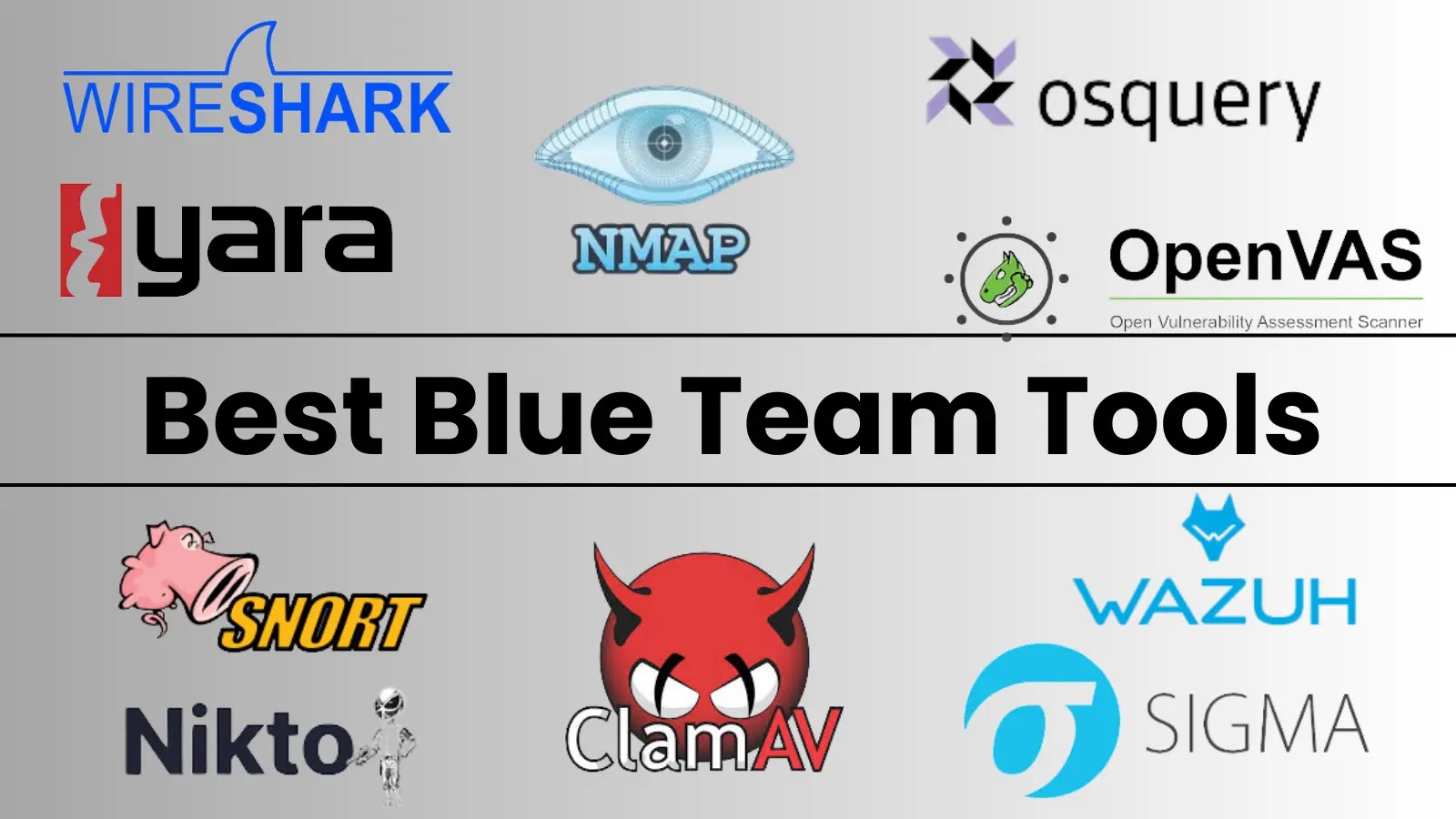
5. Wireshark
Wireshark remains the de facto standard for network protocol analysis. This GUI-based tool allows Blue Teams to capture and interactively browse the data traveling on a computer network. Its deep inspection capabilities and vast protocol support are invaluable for debugging network issues, analyzing suspicious traffic, and conducting in-depth forensic investigations of network-based attacks.
- Purpose: Network Protocol Analyzer, Traffic Debugging, Forensic Analysis
- Key Features: Deep packet inspection, extensive protocol support, real-time capture.
- Link: https://www.wireshark.org/
6. Autopsy
Autopsy is a robust, open-source digital forensics platform used for investigating what happened on a computer. It provides a comprehensive graphical interface to the Sleuth Kit and other forensic tools, enabling examiners to analyze hard drives, mobile devices, and other digital media to recover deleted files, identify artifacts, and piece together timelines of events, crucial for post-incident analysis.
- Purpose: Digital Forensics Platform, Incident Response, Evidence Analysis
- Key Features: Timeline analysis, keyword searching, artifact extraction.
- Link: https://www.autopsy.com/
7. Elasticsearch, Logstash, Kibana (ELK Stack)
The ELK Stack is a powerful collection of open-source tools for centralized logging, search, and visualization. Elasticsearch provides scalable full-text search, Logstash handles data ingestion and transformation from various sources, and Kibana offers rich data visualization dashboards. For Blue Teams, ELK is essential for aggregating logs from across the network, detecting anomalies, and visualizing security events in real-time, forming the backbone of many Security Information and Event Management (SIEM) systems.
- Purpose: Log Management, SIEM, Security Analytics, Data Visualization
- Key Features: Scalable search, flexible data ingestion, powerful dashboards.
- Link: https://www.elastic.co/elastic-stack/
8. OSSEC
OSSEC is a popular host-based intrusion detection system (HIDS) that performs log analysis, integrity checking, rootkit detection, time-based alerting, and active response. It monitors file system changes, system calls, and registry modifications, providing critical visibility into activities occurring on individual hosts. Its active response capabilities can automatically block suspicious activities.
- Purpose: Host-Based Intrusion Detection, File Integrity Monitoring, Log Analysis
- Key Features: Rootkit detection, system call monitoring, active response.
- Link: https://www.ossec.net/
9. GVM (Greenbone Vulnerability Management) – OpenVAS
Greenbone Vulnerability Management (GVM), which includes OpenVAS, is a comprehensive vulnerability scanner and manager. It helps Blue Teams identify known security weaknesses in their network, servers, and applications. Regular scanning with GVM is critical for proactive vulnerability management, allowing teams to patch and remediate issues before attackers can exploit them. For instance, discovering a critical vulnerability like CVE-2023-45802 in an exposed service through GVM can prevent a significant compromise.
- Purpose: Vulnerability Management, Network Scanning, Security Auditing
- Key Features: Comprehensive vulnerability database, report generation, scheduled scans.
- Link: https://www.greenbone.net/en/community-edition/
10. Yara
Yara is a pattern matching tool for identifying and classifying malware samples. It allows security researchers and analysts to create rules that describe patterns of malicious code, like strings, hexadecimal sequences, or byte patterns. These rules can then be used to scan files and memory for matches, aiding in malware analysis, detection, and threat hunting. For example, a Yara rule could be crafted to detect specific indicators related to the CVE-2024-21338 vulnerability’s exploit payload.
- Purpose: Malware Identification, Threat Hunting, Signature Generation
- Key Features: Rule-based pattern matching, extensible modules, command-line interface.
- Link: https://virustotal.github.io/yara/
Remediation Actions and Best Practices for Blue Teams
Leveraging these open-source tools is only one part of an effective Blue Team strategy. Actionable remediation and sound practices are equally vital:
- Regular Updates and Patching: Ensure all systems, software, and the open-source tools themselves are kept up-to-date with the latest security patches to mitigate known vulnerabilities (e.g., preventing exploits related to CVE-2023-2825).
- Automate Where Possible: Integrate tools like TheHive with MISP and your SIEM to automate threat intelligence ingestion and incident creation, reducing manual effort and response times.
- Continuous Monitoring and Alerting: Utilize Suricata, Zeek, and the ELK stack to maintain a vigilant watch over network and host activity. Configure granular alerts for suspicious behaviors and critical events.
- Forensic Readiness: Implement robust logging policies and regularly test your forensic tools (like Autopsy) and procedures to ensure you can effectively investigate incidents when they occur.
- Threat Hunting: Actively use tools like Yara and the data from Zeek and ELK to search for previously undetected threats within your environment, moving beyond reactive defense.
- Security Awareness Training: Personnel are often the weakest link. Regular, engaging security awareness training is crucial to reinforce good security practices and help users identify phishing attempts or suspicious activities.
- Regular Vulnerability Assessments: Employ GVM/OpenVAS for scheduled and ad-hoc vulnerability scans across your infrastructure. Prioritize remediation based on exploitability and impact.
- Testing and Iteration: Collaborate with Red Teams or conduct internal exercises to test your defenses, identify gaps, and refine your processes and tool configurations.
Conclusion
The role of the Blue Team is dynamic and increasingly complex, demanding a comprehensive and adaptable security strategy. The open-source tools highlighted here provide a powerful, cost-effective foundation for building a resilient defense. From network intrusion detection and forensic analysis to threat intelligence sharing and vulnerability management, these solutions empower Blue Teams to respond effectively to threats, improve their security posture, and ultimately safeguard their organizations against the persistent challenges of the digital landscape. As we progress towards 2026, embracing and mastering these tools will be paramount for any effective Blue Team operation.