10 Best Web Scanners for Website Security In 2026
In the relentless landscape of cyber threats, robust website security is non-negotiable. Modern web applications – from intricate e-commerce platforms to dynamic single-page applications (SPAs) – are under constant assault. Identifying and remediating vulnerabilities before attackers exploit them is paramount. This demands intelligent, effective web vulnerability scanners. These aren’t just tools; they are your frontline defense, actively seeking out weaknesses like SQL injection, cross-site scripting (XSS), and command injection that could compromise your entire digital presence.
For 2026, the leading web scanners go beyond static analysis. They emulate sophisticated attacker methodologies, delivering not only a list of potential flaws but also concrete proof of exploitability and precise instructions for remediation. They adeptly navigate the complexities of contemporary web architectures, uncovering hidden API endpoints and intricate authentication bypasses. This post details the 10 best web scanners poised to set the standard for website security in the coming year.
The Imperative of Web Scanning in 2026
Web applications are the primary interface for most businesses and organizations, making them lucrative targets for cybercriminals. A single, unpatched vulnerability can lead to data breaches, financial losses, reputational damage, and regulatory penalties. Proactive web scanning is no longer a luxury; it’s a fundamental component of a comprehensive security posture.
Leading scanners help identify critical application-layer flaws as defined by the OWASP Top 10, such as CVE-2022-26134 (an OGNL injection vulnerability) or the pervasive challenges of CVE-2023-34035 related to insecure deserialization. More than just identifying known vulnerabilities, the best tools employ intelligent fuzzing, behavioral analysis, and agent-based scanning to discover zero-day exploits and logical flaws that evade traditional methods.
Key Capabilities of Elite Web Scanners
As the complexity of web applications grows, so does the sophistication required of security scanners. Here are the core capabilities that define top-tier tools for 2026:
- Comprehensive Vulnerability Detection: Beyond SQLi and XSS, these tools identify a broad spectrum of vulnerabilities including insecure direct object references (IDOR), server-side request forgery (SSRF), insecure deserialization, and misconfigurations.
- Advanced Crawling and Discovery: Effective scanners must navigate complex JavaScript-heavy SPAs, discern dynamic content, and discover hidden API endpoints, including REST, SOAP, and GraphQL, which might be exposed unintentionally.
- Proof of Concept (PoC) Generation: Rather than just reporting a vulnerability, the best scanners demonstrate its exploitability with generated proof-of-concept attacks, enabling security teams to prioritize and validate findings.
- Integration with CI/CD Pipelines: Seamless integration into development pipelines allows for “shift-left” security, where vulnerabilities are identified and fixed early in the software development lifecycle, reducing remediation costs and time.
- Compliance Reporting: Automated reporting for compliance standards like PCI DSS, HIPAA, GDPR, and ISO 27001 simplifies audits and demonstrates adherence to regulatory requirements.
- Falsity Reduction: High accuracy with minimal false positives is crucial. Elite scanners employ advanced analytical techniques to distinguish genuine threats from benign code or configuration issues.
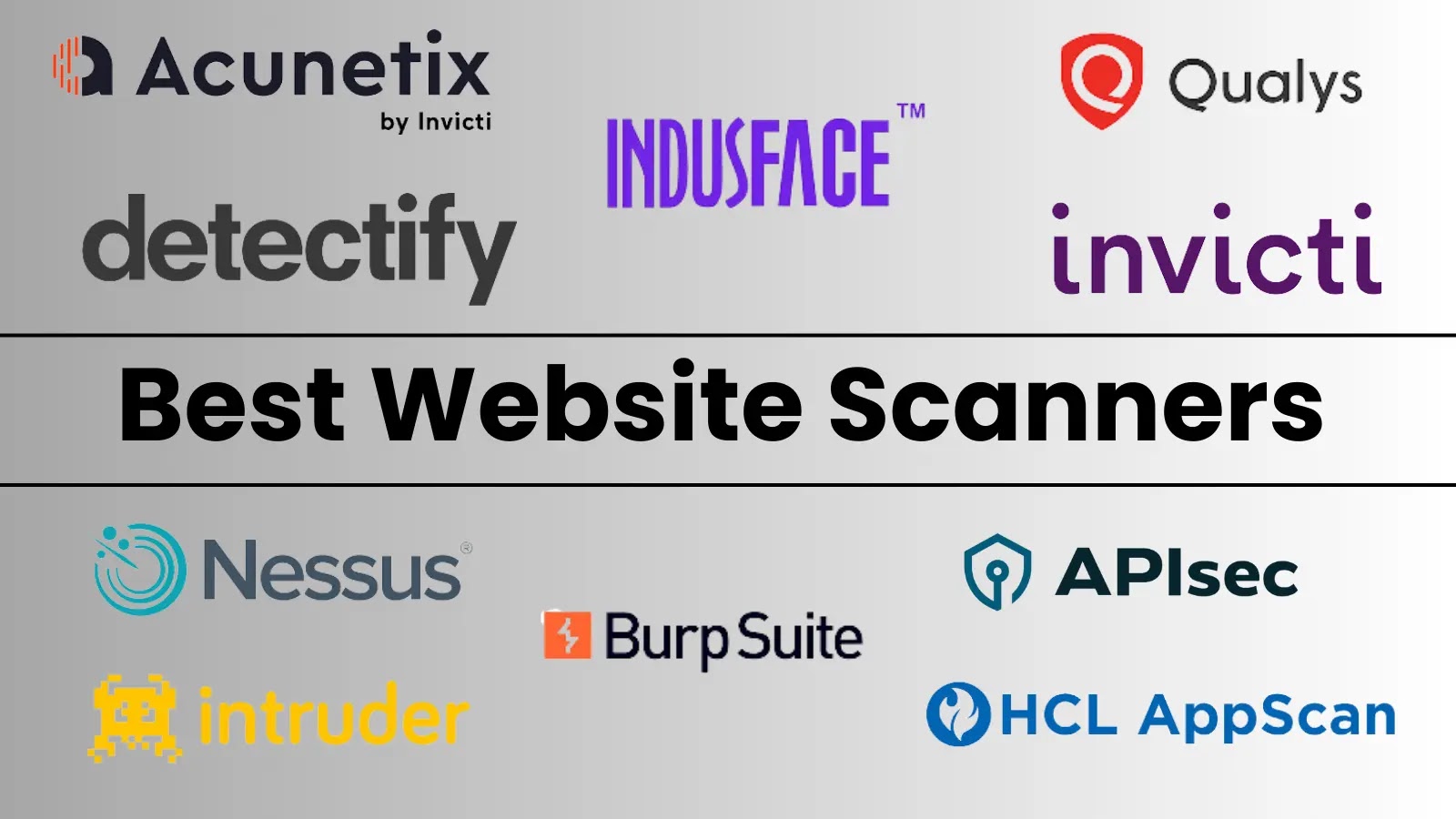
10 Best Web Scanners for Website Security In 2026
While a definitive, ranked list depends on specific enterprise needs, the following represent the leading contenders for their innovation, breadth of coverage, and reliability:
- Acunetix: Renowned for its DeepScan technology and comprehensive coverage of OWASP Top 10, SQL injection, and XSS, including precise vulnerability location.
- Invicti (formerly Netsparker): Offers advanced proof-based scanning to eliminate false positives and provide concrete evidence of vulnerabilities, supporting both DAST and IAST.
- AppScan (HCL Technologies): Provides a full suite of security testing solutions including dynamic, static, and interactive application security testing, suitable for large enterprises.
- Qualys Web Application Scanning (WAS): Part of the broader Qualys Cloud Platform, offering efficient and scalable scanning with integration for continuous monitoring and vulnerability management.
- Burp Suite Enterprise Edition: Leveraging the power of the industry-standard Burp Suite Professional, the enterprise version offers automated, scheduled scans for continuous security in CI/CD.
- OWASP ZAP (Zed Attack Proxy): An open-source powerhouse, ZAP remains a go-to for penetration testers and developers, offering a robust feature set for manual and automated testing. Its active community contributes to its continuous improvement.
- Nessus (Tenable): While primarily a network scanner, its web application scanning capabilities have grown significantly, integrating with endpoint management for a holistic view of asset risk.
- Arachni: An open-source, feature-rich, high-performance Ruby framework designed to aid in evaluating the security of web applications. Excellent for custom scripting and integration.
- Synk Open Source Security (Synk OSS): Beyond just open-source component analysis, Snyk’s platform has expanded to include web application scanning services, focusing on developer-first security.
- Rapid7 InsightAppSec: Combines DAST with advanced attack simulations to identify vulnerabilities, leveraging a vast library of attack techniques and compliance reporting.
Remediation Actions: Beyond Detection
Identifying vulnerabilities is only half the battle. Swift and accurate remediation is critical. Here’s a general approach to post-scan remediation:
- Prioritize Findings: Focus on critical and high-severity vulnerabilities first, especially those with exploitable PoCs. Consider the exposure and potential impact.
- Developer Collaboration: Share detailed reports, including technical descriptions, affected URLs, and remediation guidance, directly with development teams.
- Patch Management: Ensure all underlying software, libraries, and frameworks are kept up-to-date. Automate this process where possible.
- Secure Coding Practices: Implement secure coding standards and conduct regular training for developers on topics like input validation, output encoding, and secure authentication mechanisms.
- Web Application Firewalls (WAFs): Deploy a WAF as a protective layer to mitigate attacks while more permanent code fixes are being applied. Note that a WAF is a temporary measure, not a substitute for fixing underlying code flaws.
- Re-scan and Verify: After remediation, always re-scan the affected areas to confirm that the vulnerability has been closed and no new issues have been introduced.
Conclusion
The digital frontier of 2026 demands a proactive and intelligent approach to web application security. The web scanners highlighted here represent the vanguard, offering advanced detection capabilities, integration into development workflows, and actionable insights to strengthen your defenses. By deploying these powerful tools, organizations can move from reactive incident response to a state of continuous security, protecting their assets and maintaining user trust in an increasingly challenging cyber landscape.