30-Year-Old Libpng Vulnerability Exposes Millions of Systems to Code Execution Attacks
A 30-Year-Old Ghost in the Machine: Critical Libpng Vulnerability Exposes Millions
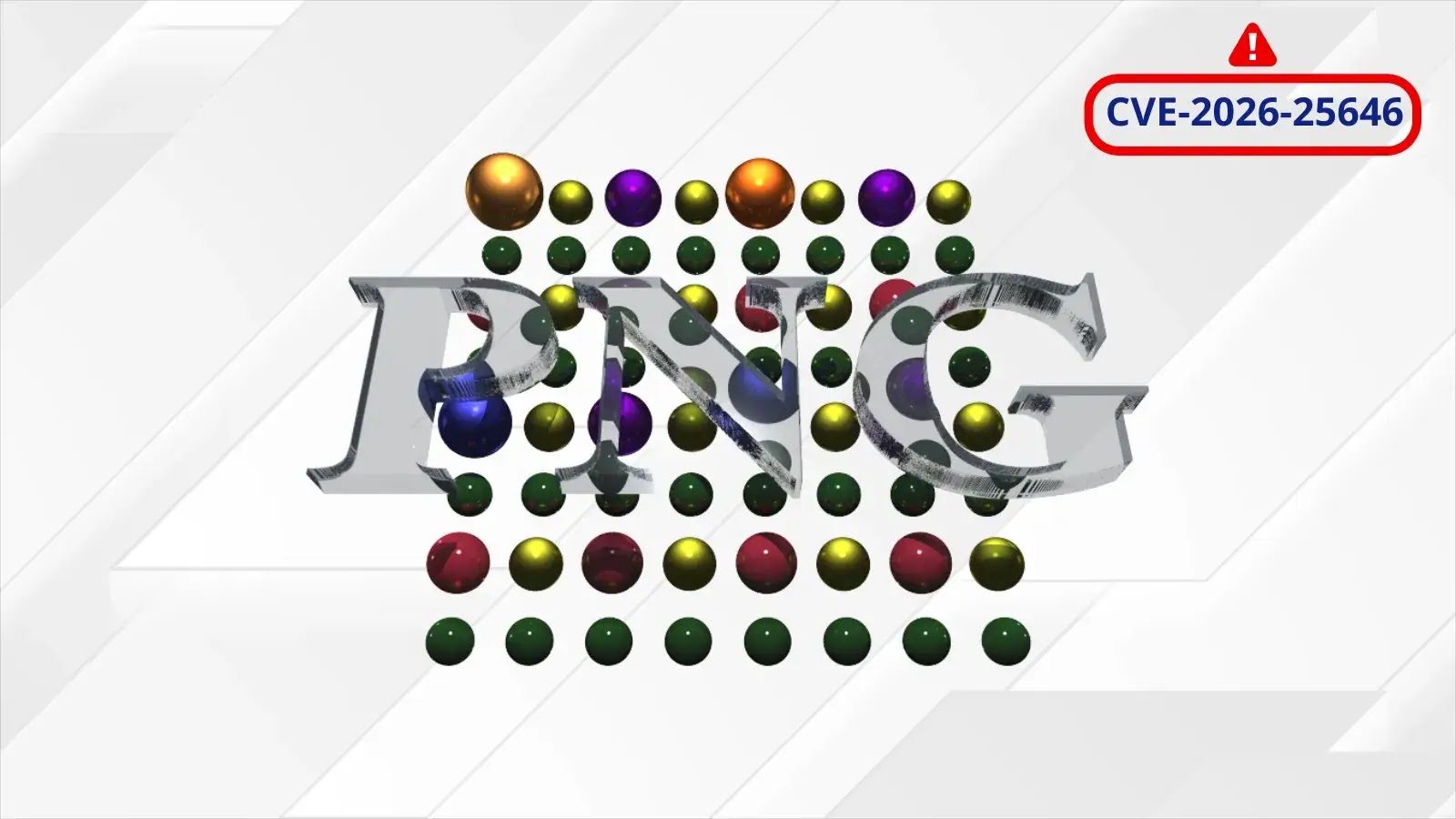
Imagine a digital artifact, foundational to how we perceive images online, harboring a critical flaw for three decades. This isn’t a plot from a cyberpunk novel; it’s the reality of a newly discovered vulnerability in libpng, the ubiquitous Portable Network Graphics (PNG) reference library. Assigned CVE-2026-25646, this heap buffer overflow in the png_set_quantize() function threatens a vast landscape of systems, potentially leading to application crashes or, more alarmingly, arbitrary code execution.
Understanding the Libpng Vulnerability: CVE-2026-25646
The vulnerability, a heap buffer overflow, is rooted deep within libpng’s png_set_quantize() function. For 30 years, this flaw has remained dormant, a ticking time bomb within one of the internet’s most fundamental image processing libraries. Libpng is the backbone for rendering PNG images across practically every operating system, web browser, and countless applications. The sheer pervasiveness of libpng means that a successful exploit could have a truly staggering impact.
A heap buffer overflow occurs when a program attempts to write data beyond the boundaries of a fixed-size buffer located in the heap memory. This can corrupt adjacent data, lead to crashes, or create opportunities for attackers to inject and execute malicious code. In the context of CVE-2026-25646, an attacker could craft a malformed PNG file that, when processed by an application using an unpatched libpng version, triggers the overflow. This could result in:
- Application Crashes: The most immediate and often visible effect, leading to denial of service.
- Arbitrary Code Execution: The gravest consequence, allowing an attacker to run their own code on the vulnerable system, potentially gaining full control.
The Widespread Impact: Millions of Systems at Risk
The severity of CVE-2026-25646 is amplified by libpng’s integral role in the digital ecosystem. Consider the fact that virtually every system capable of displaying a PNG image relies on libpng or a derivative. This includes:
- Major operating systems like Windows, macOS, Linux, and mobile platforms.
- All modern web browsers (Chrome, Firefox, Safari, Edge, etc.).
- Image editing software, document viewers, and multimedia applications.
- Embedded systems and IoT devices that process images.
The 30-year span of this vulnerability means that even long-unsupported or legacy systems could be vulnerable, posing a significant challenge for patching efforts. The attack vector is deceptively simple: an attacker only needs to entice a user or system to open or process a specially crafted PNG file.
Remediation Actions and Best Practices
Given the critical nature and widespread impact of CVE-2026-25646, immediate action is paramount. Here’s a comprehensive guide to mitigating the risk:
- Patch Libpng Immediately: The most crucial step is to update all instances of libpng to the patched version. Monitor official advisories from your operating system vendors, software providers, and distribution maintainers.
- Update Operating Systems: Ensure all operating systems (servers, desktops, mobile devices) are running the latest security patches. These updates often include bundled library fixes.
- Update Web Browsers: Keep all web browsers updated. Browser vendors typically push urgent security fixes rapidly.
- Patch Applications: For applications that directly bundle libpng, check for updates from the software vendor. This includes image editors, productivity suites, and other tools that handle PNG files.
- Implement Input Validation: While not a direct fix for the underlying vulnerability, robust input validation can help prevent malformed files from being fully processed, thus reducing the attack surface.
- Network Segmentation and Least Privilege: Limit the potential blast radius of an exploit by segmenting networks and enforcing the principle of least privilege. This can contain an attacker even if code execution occurs.
- Employee Awareness Training: Educate users about the dangers of opening unsolicited or suspicious image files, especially those from unknown sources.
Tools for Detection and Mitigation
Utilizing the right tools can significantly aid in identifying vulnerable systems and implementing effective countermeasures against CVE-2026-25646.
| Tool Name | Purpose | Link |
|---|---|---|
| Vulnerability Scanners (e.g., Nessus, OpenVAS) | Detect unpatched versions of libpng and other software vulnerabilities across networks. | Nessus / OpenVAS |
| Software Composition Analysis (SCA) Tools | Identify third-party libraries (like libpng) within applications and their associated vulnerabilities. | Sonatype Nexus Lifecycle |
| Endpoint Detection and Response (EDR) Solutions | Monitor endpoints for suspicious activity and potential exploit attempts related to image processing. | CrowdStrike Falcon Insight |
| Packet Inspection/IDS/IPS | Detect anomalous network traffic that might indicate an exploit attempt or C2 communication after a successful compromise. | Snort |
Conclusion
The discovery of CVE-2026-25646 in libpng serves as a stark reminder that even the most fundamental and long-standing components of our digital infrastructure can harbor critical vulnerabilities. The potential for millions of systems to be exposed to arbitrary code execution attacks necessitates immediate and comprehensive action. Prioritize patching, maintain vigilance over your software supply chain, and reinforce security awareness across your organization. Proactive defense is the strongest stand against threats emerging from decades-old flaws.