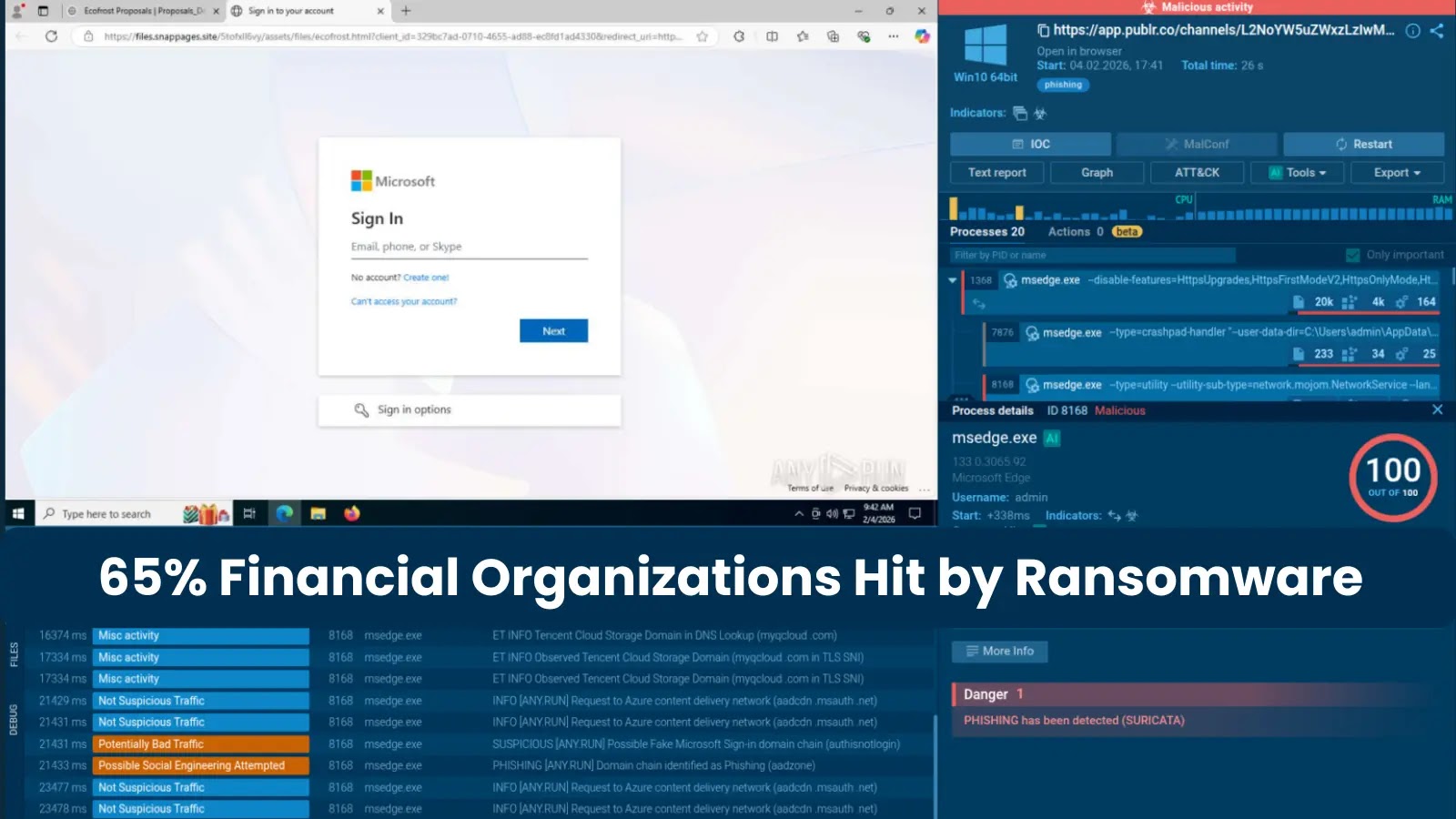
65% of Financial Organizations Targeted by Ransomware as Cybercriminals Escalate Attacks
The Ransomware Reckoning: Why Financial Institutions Are Cybercriminals’ Gold Mine
The financial sector isn’t just about money; it’s the bedrock of our economic stability, entrusted with sensitive personal data, intricate payment systems, and the very confidence of nations. Unsurprisingly, this makes it an irresistible target for cybercriminals. Recent intelligence paints a grim picture: a staggering 65% of financial organizations have been hit by ransomware in 2024. This isn’t just a number; it’s the highest rate across all industries, underscoring a severe and escalating threat landscape. The financial fallout is equally sobering, with average recovery costs, excluding ransom payments, soaring to $2.73 million.
The Escalating Threat Landscape in Finance
The prevalence of ransomware attacks against financial institutions highlights a critical shift in cybercriminal strategies. These aren’t opportunistic, low-effort exploits; they are targeted, sophisticated campaigns designed to maximize disruption and financial gain. The sheer volume of sensitive data – from customer records to proprietary trading algorithms – stored and processed by banks, investment firms, and insurers makes them prime candidates for extortion. Data exfiltration, often preceding encryption, adds another layer of threat, as criminals leverage the promise of publicizing or selling stolen information to pressure victims into paying ransoms.
Why Financial Organizations Are Prime Targets
Several factors contribute to the financial sector’s unenviable position as the most targeted industry:
- High Financial Value: Direct access to significant capital makes financial institutions an obvious choice for attackers seeking large payouts.
- Sensitive Data Hoards: Financial organizations are repositories of Personally Identifiable Information (PII), financial records, and proprietary business data, all highly valuable on dark web markets.
- Critical Infrastructure: The disruption of financial services can have cascading economic consequences, increasing the pressure on victims to restore operations quickly, often leading to ransom payments.
- Regulatory Pressure: Stringent regulatory frameworks mean data breaches and operational downtime can lead to hefty fines and reputational damage, further incentivizing rapid resolution, even if it means paying a ransom.
- Complex Attack Surfaces: Large, distributed networks, legacy systems, and frequent mergers and acquisitions often result in complex IT environments with numerous potential vulnerabilities.
The Cost of Recovery: Beyond the Ransom
The $2.73 million average recovery cost, excluding ransom payments, is a stark reminder that the financial impact of ransomware extends far beyond the immediate extortion. These costs encompass a multitude of expenses:
- Forensic Investigation: Hiring cybersecurity experts to determine the attack’s scope, origin, and impact.
- System Remediation: Rebuilding compromised systems, restoring data from backups, and patching vulnerabilities.
- Legal and Regulatory Fees: Navigating compliance obligations, potential lawsuits, and reporting requirements.
- Reputational Damage: The long-term impact on customer trust and brand image, which can lead to customer churn and reduced business.
- Business Interruption: Lost revenue due to operational downtime and inability to conduct normal business activities.
- Credit Monitoring: Offering identity protection services to affected customers.
Remediation Actions and Proactive Defense
Given the severe financial and reputational implications, financial organizations must adopt a robust, multi-layered cybersecurity strategy. Proactive defense and a strong incident response plan are non-negotiable.
- Implement Strong Access Controls: Utilize Multi-Factor Authentication (MFA) for all accounts, especially privileged ones. Adhere to the principle of least privilege.
- Regular Backups and Recovery Plans: Maintain immutable, off-site, and isolated backups of critical data. Regularly test recovery procedures to ensure efficacy.
- Employee Training and Awareness: Educate staff on phishing, social engineering, and common ransomware tactics. A human firewall is often the strongest defense.
- Patch Management: Proactively and consistently patch and update all operating systems, applications, and network devices. Regularly check for known vulnerabilities, such as those listed in the CVE database (replace XXXXX with relevant CVEs as they emerge).
- Network Segmentation: Divide networks into smaller, isolated segments to limit the lateral movement of ransomware if a breach occurs.
- Endpoint Detection and Response (EDR): Deploy advanced EDR solutions to detect and respond to suspicious activities on endpoints in real-time.
- Incident Response Plan: Develop and regularly test a comprehensive incident response plan, including communication strategies, forensic procedures, and recovery steps.
- Threat Intelligence Sharing: Participate in threat intelligence sharing initiatives to stay informed about emerging threats specific to the financial sector.
- Security Audits and Penetration Testing: Conduct regular third-party security audits and penetration tests to identify and address vulnerabilities before attackers exploit them.
Conclusion: Fortifying the Financial Frontline
The statistic – 65% of financial organizations targeted by ransomware – is a stark call to action. It underscores the critical need for financial institutions to prioritize cybersecurity as a fundamental business imperative, not just an IT function. By investing in resilient defenses, fostering a strong security culture, and meticulously planning for incident response, financial organizations can significantly mitigate their risk and protect the integrity of the global economy against the relentless assault of cybercriminals. The battle against ransomware is ongoing, and strong, proactive measures are the industry’s best defense.