
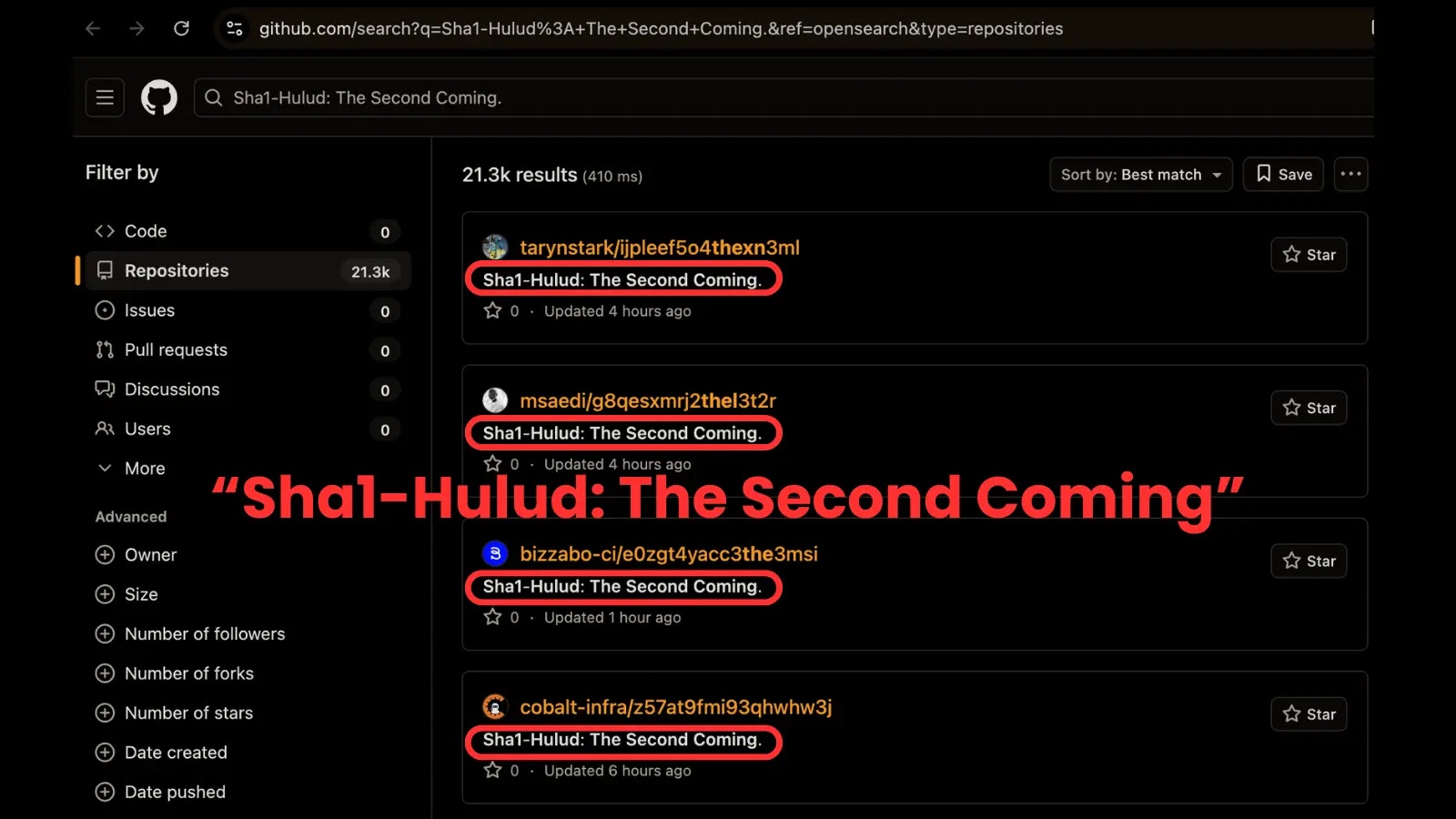
Sha1-Hulud Supply Chain Attack: 800+ npm Packages and Thousands of GitHub Repos Compromised
Sha1-Hulud Returns: Unpacking a Critical Supply Chain Attack on npm and GitHub
The open-source ecosystem, a cornerstone of modern software development, is under renewed assault. A sophisticated and widespread supply chain attack, dubbed “The Second Coming” by its perpetrators, has seen the resurgence of the Sha1-Hulud malware. This campaign has compromised over 800 npm packages and tens of thousands of GitHub repositories, casting a long shadow over the integrity of widely used software components. For cybersecurity professionals, developers, and IT leaders, understanding the breadth and depth of this attack is paramount to safeguarding digital infrastructure.
The Scope of The Second Coming
This latest wave of Sha1-Hulud is not an isolated incident but a carefully orchestrated campaign targeting high-profile dependencies. The attackers have demonstrably focused their efforts on projects associated with major organizations, including:
- AsyncAPI
- Postman
- PostHog
- Zapier
- ENS (Ethereum Name Service)
The impact is significant, affecting an estimated large number of projects downstream. The compromise of npm packages, fundamental building blocks for JavaScript applications, and GitHub repositories, central hubs for code collaboration, means that the malicious code could propagate through numerous applications and services.
Understanding the Sha1-Hulud Malware
While specific technical details of the malware’s new functionalities in “The Second Coming” are still emerging, previous iterations of Sha1-Hulud have demonstrated advanced capabilities for data exfiltration, backdooring systems, and maintaining persistence. Supply chain attacks inherently exploit trust relationships within the software development process. By injecting malicious code into legitimate libraries or projects, attackers can compromise a vast number of downstream users without directly targeting them. In this case, the malware likely uses various stealth techniques to avoid detection, making it crucial for organizations to enhance their security posture beyond traditional perimeter defenses.
Why Supply Chain Attacks Are So Dangerous
The Sha1-Hulud campaign exemplifies the insidious nature of supply chain attacks. Unlike direct attacks on an organization’s perimeter, these threats leverage vulnerabilities in the software creation and delivery process itself. Key reasons they pose a significant danger include:
- Broad Impact: A single compromised component can infect thousands of applications.
- High Trust Environment: Developers and automated systems often implicitly trust open-source packages.
- Difficult to Detect: Malicious code can be subtle and deeply embedded within legitimate functionality.
- Long-Term Persistence: Once embedded, the malware can remain dormant for extended periods, making detection and eradication challenging.
Remediation Actions and Proactive Defense
Given the severity and widespread nature of the Sha1-Hulud attack, immediate and proactive measures are essential for any organization utilizing npm packages or GitHub repositories. Here are critical remediation actions and best practices:
- Audit Dependencies: Conduct a thorough audit of all third-party npm packages and GitHub repositories used in your projects. Verify their integrity and check for any known compromises.
- Software Bill of Materials (SBOM): Implement and maintain a comprehensive SBOM for all your applications. This provides a clear inventory of all components and their provenance.
- Dependency Scanning: Utilize automated tools for continuous dependency scanning to identify known vulnerabilities and suspicious changes.
- Code Review and Static Analysis: Implement stringent code review processes and integrate static application security testing (SAST) tools into your CI/CD pipeline to detect anomalies.
- Update and Patch Regularly: Ensure all packages and dependencies are kept up-to-date with the latest security patches.
- Principle of Least Privilege: Apply the principle of least privilege to all development environments and build systems to minimize the impact of a potential compromise.
- Monitor for Anomalies: Implement robust logging and monitoring solutions to detect unusual network activity, file modifications, or process executions that could indicate malware presence.
- Supply Chain Security Tools: Invest in dedicated supply chain security solutions designed to verify package integrity and prevent tampering.
Recommended Tools for Detection & Mitigation
| Tool Name | Purpose | Link |
|---|---|---|
| Snyk | SCA, SAST, secret detection, and remediation for open-source dependencies. | https://snyk.io/ |
| OWASP Dependency-Check | Identifies known vulnerabilities in project dependencies. | https://owasp.org/www-project-dependency-check/ |
| GitHub Dependabot | Automated dependency updates and vulnerability alerts within GitHub. | https://github.com/features/security/dependabot |
| JFrog Xray | Universal software analysis and advanced dependency scanning. | https://jfrog.com/xray/ |
| Checkmarx Supply Chain Security | Specialized solution for securing the software supply chain. | https://checkmarx.com/products/software-supply-chain-security/ |
Conclusion: Strengthening the Open-Source Trust Fabric
The Sha1-Hulud “Second Coming” attack is a stark reminder that the security of our interconnected digital world hinges on the integrity of its foundational components. As organizations increasingly rely on open-source software, the responsibility to secure the supply chain becomes collective. By implementing robust security practices, leveraging specialized tools, and fostering a culture of vigilant cybersecurity, we can collectively strengthen the trust fabric of the open-source ecosystem against persistent and evolving threats like Sha1-Hulud. Proactive defense, continuous monitoring, and rapid response are no longer optional but critical imperatives.




