
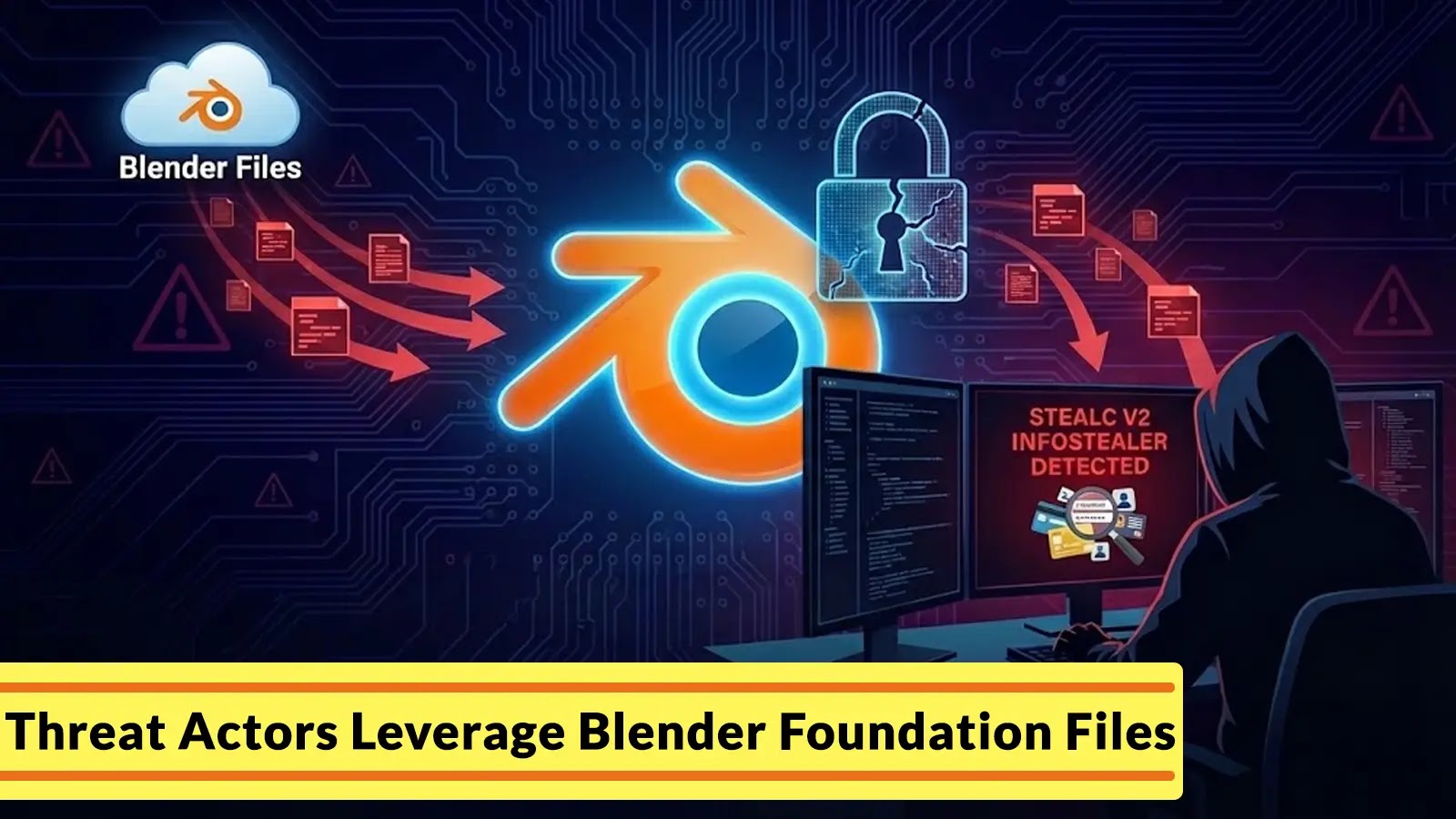
Threat Actors Leverage Blender Foundation Files to Deliver Notorious StealC V2 Infostealer
A New Attack Vector: Blender Files and StealC V2
The digital landscape for creative professionals has traditionally been considered a relatively secure space, focused on artistic creation rather than overt cyber threats. However, recent findings have unveiled a concerning new attack vector, directly targeting users of Blender, the popular open-source 3D modeling application. Cybercriminals are now embedding malicious Python scripts within seemingly innocuous Blender files, leveraging common asset platforms like CGTrader to deliver the notorious StealC V2 infostealer. This sophisticated campaign not only compromises user data but also underscores the evolving tactics of threat actors, who meticulously seek out novel infiltration methods.
Understanding the Threat: How Blender Files Become Malicious
The core of this attack lies in the often-overlooked power of embedded scripting within 3D design files. Blender, known for its extensibility, allows for Python scripts to be included within its .blend files. Threat actors exploit this legitimate functionality by crafting malicious files containing Python scripts designed to execute automatically upon opening in Blender. These scripts are engineered to download and deploy the StealC V2 infostealer, a robust piece of malware capable of exfiltrating sensitive information from compromised systems.
The distribution mechanism further amplifies the danger. Malicious Blender files are uploaded to widely-used asset marketplaces, such as CGTrader. Users, in search of free or paid 3D models, textures, or animations, download these files unaware of the embedded threat. Once opened, the automated script silently initiates the infection chain, making detection challenging for unsuspecting victims.
StealC V2 Infostealer: A Closer Look at the Malware
StealC V2 is a sophisticated infostealer designed to pilfer a wide array of sensitive data from infected machines. Its capabilities typically include:
- Credential Theft: Targeting browser stored passwords, cookies, and autofill data.
- Cryptocurrency Wallet Exfiltration: Identifying and stealing digital wallet files and private keys.
- System Information Gathering: Collecting details about the operating system, hardware, and installed applications.
- Screenshot Capture: Taking screenshots of the user’s desktop to gather visual information.
- File Collection: Searching for and exfiltrating specific file types, often related to sensitive documents or configurations.
The use of StealC V2 in this campaign highlights a strategic shift by attackers to target specific communities with tailored delivery methods. The blend of a trusted application (Blender), a common distribution platform (asset marketplaces), and a potent infostealer creates a high-risk scenario for digital artists and designers.
For more detailed information on infostealers, researchers can refer to broader analyses of malware categories and their associated behaviors.
Remediation Actions and Proactive Defenses
Addressing this specific threat requires a multi-faceted approach, combining user awareness with robust security practices. Organizations and individual users within the creative design community must implement the following actions:
- Source Verification: Always download Blender files and other assets from trusted and official sources. Exercise extreme caution when obtaining files from unknown creators or unofficial repositories.
- Script Execution Warnings: Blender often provides warnings about executing scripts embedded in files. Users should treat these warnings seriously and avoid enabling script execution unless the source is unequivocally trusted.
- Endpoint Detection and Response (EDR): Implement and maintain EDR solutions to detect and respond to suspicious activities on endpoints, including the execution of unknown scripts or the unauthorized exfiltration of data.
- Antivirus/Anti-Malware: Ensure that antivirus and anti-malware software is up-to-date and configured to perform regular scans.
- Regular Backups: Maintain frequent and secure backups of all critical data to facilitate recovery in the event of a successful compromise.
- Principle of Least Privilege: Operate design software and access files with the minimum necessary user privileges to limit potential damage from malicious scripts.
Relevant Tools for Detection and Mitigation
| Tool Name | Purpose | Link |
|---|---|---|
| Virustotal | File and URL analysis for malicious content | https://www.virustotal.com/ |
| YARA Rules (Open Source) | Pattern matching for malware detection | https://virustotal.github.io/yara/ |
| Wireshark | Network protocol analyzer for suspicious network traffic | https://www.wireshark.org/ |
| Process Monitor (Sysinternals) | Real-time file system, Registry, and process/thread activity monitoring | https://docs.microsoft.com/en-us/sysinternals/downloads/procmon |
Conclusion: Heightened Vigilance in the Creative Space
The exploitation of Blender files to deliver the StealC V2 infostealer represents a critical reminder that cyber threats continually adapt and expand into new territories. The creative design community, often perceived as less susceptible to sophisticated malware campaigns, must now adopt a heightened state of vigilance. By practicing diligent source verification, heeding software warnings, and implementing robust endpoint security measures, individuals and organizations can significantly reduce their exposure to these emerging and insidious attack vectors. Staying informed and proactive is paramount in securing digital assets against an ever-evolving threat landscape.




