
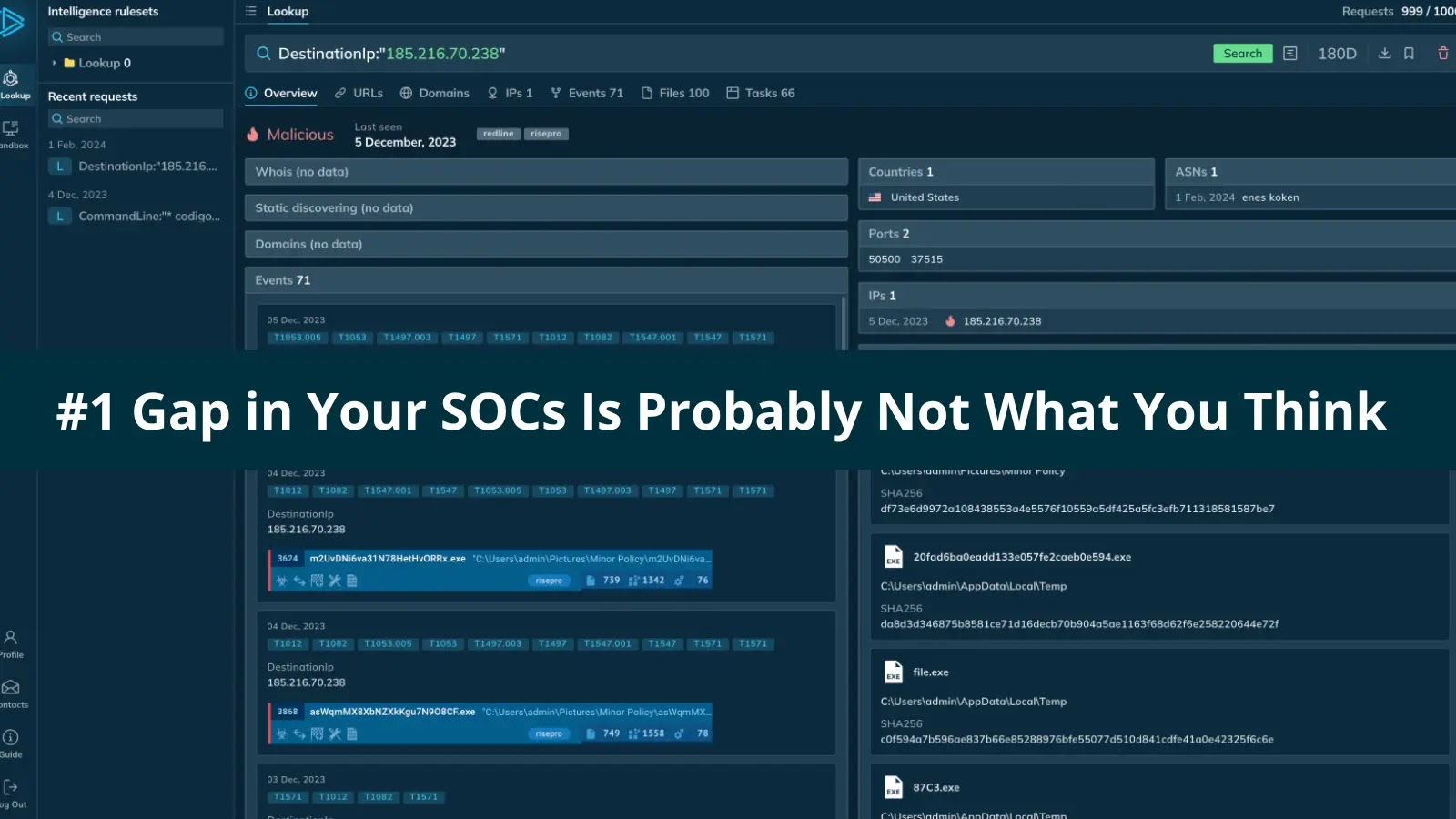
#1 Gap in Your SOCs Is Probably Not What You Think
The Unseen Foe: Why Your SOC’s Biggest Weakness Isn’t What You Expect
Leading a Security Operations Center (SOC) often feels like an unending struggle against an ever-growing tide. Cyber attacks proliferate, threat actors become more sophisticated, and the attack surface expands with every cloud migration and remote workforce adoption. SOC managers are under immense pressure, tasked with not just detecting and responding to threats, but also continuously improving processes and technologies. Amidst this relentless pace, it’s easy to focus on technical gaps: missing tools, insufficient threat intelligence, or talent shortages. However, the most critical vulnerability in many SOCs isn’t a technological or even a personnel deficit in the traditional sense. It’s often something far more fundamental, yet frequently overlooked.
The Real Gap: Overwhelmed Operational Rhythm
While the immediate assumption might be a lack of advanced SIEM capabilities or an understaffed team, the primary gap truly lies in the operational rhythm and the sheer volume of alerts that overwhelm security analysts. The influx of data from an “explosion of security tools” — firewalls, Endpoint Detection and Response (EDR) solutions, Intrusion Detection/Prevention Systems (IDS/IPS), and Cloud Access Security Brokers (CASBs) — creates a cacophony of alerts. Analysts, already stretched thin, struggle to differentiate genuine threats from benign anomalies. This leads to alert fatigue, missed critical incidents, and ultimately, a reactive rather than proactive security posture.
The Consequences of Alert Fatigue within the Modern SOC
Alert fatigue isn’t just about tired eyes; it has tangible and severe consequences for organizational security. When analysts are constantly sifting through false positives, their ability to meticulously investigate legitimate threats diminishes. This can result in:
- Increased Mean Time To Detect (MTTD): Critical breaches go unnoticed for longer periods, exacerbating their impact.
- Increased Mean Time To Respond (MTTR): Delayed detection naturally leads to delayed response, allowing attackers more time within the network.
- Analyst Burnout: The constant pressure and repetitive tasks of sifting through noise lead to high turnover rates within SOC teams, further compounding staffing challenges.
- Reduced Efficiency: Valuable analyst time is spent on non-critical tasks, diverting resources from strategic security initiatives.
Consider a scenario where a novel exploit, perhaps leveraging a vulnerability similar to CVE-2023-38814 in a widely used application, goes undetected because its initial indicators are buried under hundreds of non-critical alerts. This is a real-world risk stemming directly from an overwhelmed operational rhythm.
Remediation Actions: Re-establishing SOC Harmony
Addressing this fundamental gap requires a multi-faceted approach that prioritizes efficiency and empowers analysts rather than overwhelming them.
- Prioritize and Tune Alerts: This is paramount. Implement robust alert correlation, aggregation, and filtering mechanisms. Regularly review and tune security tool configurations to reduce false positives and elevate high-fidelity alerts. Focus on alerts that align directly with your organization’s threat model.
- Embrace Security Orchestration, Automation, and Response (SOAR): SOAR platforms are invaluable for automating repetitive tasks, enriching alerts with contextual data, and orchestrating incident response workflows. This frees analysts to focus on complex investigations.
- Implement Threat Intelligence Platform (TIP) Integration: Integrate threat intelligence feeds directly into your SIEM and other security tools. This helps in contextually enriching alerts and blocking known malicious indicators proactively.
- Invest in User and Entity Behavior Analytics (UEBA): UEBA solutions can detect anomalous user and entity behavior that might bypass traditional rules-based detection, helping to surface genuine threats amidst the noise.
- Regular Training and Upskilling: Equip your SOC analysts with the skills to effectively use new tools, understand emerging threat landscapes, and perform advanced threat hunting. This improves their ability to discern critical incidents.
- Develop Clear Playbooks and Runbooks: Standardize incident response procedures through well-defined playbooks. This ensures consistent and efficient handling of common incidents, reducing ad-hoc decision-making.
- Focus on Proactive Threat Hunting: Allocate dedicated time for threat hunting. This proactive approach helps uncover threats that might bypass automated defenses and reduces reliance on reactive alert investigations.
Tools to Streamline Detection and Response
Implementing the above remediation actions effectively often requires leveraging specialized cybersecurity tools. Here’s a brief overview of categories and examples:
| Tool Category | Purpose | Key Features/Examples |
|---|---|---|
| SIEM/XDR | Centralized log management, threat detection, and correlation across multiple security layers. | Splunk Enterprise Security, Microsoft Sentinel, Exabeam, Cortex XDR |
| SOAR Platforms | Automate repetitive tasks, orchestrate workflows, and standardize incident response. | Splunk Phantom, Palo Alto Networks Cortex XSOAR, IBM Resilient, D3 Security |
| Threat Intelligence Platforms (TIP) | Aggregate, normalize, and distribute threat intelligence feeds. | MISP, Anomali ThreatStream, Recorded Future, ThreatConnect |
| UEBA Solutions | Detect anomalous user and entity behavior for insider threat detection and compromised accounts. | Exabeam, Securiti.ai, Gurucul |
| Endpoint Detection and Response (EDR) | Real-time monitoring, detection, and response capabilities on endpoints. | CrowdStrike Falcon, SentinelOne Singularity, Microsoft Defender for Endpoint |
Key Takeaways for a Resilient SOC
The operational challenges faced by SOCs are immense, but the solution isn’t always about acquiring more tools. It’s about optimizing the tools and processes already in place, alleviating alert fatigue, and empowering security analysts to perform at their best. By focusing on alert tuning, strategic automation, robust threat intelligence integration, and continuous skill development, organizations can transform their SOCs from reactive firefighting units into proactive, efficient, and resilient security powerhouses. The true strength of a SOC lies not just in its technology, but in its ability to operate effectively and efficiently under pressure, discerning critical threats from the background noise.




