
Hackers Exploit NTLM Authentication Flaws to Target Windows Systems
The Persistent Peril: NTLM Authentication Flaws and Ongoing Windows System Compromise
The digital landscape is a battleground where old vulnerabilities often resurface with new ferocity. A prime example of this enduring threat is the New Technology LAN Manager (NTLM) authentication protocol. Decades after its initial discovery, NTLM continues to be a critical weak point in Windows systems worldwide. What began as a theoretical vulnerability in 2001 has unfortunately escalated into a widespread security crisis, with attackers actively weaponizing multiple NTLM flaws to compromise networks across various regions. This article delves into the persistent nature of NTLM vulnerabilities, the methods attackers employ, and the crucial steps organizations must take to secure their environments.
Understanding NTLM: A Legacy of Vulnerabilities
NTLM, developed by Microsoft, serves as a challenge-response authentication protocol for Windows systems. While historically significant, its architectural limitations and design choices have made it a fertile ground for attackers. Unlike more robust and modern authentication protocols like Kerberos, NTLM is susceptible to various attacks due to its reliance on weak cryptographic algorithms and the ability to capture and relay hashed credentials.
Over the years, numerous vulnerabilities exploiting NTLM’s weaknesses have been discovered. These flaws often revolve around:
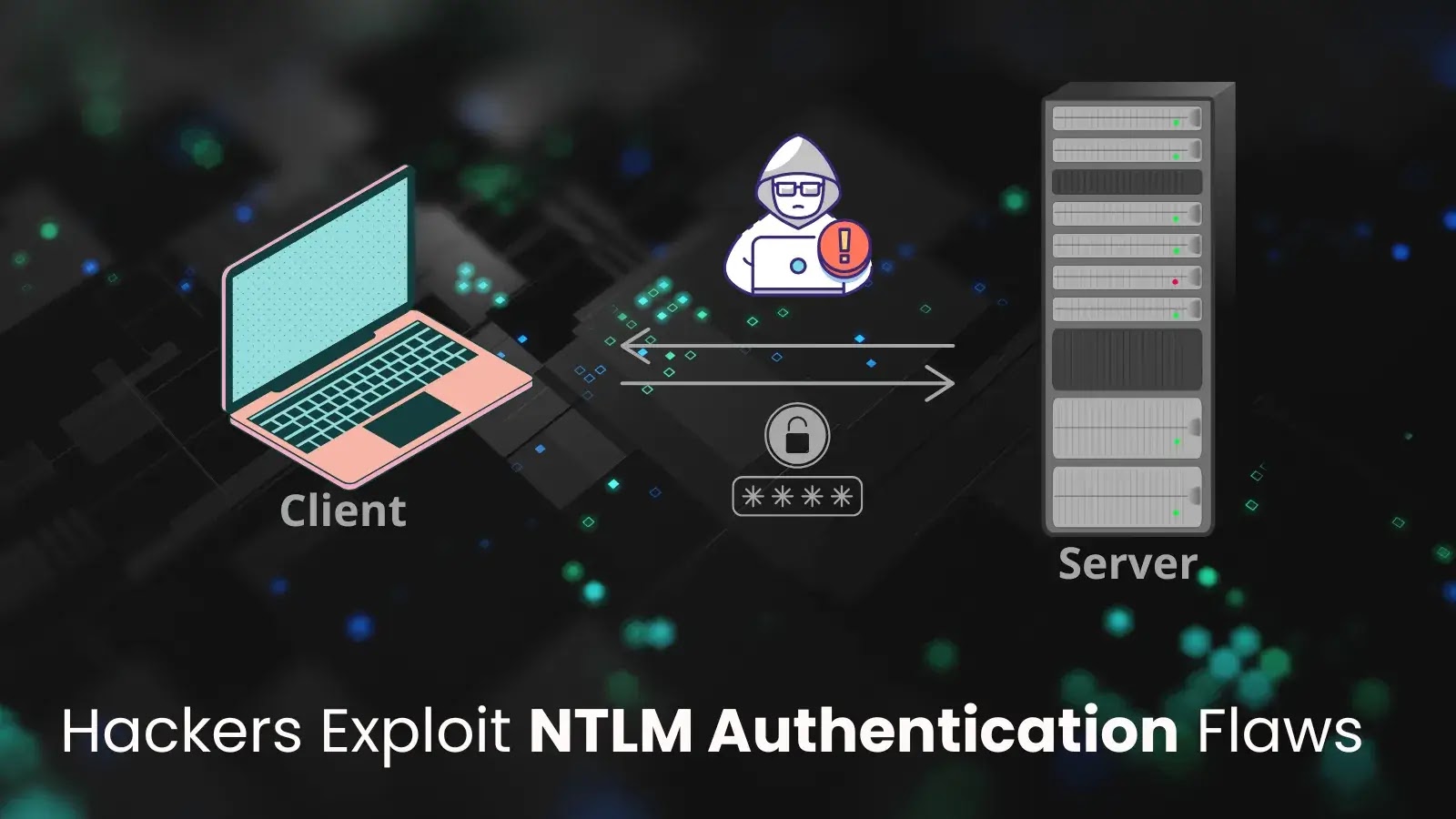
- Credential Relaying: Attackers can intercept NTLM authentication requests and “relay” them to another server, impersonating the legitimate user.
- Pass-the-Hash Attacks: Instead of cracking a password, attackers can use a captured NTLM hash directly to authenticate to other services.
- Brute-Force and Dictionary Attacks: While NTLM hashes are more resilient than plaintext passwords, they are still vulnerable to offline brute-force attacks if captured.
- Downgrade Attacks: Attackers can force systems to use less secure NTLM versions, even if stronger alternatives are available.
Active Exploitation: Real-World Impact
The recent surge in active exploitation of NTLM flaws underscores the severity of this issue. Cyber Security News highlights that attackers are not just leveraging isolated vulnerabilities but orchestrating sophisticated campaigns. These campaigns often involve:
- Phishing and Social Engineering: Initial access is frequently gained through expertly crafted phishing emails, enticing users to click malicious links or open compromised attachments.
- Internal Network Lateral Movement: Once inside a network, NTLM relay and pass-the-hash techniques become powerful tools for lateral movement, allowing attackers to escalate privileges and access sensitive resources.
- Data Exfiltration and Ransomware Deployment: The ultimate goals often include stealing valuable data or deploying ransomware, crippling an organization’s operations.
While specific CVEs detailing recent NTLM attack vectors might be proprietary or emerging, the underlying principles of past vulnerabilities like CVE-2019-1040 (an NTLM relay bypass) and other similar flaws continue to inform attacker methodologies. It’s the inherent weaknesses in the protocol that attackers repeatedly exploit, regardless of new patches attempting to mitigate specific instances.
Remediation Actions: Securing Your Windows Environment
Addressing NTLM vulnerabilities requires a multi-layered approach, focusing on prevention, detection, and response. Proactive measures are paramount to reducing your attack surface.
- Prioritize Kerberos: Wherever possible, transition from NTLM to Kerberos authentication. Kerberos offers superior security features, including mutual authentication and ticket-based mechanisms, making it far more resilient to credential theft and relay attacks.
- Enable Extended Protection for Authentication (EPA): EPA helps prevent NTLM relay attacks by binding authentication credentials to the original TLS connection, making it harder for attackers to reuse captured hashes.
- Implement NTLM Blocking and Auditing: Identify and block NTLM authentication on systems where it’s not strictly necessary. Group Policy Objects (GPOs) can be used to restrict NTLM usage. Simultaneously, rigorously audit NTLM usage to identify suspicious activity.
- Strong Passwords and Multi-Factor Authentication (MFA): While not directly mitigating NTLM protocol flaws, strong, unique passwords and ubiquitous MFA significantly reduce the impact of any credential compromise by adding another layer of security.
- Principle of Least Privilege: Limit user and service account permissions to only what is absolutely necessary. This curtails the potential damage an attacker can inflict even if they compromise a credential.
- Apply Security Patches Promptly: Regularly update all Windows systems with the latest security patches. Microsoft frequently releases fixes for NTLM-related vulnerabilities, and timely patching is crucial.
- Network Segmentation: Isolate critical systems and applications on separate network segments. This limits an attacker’s ability to move laterally and reach high-value targets even if they gain initial access.
Recommended Tools for NTLM Security Management
Leveraging specialized tools can significantly aid in identifying and mitigating NTLM-related risks.
| Tool Name | Purpose | Link |
|---|---|---|
| BloodHound | Identifies complex attack paths in Active Directory environments, including those leveraging NTLM weaknesses. | https://bloodhoundenterprise.io/ |
| Responder | A rogue authentication server that can capture NTLM hashes and conduct NTLM relay attacks during penetration tests. | https://github.com/lgandx/Responder |
| ntlmrelayx.py (Impacket) | Used for NTLM relay attacks, often integrated into red teaming and penetration testing. | https://github.com/SecureAuthCorp/impacket |
| Microsoft Advanced Threat Analytics (ATA) / Microsoft Defender for Identity | Monitors Active Directory for suspicious activities, including NTLM credential misuse. | https://learn.microsoft.com/en-us/defender-for-identity/what-is-defender-for-identity |
Looking Ahead: The Path to Enhanced Security
The continued exploitation of NTLM flaws underscores a critical lesson in cybersecurity: legacy systems, if not properly managed and phased out, can pose significant and enduring risks. While NTLM may still be necessary for certain legacy applications, the strategic goal for every organization should be to minimize its footprint and transition to more mature and secure authentication protocols like Kerberos or modern identity providers. Continuous monitoring, proactive vulnerability management, and a robust incident response plan are essential to defending against these persistent threats and maintaining a secure Windows ecosystem.




