
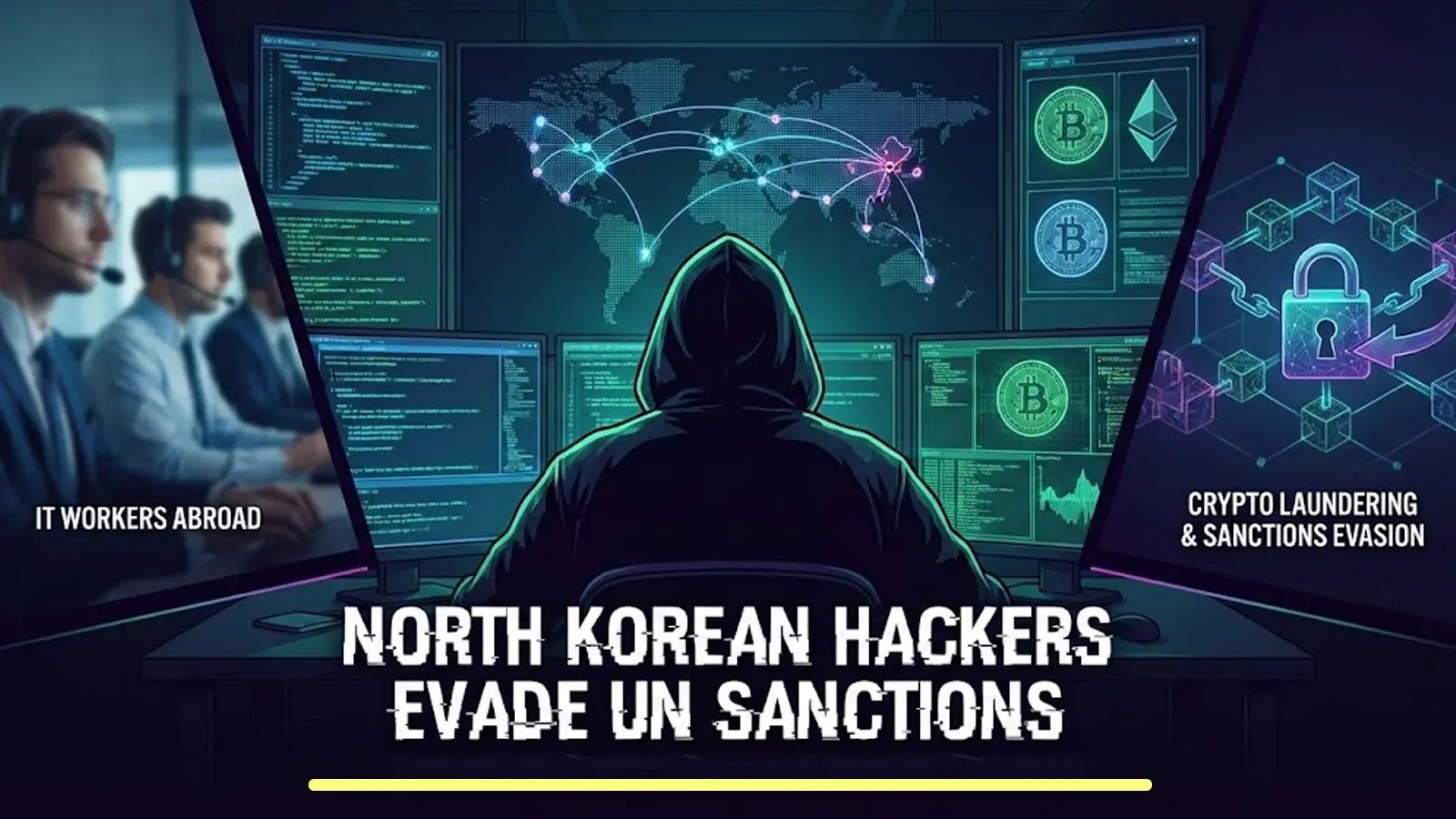
North Korean Hackers Evade UN Sanctions Leveraging Cyber Capabilities, IT Workers and Crypto Activities
North Korea’s Cyber War Machine: How Sanctions Are Being Bypassed
The Democratic People’s Republic of Korea (DPRK) has escalated its global cyber operations, exhibiting a relentless drive to circumvent United Nations Security Council (UNSC) resolutions. These sophisticated campaigns involve large-scale cyberattacks, extensive cryptocurrency theft, and intricate cross-border money laundering schemes. This poses significant challenges for international security and underscores the evolving nature of state-sponsored threats in the digital domain.
Understanding the mechanisms by which North Korea funds its illicit programs is critical for cybersecurity professionals and policymakers alike. The Multilateral Sanctions Monitoring Team (MSMT) reports paint a stark picture, revealing the vast sums North Korean hackers are siphoning off through these activities.
The DPRK’s Multi-Front Cyber Strategy
North Korea’s approach to sanctions evasion is multi-faceted, leveraging a combination of highly skilled cyber operatives, strategic IT outsourcing, and the inherent anonymity offered by cryptocurrencies. This integrated strategy allows them to not only generate substantial revenue but also to obscure their tracks, making attribution and recovery exceedingly difficult.
Cyberattacks and Cryptocurrency Theft: A Lucrative Pipeline
The MSMT report highlights a disturbing trend: North Korean threat actors are highly effective at cryptocurrency theft. In 2024 alone, these groups are estimated to have stolen at least USD 1.19 billion in cryptocurrency. This vast sum is a direct lifeline for the DPRK’s weapons programs, proving that traditional financial sanctions are increasingly ineffective against a state actor adept at exploiting digital currencies.
Common tactics employed include:
- Spear-phishing campaigns: Targeting individuals and organizations with access to cryptocurrency exchanges or wallets.
- Supply chain attacks: Compromising software or services used by cryptocurrency platforms.
- Exploitation of vulnerabilities: Identifying and leveraging weaknesses in cryptocurrency systems. While specific CVEs linked directly to DPRK crypto theft vary and are often short-lived undisclosed exploits, understanding general attack vectors like those leveraging common web application vulnerabilities (e.g., CVE-2023-38545 for curl’s SOCKS5 proxy vulnerability, though not directly crypto-related, illustrates the type of network exploitation that could facilitate such theft) is crucial for defense.
Exploiting IT Workers and Cross-Border Money Laundering
Beyond direct cyberattacks, North Korea also fields a sophisticated network of IT workers operating internationally. These individuals, often disguised as legitimate contractors, provide services ranging from software development to freelance IT support. This allows the DPRK to:
- Generate hard currency: Their legitimate-looking work serves as a cover for illicit financial activities and provides direct revenue.
- Access sensitive networks: Posing as legitimate IT professionals grants them an entry point into company systems, potentially leading to further cyber espionage or data exfiltration.
- Facilitate money laundering: The earnings from these IT operations, combined with stolen cryptocurrency, are then laundered through complex global networks, often involving multiple cryptocurrency exchanges and shell companies, further obscuring their origin.
Remediation Actions and Defensive Strategies
Countering North Korea’s evolving cyber threat requires a multi-layered and proactive defense strategy. Organizations and individuals must prioritize robust cybersecurity practices.
- Enhanced Phishing Detection and Training: Implement advanced email security gateways and conduct regular, realistic phishing simulations to educate employees about identifying and reporting malicious communications.
- Supply Chain Security Audits: Vet third-party vendors rigorously, especially those providing software development or IT services. Ensure they adhere to strong security protocols and conduct regular security assessments.
- Cryptocurrency Security Best Practices:
- Utilize hardware wallets for storing significant cryptocurrency holdings.
- Enable multi-factor authentication (MFA) on all cryptocurrency exchange accounts.
- Be wary of unsolicited offers or investment schemes promising unrealistic returns.
- Regularly audit smart contract code before interacting with decentralized applications (dApps).
- Network Segmentation and Least Privilege: Implement strict network segmentation to limit the lateral movement of attackers and enforce the principle of least privilege for all user accounts and applications.
- Vulnerability Management: Regularly scan for and patch known vulnerabilities in all systems and applications. Keep abreast of new CVEs and apply updates promptly.
- Employee Vetting and Monitoring: For contract IT workers, especially those working remotely or from high-risk regions, conduct thorough background checks and continuous monitoring for suspicious activity.
- Threat Intelligence Sharing: Organizations should actively participate in threat intelligence sharing communities to stay informed about the latest tactics, techniques, and procedures (TTPs) used by state-sponsored actors.
| Tool Name | Purpose | Link |
|---|---|---|
| OpenCTI | Threat Intelligence Platform for tracking TTPs | https://www.opencti.io/ |
| PhishMe (now Cofense) | Phishing Simulation & Awareness Training | https://cofense.com/ |
| Tenable Nessus | Vulnerability Scanning & Management | https://www.tenable.com/products/nessus |
| YubiKey | Hardware Security Key for MFA | https://www.yubico.com/products/yubikey-5-series/ |
Conclusion
The DPRK’s ability to evade UN sanctions through sophisticated cyber capabilities, exploiting IT workers, and leveraging cryptocurrency theft presents a persistent and evolving threat. The financial scale of these operations underscores the urgency for robust cybersecurity measures, international cooperation, and continuous adaptation to emerging threats. As digital assets become more ubiquitous, the need for enhanced security protocols and a deeper understanding of state-sponsored cyber financing mechanisms becomes paramount for protecting global financial stability and national security.




