
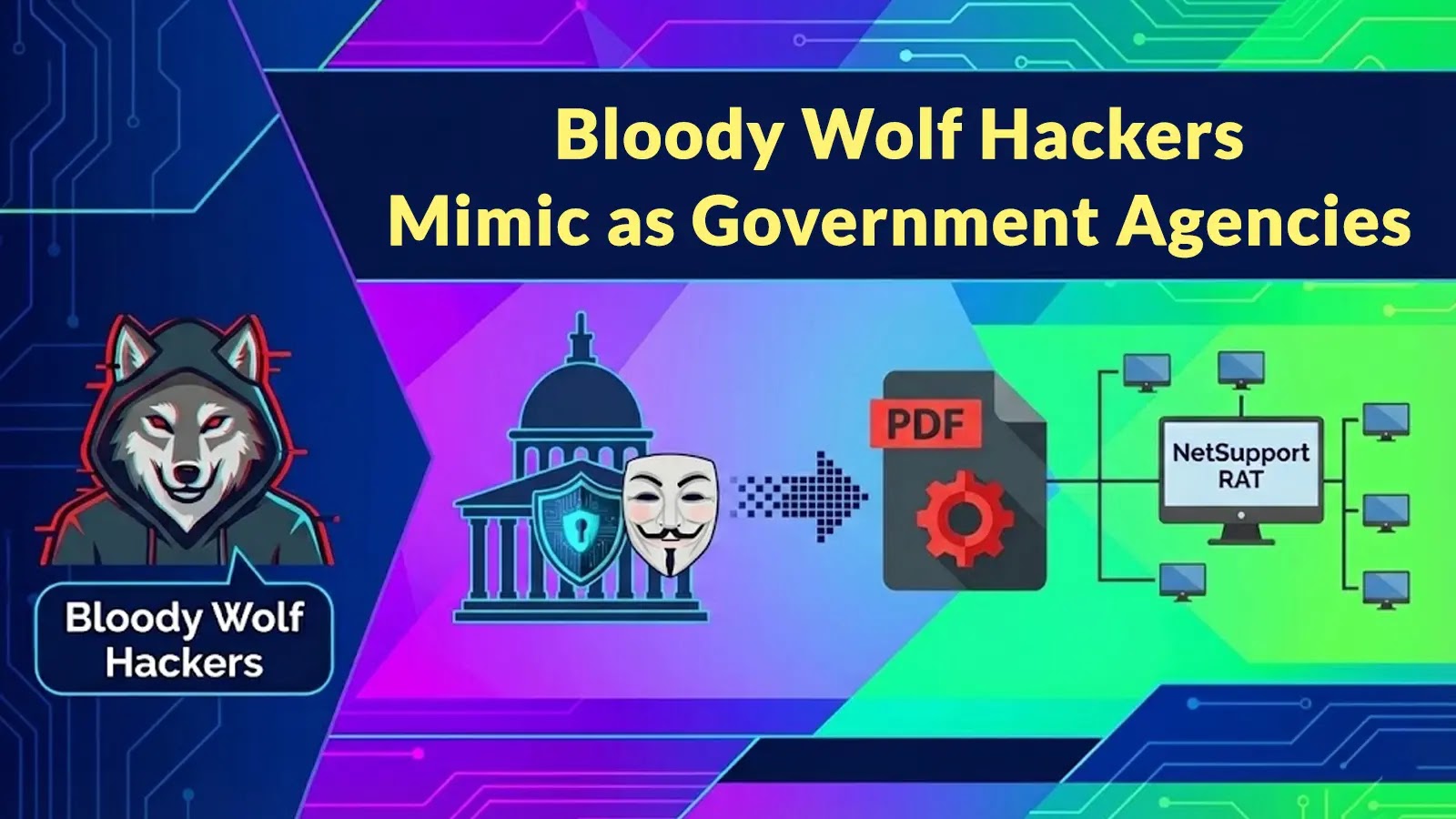
Bloody Wolf Hackers Mimic as Government Agencies to Deploy NetSupport RAT via Weaponized PDF’s
Bloody Wolf Hunts Central Asia: Unmasking Sophisticated Government Impersonation and NetSupport RAT Deployment
The digital landscape of Central Asia is under siege. A highly sophisticated Advanced Persistent Threat (APT) group, code-named Bloody Wolf, has significantly escalated its cyber espionage campaigns, specifically targeting government and private sector organizations across the region. Their latest tactics, observed since late June 2024, involve meticulously crafted spear-phishing attacks that leverage the trusted identities of state entities to deploy the potent NetSupport RAT via weaponized PDF documents. This evolving threat demands immediate attention from cybersecurity professionals and organizational leaders alike.
For organizations in Kyrgyzstan and Uzbekistan, the risk is particularly acute, as Bloody Wolf has focused its efforts predominantly on these nations. The group’s ability to convincingly impersonate government agencies, such as the Ministry of Justice, grants them a significant advantage in bypassing conventional security measures and exploiting human trust. Understanding their methods and deploying robust countermeasures is paramount to safeguarding sensitive data and critical infrastructure from this persistent and cunning adversary.
Bloody Wolf’s Modus Operandi: Spear-Phishing and Government Impersonation
Bloody Wolf’s recent operations highlight a refined approach to initial access. Their primary vector is spear-phishing, a highly targeted form of email attack designed to deceive specific individuals or organizations. What makes their current campaign particularly effective is their choice of guise: legitimate government agencies. By mimicking official communications from entities like the Ministry of Justice, they significantly increase the likelihood of recipients opening malicious attachments or clicking on dangerous links.
This tactic exploits a fundamental aspect of human behavior: trust in authoritative sources. When an email appears to originate from a government body, recipients are often less scrutinizing, making them more susceptible to social engineering. For instance, an email seemingly from the Ministry of Justice requesting action on a legal matter would likely be opened without much hesitation, paving the way for the next stage of the attack: malware delivery.
Weaponized PDFs: The Delivery Mechanism for NetSupport RAT
central to Bloody Wolf’s current strategy is the use of weaponized PDF documents. These are seemingly innocuous PDF files that contain embedded malicious code or links designed to execute malware upon opening or interaction. In this campaign, the weaponized PDFs serve as the conduit for deploying NetSupport RAT (Remote Access Trojan).
NetSupport RAT is a powerful and versatile tool favored by threat actors due to its extensive capabilities. Once installed on a victim’s system, NetSupport RAT grants the attackers comprehensive remote control, enabling them to:
- Exfiltrate sensitive data.
- Monitor user activities (keystrokes, screen captures).
- Execute arbitrary commands.
- Install additional malware.
- Gain persistence on the compromised system.
The use of PDFs as a delivery mechanism is particularly insidious because PDFs are a ubiquitous document format, often perceived as safe. Users frequently exchange PDF files for legitimate business and governmental purposes, making them an ideal cover for malicious payloads. The exact mechanism of exploitation within these PDFs could vary, potentially leveraging vulnerabilities in PDF readers or relying on social engineering to trick users into enabling macros or viewing malicious content.
Targeted Geography and Industries: Central Asian Focus
Bloody Wolf’s current campaign demonstrates a clear geographical and sectoral focus. The group has intensified its cyber espionage within Central Asia, with a predominant focus on organizations in Kyrgyzstan and Uzbekistan. This regional targeting suggests potential geopolitical motivations or a strategic interest in the data held by these specific nations.
Both government agencies and private sector entities within these countries are at risk. For government bodies, the compromise could lead to espionage, intellectual property theft, or disruption of critical services. For private sector organizations, the threat encompasses data breaches, corporate espionage, and financial fraud. The pervasive nature of NetSupport RAT ensures that once a system is compromised, the attackers have a wide range of options to achieve their ultimate objectives.
Remediation Actions: Fortifying Defenses Against Bloody Wolf
Protecting against sophisticated APT groups like Bloody Wolf requires a multi-layered and proactive cybersecurity strategy. Organizations in high-risk regions or sectors, particularly in Central Asia, must implement the following remediation actions:
- Enhanced Email Security: Deploy advanced email filtering solutions capable of detecting spear-phishing attempts, spoofed sender addresses, and malicious attachments, even those disguised as legitimate PDFs. Implement DMARC, DKIM, and SPF protocols for email authentication.
- User Awareness Training: Conduct regular and interactive training sessions for all employees on identifying phishing attempts, especially those impersonating government agencies. Emphasize caution when opening attachments from unexpected senders, even if they appear official.
- Endpoint Detection and Response (EDR)/Extended Detection and Response (XDR): Implement robust EDR or XDR solutions to monitor endpoints for suspicious activities, detect malware like NetSupport RAT, and respond to incidents in real-time.
- Patch Management: Ensure all operating systems, applications, and particularly PDF readers are consistently updated with the latest security patches to mitigate known vulnerabilities that attackers could exploit. Relevant CVEs, such as those impacting common PDF readers, should be prioritized for patching.
- Least Privilege Principle: Enforce the principle of least privilege, ensuring users and applications only have the minimum necessary access rights to perform their functions. This limits the damage an attacker can inflict if an account is compromised.
- Network Segmentation: Implement network segmentation to isolate critical systems and data, preventing lateral movement by attackers if a part of the network is breached.
- Incident Response Plan: Develop and regularly test a comprehensive incident response plan, specifically addressing how to handle RAT infections and state-sponsored espionage attempts.
- Threat Intelligence: Subscribe to and actively utilize threat intelligence feeds to stay informed about emerging threats, tactics, techniques, and procedures (TTPs) used by groups like Bloody Wolf.
Conclusion: Heightened Vigilance is Key
The Bloody Wolf APT group’s shift towards impersonating government agencies to deploy NetSupport RAT via weaponized PDFs marks a significant escalation in cyber espionage efforts targeting Central Asia. Their methodical approach and focus on high-value targets necessitate a heightened state of vigilance and robust defensive measures.
Organizations, particularly those within Kyrgyzstan and Uzbekistan, must prioritize strengthening their cybersecurity posture. This involves not only technological solutions but also a continuous investment in human awareness and effective incident response protocols. By understanding the adversary’s tactics and adopting a proactive defense strategy, the impact of sophisticated threats like Bloody Wolf can be significantly mitigated, protecting critical information and national security.




