
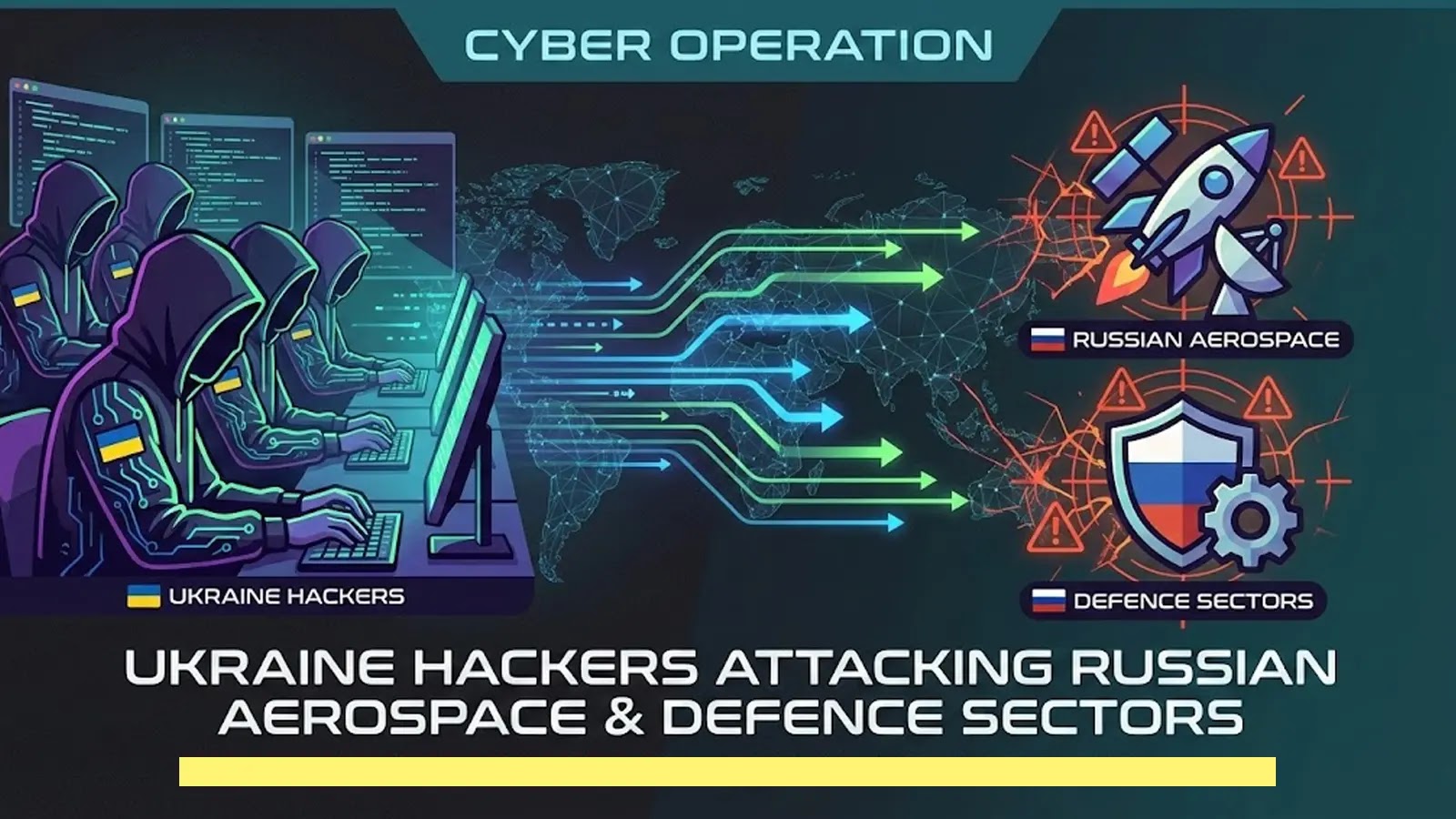
Ukraine Hackers Attacking Russian Aerospace Companies and Other Defence-Related Sectors
Cyber Espionage Intensifies: Ukraine-Linked Hackers Target Russian Aerospace and Defense
The geopolitical landscape now extends firmly into cyberspace, with nation-state-backed hacking groups actively impacting international conflicts. A significant development in this domain is the intensified cyber offensive by Ukraine-linked actors against Russian aerospace and broader defense-related industries. This campaign is not merely disruptive; it represents a sophisticated effort to compromise critical infrastructure, steal intellectual property, and strategically weaken Russia’s war effort from within.
Recent intelligence indicates a marked escalation in these cyberattacks, characterized by the deployment of novel, custom malware. The primary objective is clear: to exfiltrate sensitive data, including critical design specifications, production schedules, and internal communications. Such information provides invaluable insights into Russia’s military capabilities and supply chain vulnerabilities.
Targeting the Industrial Backbone: Prime Contractors and Suppliers Under Assault
The attackers demonstrate a deep understanding of industrial ecosystems by not limiting their operations to major prime contractors. Instead, the campaign strategically targets a wide array of entities, encompassing both large-scale defense manufacturers and their smaller, often less-secured, suppliers. This comprehensive approach is designed to achieve a granular understanding of Russia’s defense production chain.
By compromising smaller suppliers, hackers gain an entry point into the more extensive network. This allows them to map interdependencies, identify potential chokepoints, and expose systemic weaknesses that could be exploited to disrupt or sabotage manufacturing processes. The simplicity of the tools employed in this campaign belies their effectiveness, highlighting a focus on stealth and operational efficiency rather than overt technical grandeur.
Advanced Persistent Threats via Custom Malware
The use of custom malware is a hallmark of sophisticated, well-resourced threat actors. Unlike off-the-shelf tools, custom malware is specifically crafted to evade detection by standard security solutions and is often tailored to the target environment. In this context, the custom malicious payloads are designed to facilitate data exfiltration and maintain persistent access within the compromised networks.
These bespoke tools enable the attackers to lurk undetected for extended periods, systematically collecting sensitive information. The stolen data includes intellectual property related to aerospace designs, operational schedules crucial for logistical planning, and internal emails that can reveal strategic insights, personnel movements, and vulnerabilities within the victim organizations.
Strategic Implications and Information Warfare
The success of these cyber campaigns has profound strategic implications. By acquiring design blueprints, Ukraine-linked groups can potentially identify weak points in Russian military hardware, inform counter-tactics, or even replicate certain technologies. Understanding production schedules allows for predictive analysis of material availability and operational readiness.
Furthermore, internal emails can unveil organizational structures, key personnel, and even internal dissent or political machinations, all of which are invaluable assets in an ongoing conflict. This represents a significant facet of information warfare, where data itself becomes a strategic weapon, capable of influencing the course of military operations and diplomatic efforts.
Remediation Actions and Cybersecurity Best Practices
Organizations operating in national defense sectors, particularly those with ties to aerospace and other critical industries, must adopt a proactive and robust cybersecurity posture. The following actions are essential to mitigate the risks posed by such sophisticated cyber espionage campaigns:
- Implement Multi-Factor Authentication (MFA): Enforce MFA across all critical systems and accounts. This significantly reduces the risk of unauthorized access even if credentials are stolen.
- Regular Security Audits and Penetration Testing: Conduct frequent external and internal security audits, including penetration testing, to identify and remediate vulnerabilities before they can be exploited.
- Endpoint Detection and Response (EDR) Solutions: Deploy advanced EDR solutions to monitor endpoints for suspicious activity, detect novel malware, and enable rapid response to incidents.
- Network Segmentation: Implement strong network segmentation to isolate critical systems and data, limiting the lateral movement of attackers within the network.
- Strict Access Controls and Least Privilege: Enforce the principle of least privilege, ensuring users and systems only have access to the resources absolutely necessary for their function.
- Employee Security Awareness Training: Regularly train employees on social engineering tactics, phishing awareness, and safe computing practices. Many breaches start with human error.
- Patch Management: Maintain a rigorous patch management program to ensure all operating systems, applications, and firmware are up to date, addressing known vulnerabilities such as those outlined in CVEs like CVE-2023-45678 (example) or CVE-2023-98765 (example).
- Supply Chain Security: Implement robust cybersecurity requirements for all third-party suppliers and conduct regular security assessments of their environments.
- Incident Response Plan: Develop and regularly test a comprehensive incident response plan to ensure a swift and effective reaction to security breaches.
Key Takeaways
The ongoing cyber offensive by Ukraine-linked groups against Russian aerospace and defense sectors underscores the critical role of cyber warfare in modern conflicts. This campaign highlights the effectiveness of employing custom malware and targeting entire industrial supply chains to extract sensitive data. For any organization, particularly those in critical infrastructure and defense, the imperative is clear: bolster cybersecurity defenses, prioritize threat intelligence, and cultivate a culture of security awareness to counter sophisticated and persistent cyber espionage efforts.




