
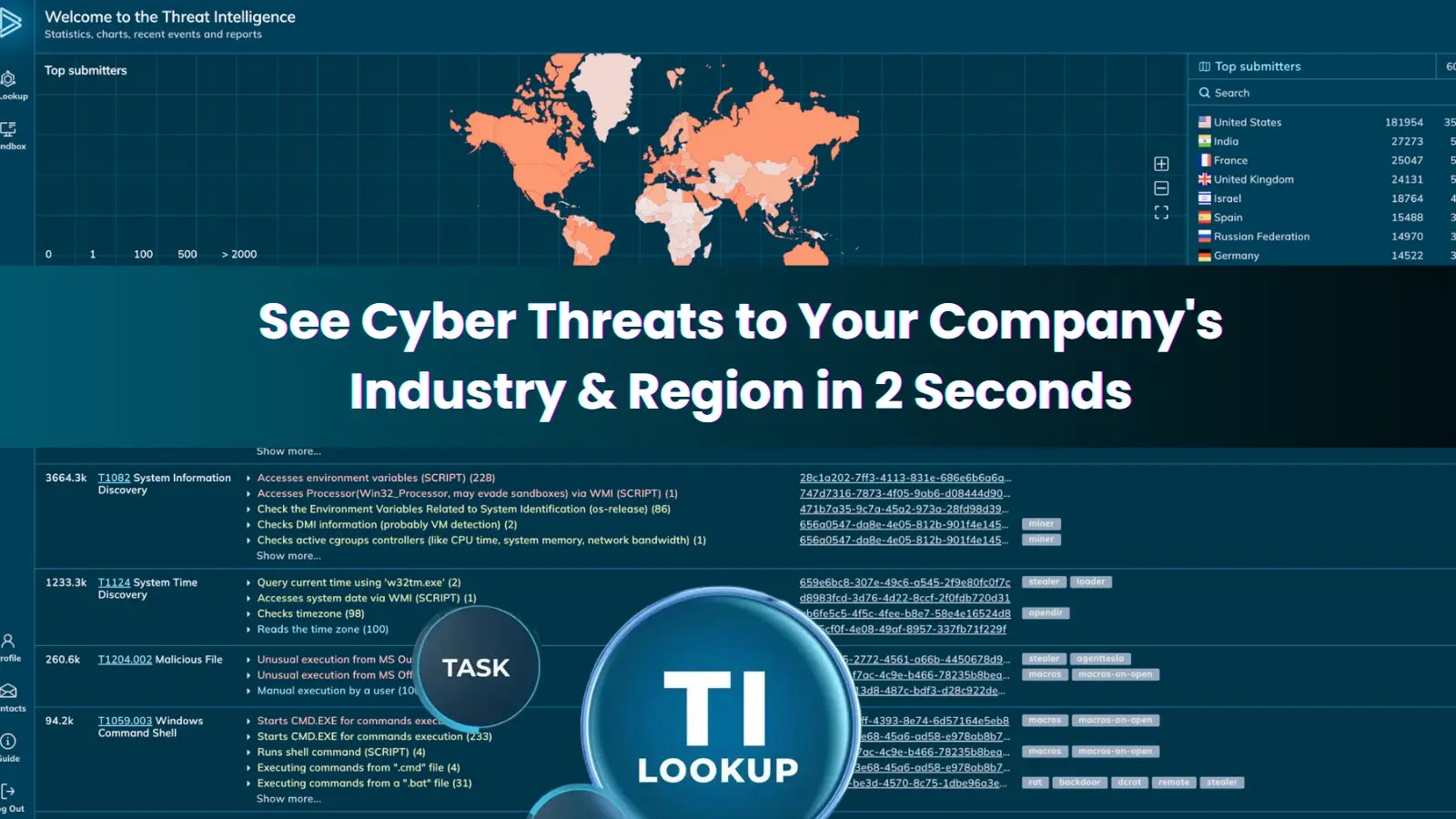
See Cyber Threats to Your Company’s Industry & Region in 2 Seconds
For organizations navigating the intricate landscape of modern cyber threats, a persistent challenge looms large: the overwhelming volume of security data. Security teams, from established enterprises to agile startups, grapple with a paradox. Threat volumes continue their relentless ascent, yet a significant portion of what inundates Security Information and Event Management (SIEM) systems and inbox alerts proves to be little more than “noise.” This noise often comprises indicators stripped of actionable meaning, alerts detached from their crucial context, and threat intelligence that treats every organization as if it faces an identical risk profile.
This article delves into how a lack of contextualized threat intelligence directly impacts Chief Information Security Officers (CISOs), Security Operations Center (SOC) leads, and Managed Security Service Provider (MSSP) leaders. We’ll explore the tangible costs associated with this deficiency and highlight the critical need for a more precise, industry and region-specific approach to cybersecurity threat assessment.
The Cost of Contextless Threat Intelligence
When security data lacks the necessary context, its value diminishes significantly. For CISOs and their teams, this translates into several measurable and detrimental outcomes:
- Wasted Resources: Analysts spend invaluable time sifting through irrelevant alerts, investigating false positives, and chasing down generic indicators. This diverts skilled personnel from high-priority tasks, stretching already thin resources.
- Delayed Response Times: The signal-to-noise ratio in traditional threat intelligence feeds can obscure genuine threats. Critical incidents might be buried under an avalanche of generic alerts, leading to delayed detection and response, escalating potential damage.
- Ineffective Risk Management: Without understanding which threats are most pertinent to their specific industry and geographical location, organizations struggle to prioritize their defensive strategies. This can result in misallocated security budgets and resources, leaving genuine vulnerabilities exposed.
- Burnout and Frustration: Constantly battling a flood of non-contextualized data leads to analyst fatigue and burnout. The lack of clear priorities and the constant need to manually sift through data contribute to a demotivated security team.
The Discrepancy: Industry and Regional Threat Profiles
The notion that all organizations face the same cyber threats is fundamentally flawed. A financial institution in New York City faces a dramatically different threat landscape than a manufacturing plant in rural Germany, or a healthcare provider in Southeast Asia. This is not merely anecdotal; threat actors frequently specialize, targeting industries rich in specific data types or vulnerable through common supply chain vectors. Geopolitical factors also influence regional threats, introducing state-sponsored attacks or localized cybercrime groups.
For example, the manufacturing sector often grapples with threats like CVE-2022-26927, a critical vulnerability impacting certain industrial control systems. Meanwhile, financial services might prioritize defending against sophisticated phishing campaigns exploiting vulnerabilities like CVE-2023-2825 in web applications. These examples underscore the necessity of granular threat intelligence.
Achieving Hyper-Contextualized Threat Insights
The solution to this paradox lies in moving beyond generic threat feeds to hyper-contextualized intelligence. This means leveraging platforms and methodologies that can swiftly filter and present threats relevant to an organization’s specific industry, operating region, and even its unique technology stack. Such capabilities enable security teams to:
- Prioritize Effectively: Focus on threats that genuinely pose a risk to their assets and operations, allowing for more strategic resource allocation and proactive defense.
- Enhance Situational Awareness: Gain a deeper understanding of the specific adversaries targeting their sector and region, including their tactics, techniques, and procedures (TTPs).
- Accelerate Incident Response: With pre-filtered and relevant alerts, incident responders can quickly identify and address actual threats, minimizing dwell time and mitigating potential impact.
- Improve Proactive Defense: Proactively implement security controls and patches against vulnerabilities known to be actively exploited in their specific threat landscape, rather than reacting to every announced vulnerability.
Remediation Actions: Implementing Context-Aware Security
To move towards a more context-aware security posture, organizations should consider the following actions:
- Adopt Contextual Threat Intelligence Platforms: Invest in solutions that integrate industry, regional, and vertical-specific threat indicators directly into your SIEM or threat intelligence platform. These platforms leverage advanced analytics to correlate generic feeds with your specific profile.
- Geographic and Industry Tagging: Ensure all critical assets, systems, and data are accurately tagged with their industry relevance and geographical location within your asset management and configuration management databases (CMDBs). This metadata is crucial for contextual filtering.
- Participate in Industry ISACs/ISAOs: Join Information Sharing and Analysis Centers (ISACs) or Information Sharing and Analysis Organizations (ISAOs) relevant to your industry. These communities facilitate the exchange of highly specific, actionable threat intelligence.
- Vulnerability Management with Context: Prioritize patching and mitigation efforts not just by CVSS score, but also by whether a vulnerability is actively exploited in your industry or region, and its potential impact on your specific business processes.
- Regular Threat Modeling: Conduct threat modeling exercises that specifically consider your industry’s common attack vectors and the regional threat landscape. This informs your security architecture and control implementation.
Embracing a contextual approach to cybersecurity is no longer an optional luxury but a strategic imperative. By understanding the specific cyber threats relevant to their industry and region, organizations can transform their security operations from reactive fire-fighting to proactive, intelligence-driven defense. This shift empowers security teams to reduce noise, optimize resource allocation, and ultimately strengthen their resilience against an ever-evolving adversary landscape.




