
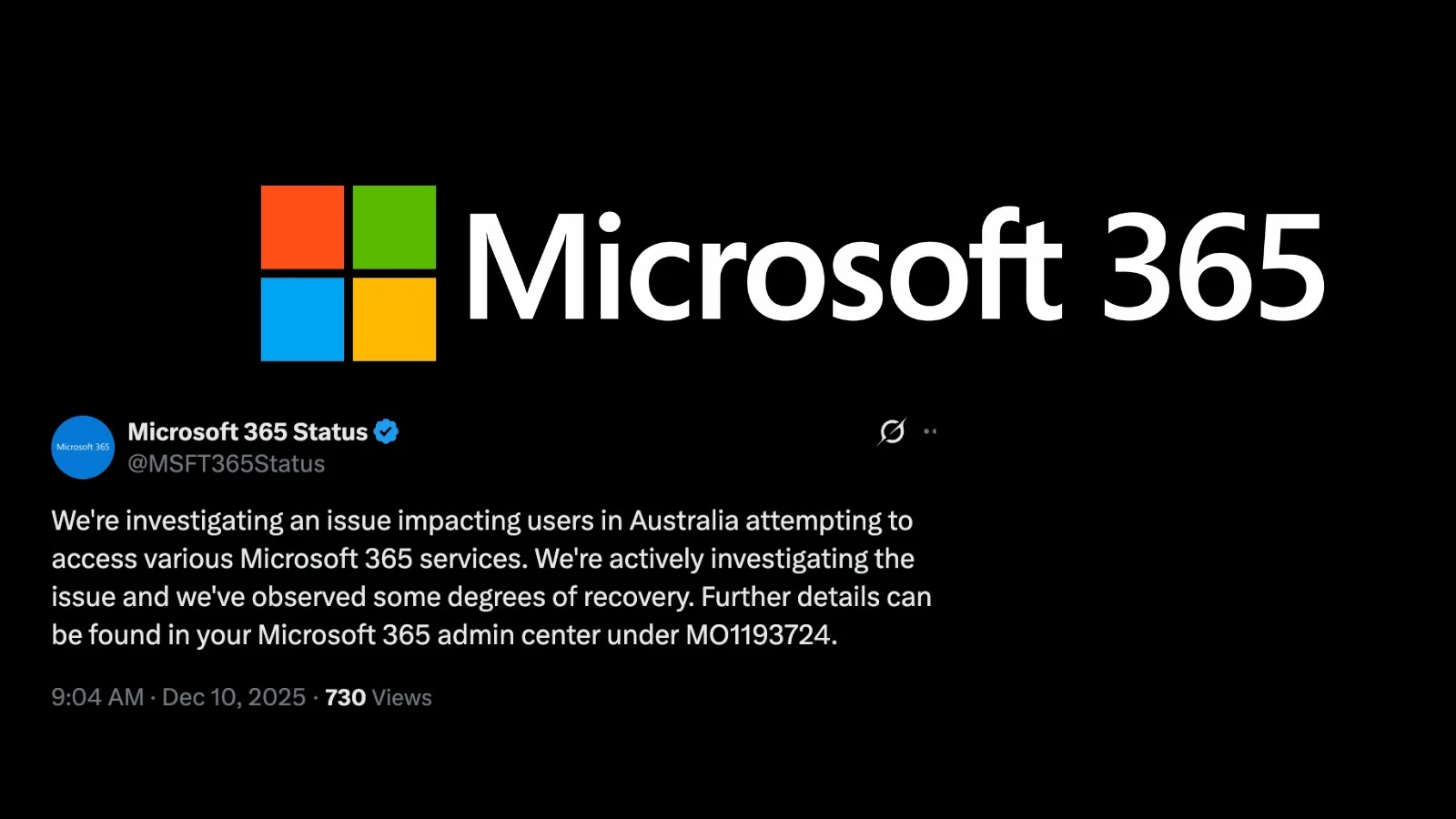
Microsoft 365 Services Disruption in Australia: Users Face Access Issues in Accessing Services
Microsoft 365 Services Hit by Widespread Disruption in Australia
The digital backbone of countless Australian businesses and individuals felt a significant jolt on the morning of December 10, 2025, as Microsoft 365 services experienced a broad-based disruption. This unexpected outage left users unable to access critical business applications, highlighting the pervasive reliance on cloud-based productivity tools. The ripple effect of such an incident extends far beyond individual inconvenience, impacting operational efficiency, communication, and overall business continuity.
Incident Overview: What Happened?
According to reports, the disruption to Microsoft 365 services began on December 10, 2025, specifically affecting users across Australia. This widespread outage prevented access to essential Microsoft 365 applications, with Microsoft Teams appearing to be particularly hard hit. While the exact cause at the time of reporting was not detailed, such incidents often stem from underlying infrastructure issues, network connectivity problems, or configuration errors within Microsoft’s vast cloud environment.
Impact on Australian Users and Businesses
The immediate impact of the Microsoft 365 disruption was substantial. For enterprise users, the inability to access tools like Teams means stalled internal communications, disrupted collaborative workflows, and potentially missed deadlines. Individuals relying on these services for daily tasks faced similar challenges, hindering productivity and access to vital information. The interconnected nature of modern business operations means an outage in one core service can cascade, affecting various other processes that depend on Microsoft 365 for authentication, data storage, or communication.
- Communication Breakdown: Microsoft Teams, a central hub for many organizations, was heavily impacted, leading to challenges in internal and external communication.
- Productivity Loss: Inability to access cloud-based documents, emails (Outlook), and other productivity applications resulted in significant downtime.
- Business Continuity Concerns: The incident underscored the critical need for robust business continuity plans that account for cloud service disruptions.
Understanding Cloud Service Reliability and Redundancy
While cloud services like Microsoft 365 offer immense benefits in terms of scalability, accessibility, and cost-efficiency, incidents like this serve as a stark reminder of the importance of understanding the underlying architectures. Major cloud providers invest heavily in redundancy and fault tolerance across their data centers. However, complex systems can still experience localized or regional issues due to factors such as:
- Network Infrastructure Failures: Problems with routing, DNS, or backbone networks can disrupt connectivity to cloud services.
- Software Bugs or Configuration Errors: A faulty update or misconfiguration within a core service can propagate quickly across an environment.
- Hardware Malfunctions: Although rare due to extensive redundancy, hardware failures in critical components can trigger service interruptions.
Proactive Measures for Businesses and IT Professionals
While organizations cannot directly control the operational status of a major cloud provider like Microsoft, they can implement strategies to mitigate the impact of such outages and ensure resilience. These proactive measures are crucial for IT professionals and business leaders:
- Diversify Communication Channels: Maintain alternative, independent communication methods (e.g., secondary chat platforms, traditional phone lines) for critical incidents.
- Offline Access and Data Backup: Configure Microsoft 365 applications for offline access where possible. Regularly back up critical data to independent storage solutions.
- Incident Response Planning: Develop and regularly test an incident response plan specifically for cloud service disruptions. This should include clear communication protocols for employees and stakeholders.
- Stay Informed: Monitor Microsoft’s official service health dashboards and status pages for real-time updates during an outage.
- Review Service Level Agreements (SLAs): Understand the terms of your Microsoft 365 SLA, including any compensation or credits for prolonged downtime.
Conclusion: Lessons in Cloud Resilience
The Microsoft 365 service disruption in Australia on December 10, 2025, served as a tangible reminder of the critical reliance modern enterprises place on cloud infrastructure. While such incidents are often swiftly addressed by major providers, their occurrence unequivocally stresses the importance of proactive preparedness. Businesses must not only embrace the agility of cloud computing but also engineer parallel strategies for resilience, ensuring that critical operations can sustain continuity even when core external services face unforeseen challenges.




