
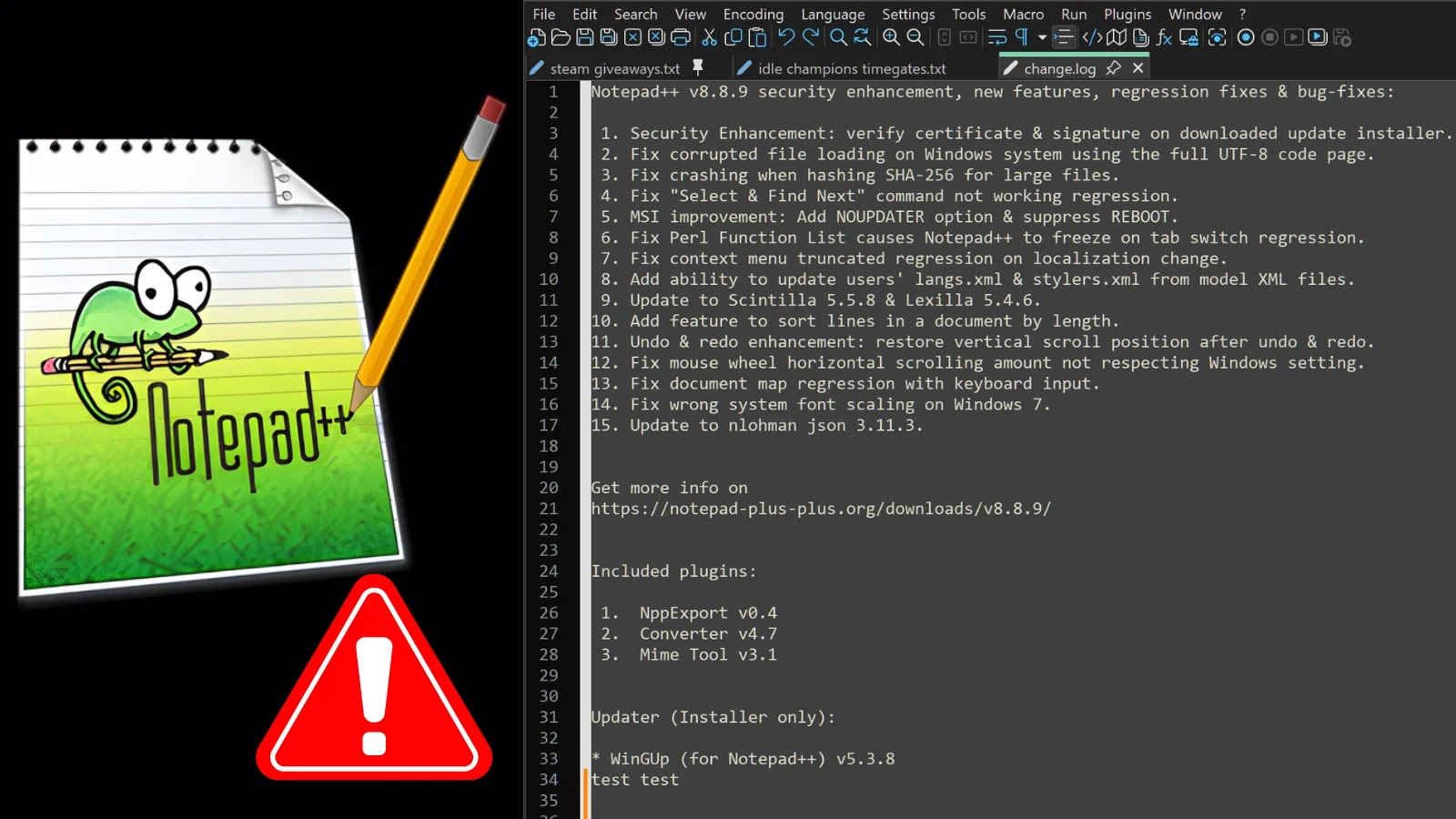
Notepad++ Vulnerability Let Attackers Hijack Network Traffic to Install Malware via Updates
A critical vulnerability within the update mechanism of Notepad++, the widely-used text editor, could have allowed attackers to compromise user systems. Security researchers have uncovered a weakness enabling threat actors to intercept network traffic and deliver malicious executables disguised as legitimate software updates. This incident underscores the persistent challenge of securing update processes even in trusted applications.
The Notepad++ Update Vulnerability Explained
Recent observations by cybersecurity researchers brought to light suspicious network activity originating from WinGUp, Notepad++’s integrated update client. This anomaly suggested a potential flaw in how Notepad++ validated and downloaded updates.
The core issue resided in how WinGUp handled update requests and responses. An attacker positioned to intercept network traffic between a user’s machine and Notepad++’s update servers could perform a Man-in-the-Middle (MitM) attack. By doing so, they could inject their own malicious executable, and without proper validation, WinGUp would proceed to download and potentially execute this malicious file, believing it to be a genuine update from Notepad++.
Such a vulnerability, especially in a widely adopted application like Notepad++, presents a significant attack vector. Successful exploitation could lead to:
- Installation of ransomware or other forms of malware.
- Establishment of persistent backdoor access to the compromised system.
- Data exfiltration and espionage.
- Further network penetration within an organization.
While a specific CVE for this particular vulnerability has not been widely published at the time of this writing, similar update mechanism vulnerabilities often fall under categories related to insecure update protocols or insufficient integrity checks. Users should remain vigilant for official CVE reports as they emerge.
Impact of Compromised Software Updates
The exploitation of software update mechanisms is a high-impact attack vector due to the inherent trust users place in such processes. When an attacker can masquerade as a legitimate software vendor, the chances of a user unknowingly installing malware increase dramatically. This type of supply chain attack can disseminate malicious code to a vast user base with minimal initial effort from the attacker.
For organizations, a compromised Notepad++ instance could be a gateway for lateral movement within their network, enabling attackers to gain access to sensitive data or critical systems. The widespread use of Notepad++ across developer and IT professional communities makes this particular vulnerability especially concerning, as these users often have elevated privileges on their machines.
Remediation Actions
Addressing this type of vulnerability requires immediate action and ongoing vigilance. For Notepad++ users and IT administrators managing installations, the following steps are crucial:
- Update Notepad++ Immediately: Ensure all instances of Notepad++ are updated to the latest secure version. The developers have addressed the flaw, and updating is the most critical first step.
- Verify Update Sources: Always download software and updates from official, reputable sources (e.g., the Notepad++ official website) or trusted package managers. Avoid third-party download sites.
- Implement Network Security Controls: Organizations should employ network traffic inspection (e.g., Intrusion Detection/Prevention Systems – IDS/IPS) to detect and block suspicious network activity, including potential MitM attempts against update channels.
- Use Endpoint Detection and Response (EDR): EDR solutions can help identify and neutralize malicious executables that might bypass traditional antivirus, especially those delivered via seemingly legitimate update processes.
- Educate Users: Train users to be wary of unexpected update prompts or sudden changes in application behavior. Prioritize secure software development practices for internal applications, including robust update validation.
Tools for Detection and Mitigation
Effective defense against such threats involves a combination of proactive security measures and reactive detection capabilities. The following tools can aid in identifying and mitigating risks associated with insecure update mechanisms:
| Tool Name | Purpose | Link |
|---|---|---|
| Wireshark | Network protocol analyzer to inspect and detect suspicious network traffic, including potential MitM activity. | https://www.wireshark.org/ |
| Snort / Suricata | Intrusion Detection/Prevention Systems (IDS/IPS) for real-time traffic analysis and blocking known attack patterns. | https://www.snort.org/ / https://suricata.io/ |
| Cisco Umbrella / Cloudflare Gateway | DNS-layer security to block access to known malicious domains and enhance web traffic security. | https://umbrella.cisco.com/ / https://www.cloudflare.com/products/gateway/ |
| Any modern EDR Solution (e.g., CrowdStrike, SentinelOne) | Endpoint Detection and Response platforms to monitor endpoint activity, detect malicious executions, and respond to threats. | (Provider Dependent) |
Key Takeaways for Software Security
The Notepad++ vulnerability serves as a stark reminder that even widely trusted applications can harbor critical security flaws, particularly within their update mechanisms. Developers must prioritize secure coding practices, including robust authentication and integrity checks for all update channels. For users and organizations, maintaining up-to-date software, employing comprehensive network and endpoint security measures, and fostering a culture of cybersecurity awareness are non-negotiable foundations for defense against evolving threats.
Always ensure your software is sourced from official channels and that cryptographic signatures are verified where possible. Vigilance in monitoring network traffic and endpoint behavior is paramount to detecting and responding to sophisticated attacks that exploit software supply chains.




