
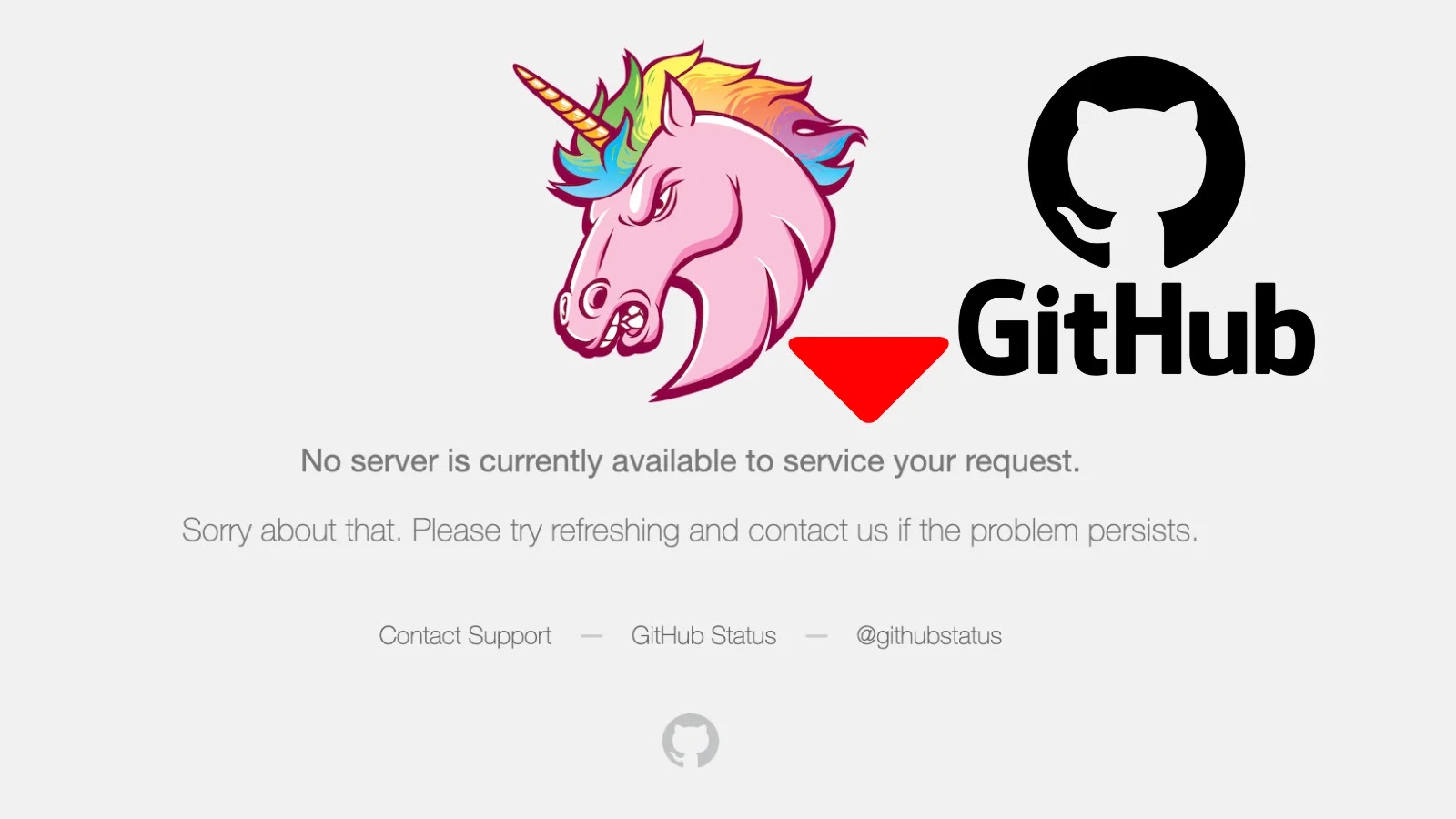
GitHub Down: Developers Frustrated by ‘No Server Available’ Message
GitHub Experiences Widespread Outage: Developers Face ‘No Server Available’ Error
The heartbeat of the developer world, GitHub, has been intermittently disrupted, leaving countless engineers staring at a frustrating “No server is currently available to service your request” message. This widespread outage, first prominently reported on December 11, 2025, has sparked significant frustration and workflow interruptions, particularly impacting developers in regions like India during peak working hours.
For many, the familiar GitHub unicorn mascot, usually a symbol of innovation and collaboration, has become an unwelcome herald of operational paralysis. This incident underscores the profound reliance of the global tech community on critical infrastructure services and the cascading effects when they falter.
Dissecting the ‘No Server Available’ Message
The specific error message – “No server is currently available to service your request” – strongly suggests an issue with GitHub’s backend infrastructure. This isn’t a client-side problem or a simple DNS misconfiguration; it points to a deeper systemic issue within their server farms or load balancing mechanisms. Possible causes could include:
- Server Overload: An unexpected surge in traffic or a misconfiguration in scaling could overwhelm existing server capacity.
- Load Balancer Failure: If the systems responsible for distributing requests across multiple servers fail, users might be routed to unavailable nodes or encounter no response at all.
- Database Connectivity Issues: Core database systems might be experiencing problems, preventing servers from retrieving necessary data to fulfill requests.
- Network Infrastructure Problems: Underlying network issues within GitHub’s data centers could restrict communication between different service components.
- Deployment Rollback Issues: A recent code deployment or infrastructure change could have introduced unforeseen instabilities.
Based on user reports and screenshots shared across various platforms since early December 11, the incident appears to be affecting a broad user base, indicating a significant, rather than localized, problem.
Geographic Impact and Developer Frustration
While the outage’s full global reach is still being assessed, reports confirm a substantial impact in regions like India. This geographic specificity during peak hours highlights how such disruptions can disproportionately affect global development cycles. When a platform as central as GitHub is inaccessible, developers lose their ability to:
- Push and pull code changes.
- Collaborate on projects in real-time.
- Access repositories, documentation, and issues.
- Run automated CI/CD pipelines.
- Deploy applications.
The cumulative effect is a direct hit to productivity, often leading to missed deadlines and a ripple effect across interconnected teams and projects.
The Broader Implications of Cloud Service Dependence
This GitHub outage serves as a stark reminder of the inherent risks associated with centralizing critical operations on third-party cloud services. While these platforms offer unparalleled scalability and convenience, their downtime can bring vast segments of the internet to a standstill. Organizations relying heavily on GitHub for their software development lifecycle must consider:
- Redundancy Strategies: Implementing local backups of critical repositories or exploring distributed version control systems where possible.
- Communication Protocols: Having clear internal and external communication plans for when essential services are down.
- Contingency Planning: Developing alternative workflows or emergency procedures for development, testing, and deployment when primary tools are unavailable.
- Hybrid Approaches: Balancing cloud-hosted services with on-premises solutions for highly sensitive or critical components.
While this particular incident does not appear to be a security vulnerability (e.g., CVE-2025-XXXXX), it underscores the importance of operational resilience in the face of any disruption, whether technical failure or malicious attack.
Staying Informed and Moving Forward
As a leading platform for open-source and proprietary software development, GitHub typically maintains robust uptime and quickly addresses such issues. Developers and organizations are advised to monitor GitHub’s official status page for real-time updates and resolutions.
This incident, though disruptive, offers a valuable lesson in the necessity of operational resilience and diversified tooling within the modern software development ecosystem. The frustration is palpable, but it also prompts a re-evaluation of dependencies and disaster recovery strategies.




