
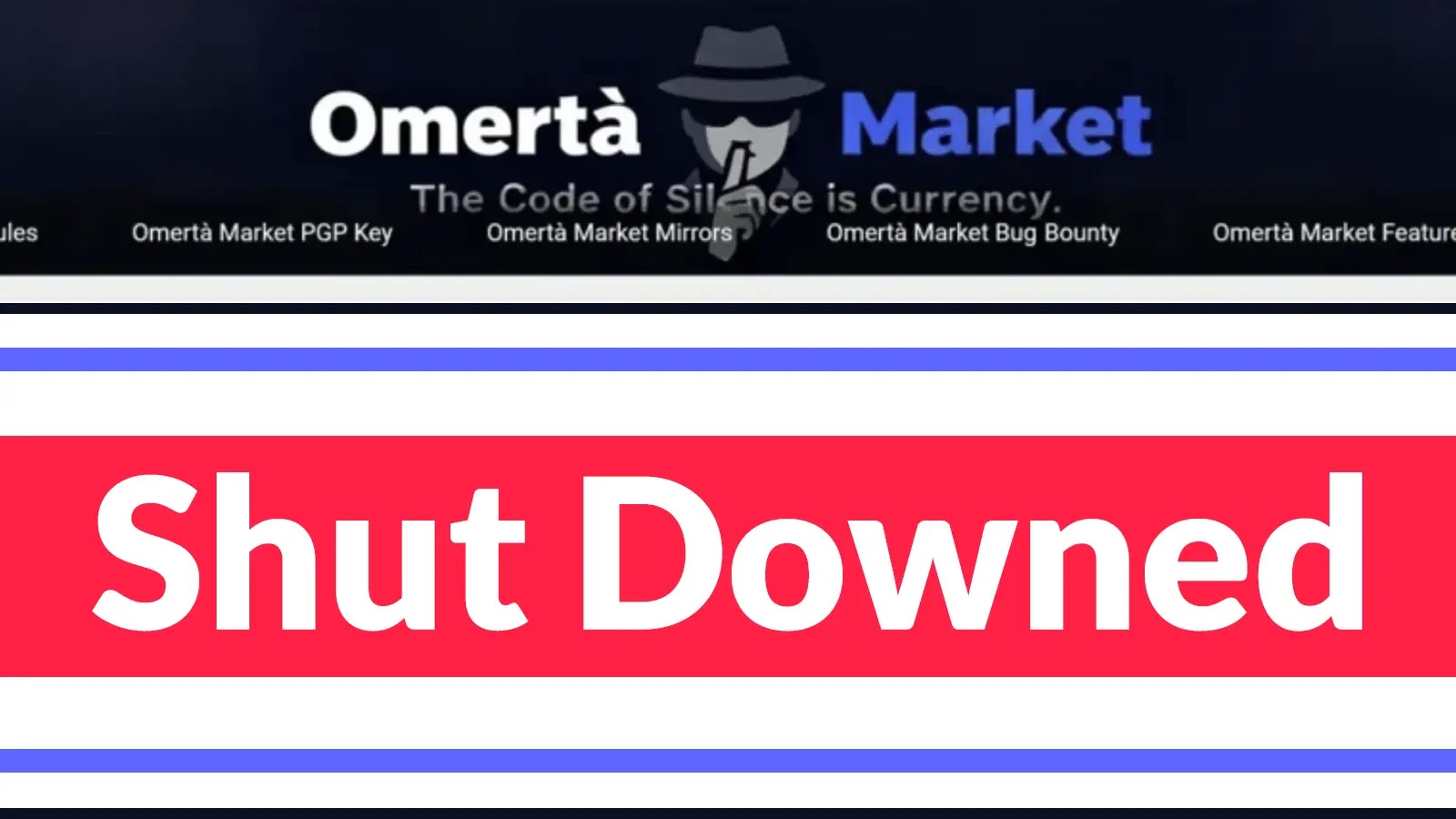
Dark Web Omertà Market Shut Downed Following the Leak of Real Server IPs
The Omertà Market’s Demise: A Case Study in Dark Web Insecurity
The dark web, a shadowy realm often romanticized for its anonymity, frequently sees platforms emerge and vanish with alarming speed. These digital bazaars, built on the promise of untraceable transactions, are in a perpetual state of flux. On November 21, 2025, a new contender, Omertà Market, entered this volatile arena. It positioned itself as a bastion of stability and security, with administrators championing a philosophy of “security over flash” and claiming years of silent development. Yet, as recent events demonstrate, even the most ambitious claims of invulnerability can unravel quickly in the face of critical vulnerabilities.
The Rise and Fall of Omertà Market
Omertà Market sought to differentiate itself by emphasizing robust security measures. Its creators suggested a meticulous, multi-year development process aimed at building a resilient platform. However, this carefully constructed façade crumbled following an unprecedented security breach. The core issue? A catastrophic leak of its real server Internet Protocol (IP) addresses.
The Critical Disclosure: Why Real IP Addresses Matter
For any dark web operation, the real IP address of its hosting servers is paramount to its physical location. Dark web markets rely heavily on anonymity networks like Tor to obscure their infrastructure from law enforcement and rival actors. The disclosure of a real server IP address bypasses these protective layers, effectively unmasking the physical location of the server. This is analogous to a bank vault’s blueprints being publicly distributed; it compromises the foundational security of the entire operation. This specific type of information leak can often be attributed to misconfigurations in network settings, exposed development environments, or even flaws in the underlying operating system or web server software, though the specific CVE for Omertà’s collapse is not publicly detailed.
Immediate Aftermath and Market Shutdown
The leak of Omertà Market’s real server IPs sent shockwaves through the dark web community. Such a compromise leaves the market’s administrators and potentially its users vulnerable to identification and legal repercussions. Faced with an undeniable and existential threat to its anonymity, Omertà Market had no choice but to shut down operations. This swift closure underscores the critical importance of operational security (OpSec) for any dark web entity. The incident serves as a stark reminder that even platforms promising superior security are susceptible to fundamental flaws.
Implications for Dark Web Operations and Users
The shutdown of Omertà Market reinforces several key lessons:
- The Fragility of Anonymity: Despite advanced technologies aimed at obfuscation, the underlying infrastructure of dark web services remains vulnerable. A single misstep can compromise an entire operation.
- Constant Threat Landscape: Dark web markets operate under continuous surveillance from law enforcement agencies worldwide. Any vulnerability is quickly exploited.
- User Risk: Users of such markets, both buyers and sellers, often face significant risks if the platform’s security is compromised. Transaction histories, personal messages (if unencrypted), and even cryptocurrency movements can be linked back to individuals.
Remediation Actions and Best Practices for Secure Hosting (General Context)
While discussing the failures of a dark web market, it’s crucial to extrapolate general lessons for legitimate organizations striving for robust cybersecurity. The principles of securing infrastructure remain universally applicable.
- Strict Network Segmentation: Isolate critical services and databases from public-facing infrastructure. Implement robust firewalls and access control lists (ACLs).
- Thorough IP Address Management: Ensure that all external-facing IP addresses are intentionally published and correctly configured. Regularly audit network configurations to prevent accidental exposure of internal or development IPs.
- Regular Security Audits and Penetration Testing: Proactively identify vulnerabilities before malicious actors do. Focus on areas related to network configuration, web server hardening, and application security.
- Use of Content Delivery Networks (CDNs) and Reverse Proxies: Properly configured CDNs and reverse proxies can help mask the origin server’s IP address, adding an additional layer of protection.
- Operating System and Software Hardening: Follow best practices for securing web servers (e.g., Apache, Nginx) and operating systems (e.g., Linux distributions). This includes removing unnecessary services, applying security patches promptly, and implementing least privilege principles.
- Secure Development Lifecycle (SDL): Integrate security considerations throughout the entire software development process, from design to deployment.
Conclusion
The demise of Omertà Market, following the leak of its real server IP addresses, encapsulates the inherent risks and ephemeral nature of dark web operations. It serves as a stark reminder that even with grand promises of “security over flash,” fundamental infrastructure vulnerabilities can lead to rapid and irreversible collapse. For legitimate organizations, this incident underscores the paramount importance of meticulous operational security, diligent network configuration, and continuous vulnerability management to protect critical assets and maintain trust.




