
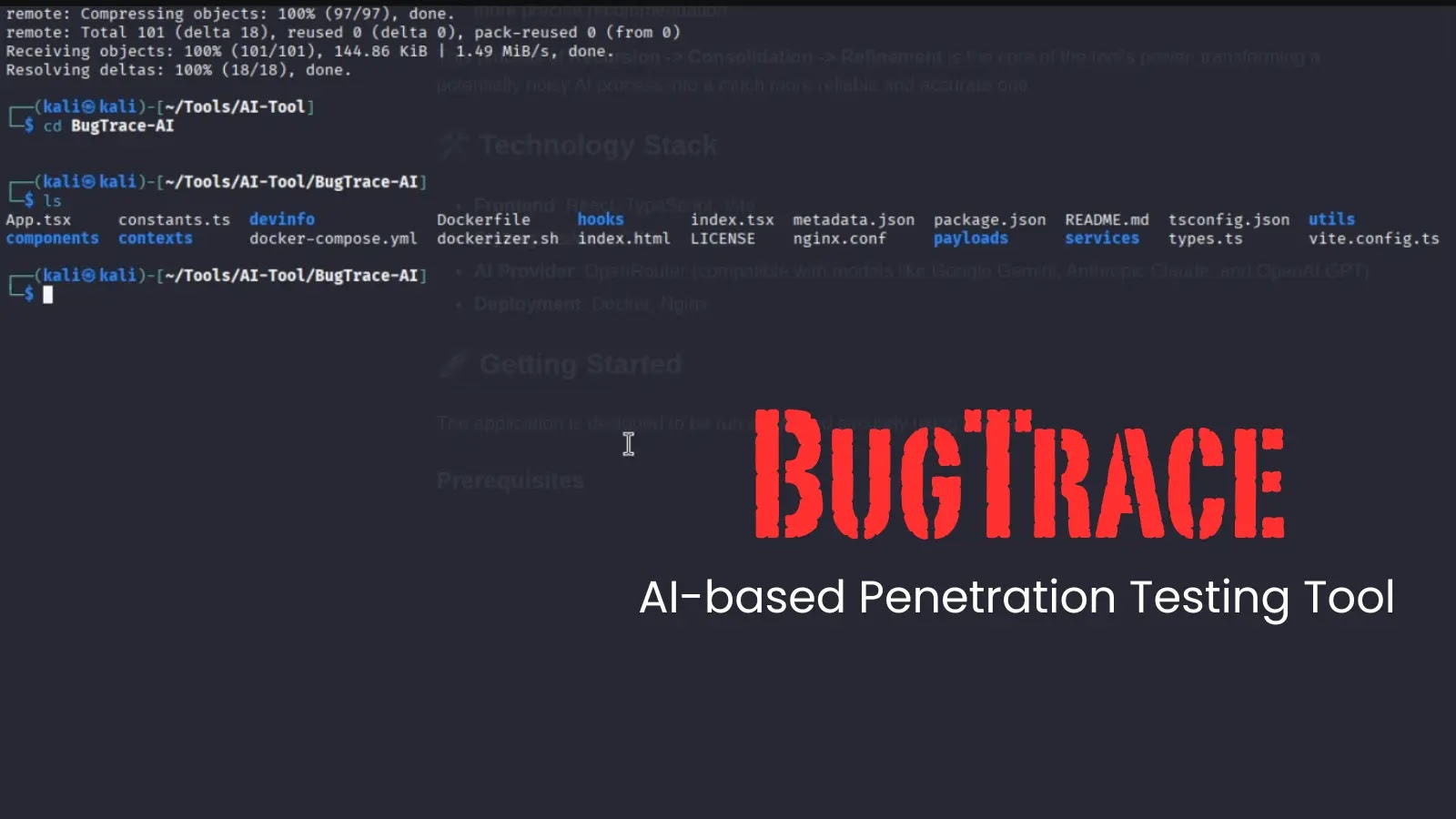
BugTrace – AI-based Penetration Testing Tool to Detect Potential Vulnerabilities
The relentless pace of digital transformation demands equally sophisticated security measures. As web applications grow in complexity, so too do the attack surfaces they present. Traditional penetration testing, while vital, can be time-consuming and resource-intensive, often struggling to keep pace with rapid development cycles. This is where artificial intelligence steps in, promising to augment and accelerate our defensive capabilities.
Enter BugTrace-AI, an innovative open-source suite designed to revolutionize vulnerability detection. This platform leverages generative AI to provide a comprehensive, intelligent approach to web security analysis, moving beyond conventional methods to uncover hidden weaknesses more efficiently.
What is BugTrace-AI?
BugTrace-AI is a cutting-edge, open-source penetration testing tool that integrates advanced AI capabilities with established security testing methodologies. Developed as a one-stop solution for web security analysis, it aims to empower ethical hackers, security analysts, and developers with smarter, non-invasive methods for identifying potential vulnerabilities. Its sleek, React-based interface ensures ease of use while delivering powerful results.
Key Features and AI-Driven Capabilities
BugTrace-AI distinguishes itself through its blend of traditional and AI-powered techniques:
- Static Application Security Testing (SAST): Analyzes source code to identify potential vulnerabilities without executing the application. This is crucial for catching flaws early in the development lifecycle.
- Dynamic Application Security Testing (DAST): Tests the running application to identify vulnerabilities that manifest during execution. This provides real-world insights into an application’s security posture.
- AI-Driven Reconnaissance: Beyond standard information gathering, BugTrace-AI uses AI to intelligently map out an application’s architecture, pinpointing critical endpoints and potential areas of interest for attackers.
- AI-Powered Payload Crafting: Generative AI assists in creating highly effective and context-aware payloads for various attack vectors, including SQL injection, cross-site scripting (XSS), and more. This significantly enhances the tool’s ability to discover subtle vulnerabilities. For instance, an AI-crafted payload might exploit a specific logical flaw that a generic payload would miss, potentially revealing a CVE-2022-22965 (Spring4Shell) type of vulnerability if the application stack is susceptible.
- Comprehensive Vulnerability Identification: The combination of SAST, DAST, and AI-driven techniques allows BugTrace-AI to detect a wide array of vulnerabilities, ranging from common web application flaws to more complex, logic-based weaknesses.
Why AI in Penetration Testing?
The integration of AI in penetration testing addresses several critical challenges:
- Scalability: Manual penetration testing is time-consuming. AI can automate repetitive tasks, allowing security professionals to focus on complex, high-impact issues.
- Efficiency: AI algorithms can process vast amounts of data and identify patterns that might be overlooked by human eyes, leading to faster and more accurate vulnerability detection.
- Adaptability: Generative AI can adapt to new attack vectors and application architectures, making the testing process more resilient against evolving threats.
- Reduced False Positives/Negatives: Intelligent analysis can help refine vulnerability reports, reducing the number of false positives (incorrectly identified vulnerabilities) and false negatives (missed vulnerabilities).
Target Audience and Accessibility
BugTrace-AI is designed for a broad spectrum of cybersecurity professionals:
- Ethical Hackers: Provides advanced tools for proactive security assessment.
- Developers: Helps developers integrate security early in the software development lifecycle (SDLC) by providing actionable insights.
- Security Analysts: Equips analysts with a powerful tool for in-depth web application security audits.
As an open-source project, BugTrace-AI is freely available on GitHub, fostering community collaboration and continuous improvement.
Remediation Actions
While BugTrace-AI excels at identifying vulnerabilities, effective remediation is paramount. Organizations and developers should implement a robust security posture based on the findings:
- Prioritize Findings: Address critical and high-severity vulnerabilities first. Use industry standards like CVSS (Common Vulnerability Scoring System) to rate urgency.
- Patch and Update: Regularly apply security patches and updates to all software components, libraries, and frameworks. This directly mitigates known vulnerabilities, such as a potential CVE-2023-49070 in Apache ActiveMQ.
- Input Validation and Sanitization: Implement stringent input validation on all user-supplied data to prevent injection attacks (SQLi, XSS), a common cause for reported vulnerabilities like CVE-2022-23945 (WordPress).
- Secure Coding Practices: Train developers on secure coding principles and integrate security checkpoints into the development workflow. Leverage frameworks and libraries that inherently promote secure coding.
- Least Privilege Principle: Ensure that applications and users operate with the minimum necessary permissions to perform their functions.
- Regular Security Audits: Complement AI-driven tools with periodic manual penetration testing and security audits to ensure comprehensive coverage.
- Web Application Firewall (WAF): Deploy a WAF to provide an additional layer of protection, especially against common web attack vectors.
- Incident Response Plan: Develop and regularly test an incident response plan to act swiftly and effectively if a breach occurs.
Conclusion
BugTrace-AI represents a significant step forward in the realm of web application security. By combining the power of generative AI with established SAST and DAST methodologies, it offers a sophisticated, efficient, and accessible tool for detecting vulnerabilities. For those committed to strengthening their digital defenses, exploring BugTrace-AI through its open-source GitHub repository is a highly recommended endeavor. The future of penetration testing is intelligent, and tools like BugTrace-AI are leading the charge.




