
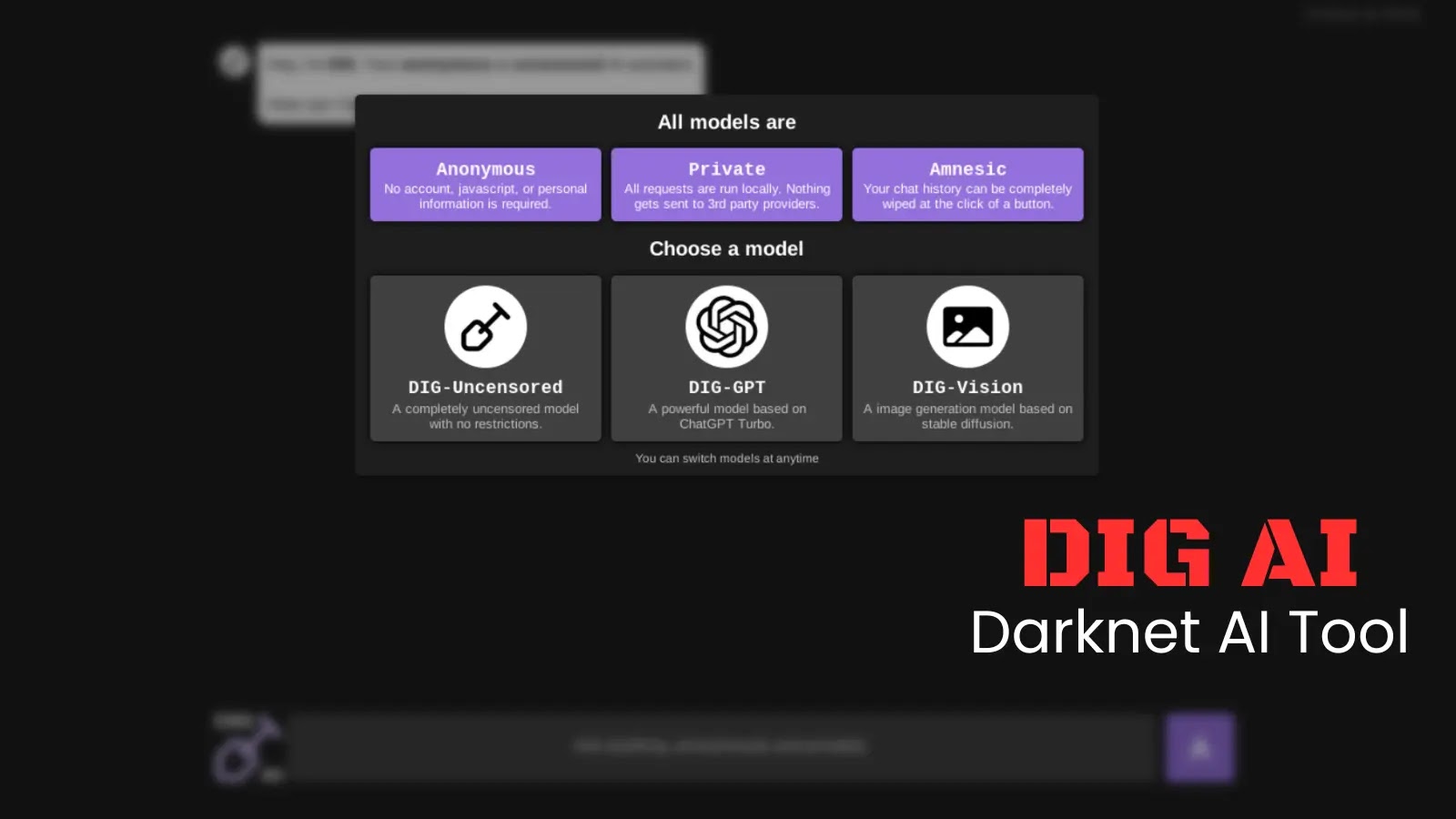
DIG AI – Darknet AI Tool Enabling Threat Actors to Launch Sophisticated Attacks
The Rise of DIG AI: Darknet’s New Frontier for Automated Attacks
The cybersecurity landscape has always been a battleground of innovation, but a new, unsettling player has emerged from the shadows: DIG AI. Identified by researchers at Resecurity, this uncensored artificial intelligence tool operates within the darknet, empowering threat actors with unprecedented capabilities. DIG AI represents a significant leap in the realm of “Shadow AI,” enabling the automation of sophisticated cyberattacks, the generation of illicit content, and the circumvention of ethical guardrails built into traditional AI models. This development signals a critical shift, demanding immediate attention from security professionals globally.
What is DIG AI? Unpacking the Darknet’s AI Weapon
DIG AI is not just another AI model; it’s a dedicated platform hosted on the darknet designed explicitly to sidestep the ethical safeguards and content filtering typically found in mainstream AI solutions. First detected in September [Source: Cybersecurity News], its rapid proliferation highlights a growing trend where malicious actors leverage advanced technologies to refine their attack methodologies. Unlike publicly available AI tools that strive for responsible use, DIG AI provides an unconstrained environment for malevolent purposes.
Empowering Threat Actors: The Capabilities of DIG AI
- Automated Cyberattacks: DIG AI can be trained to craft highly convincing phishing emails, generate sophisticated malware variants, and even identify vulnerabilities in target systems much faster than human actors. This automation drastically reduces the time and skill required to launch effective attacks.
- Illicit Content Generation: Beyond offensive operations, DIG AI can produce a wide range of illicit content, including deepfakes, propaganda, and harmful narratives. This capability poses significant risks for disinformation campaigns and reputational damage.
- Bypassing Safety Guardrails: The core danger of DIG AI lies in its uncensored nature. Traditional AI models are designed with ethical limitations to prevent misuse. DIG AI, however, is built to ignore these constraints, offering a free rein for malicious intent.
- Enhanced Social Engineering: With access to vast amounts of data and the ability to generate hyper-realistic text and media, DIG AI can significantly enhance social engineering tactics, making it harder for individuals and organizations to detect fraudulent communications.
The Broader Impact: Shadow AI and the Future of Cyber Warfare
The emergence of DIG AI underscores the growing threat of “Shadow AI” – AI tools developed and utilized for nefarious purposes outside of regulated and ethical frameworks. This trend has profound implications for cybersecurity, escalating the sophistication and frequency of attacks:
- Reduced Barrier to Entry: Less technically skilled individuals can now launch complex attacks, democratizing cybercrime.
- Increased Attack Scale and Speed: Automated tools enable threat actors to target a larger number of victims and execute attacks with unprecedented speed.
- Difficulty in Detection: AI-generated content and attack vectors can be highly evasive, making traditional security measures less effective.
Remediation Actions: Defending Against AI-Powered Threats
Addressing the threat posed by tools like DIG AI requires a multi-faceted approach, combining advanced technological defenses with robust human training and policy implementation.
- Advanced Threat Detection: Implement and continuously update Intrusion Detection Systems (IDS), Intrusion Prevention Systems (IPS), and Security Information and Event Management (SIEM) solutions that leverage AI and machine learning to detect anomalous activities and AI-generated threats.
- Enhanced Email Security: Deploy sophisticated email gateway protection that includes advanced threat intelligence, sandboxing, and AI-powered phishing detection to identify and block AI-crafted phishing attempts.
- Employee Training and Awareness: Conduct regular and comprehensive training for all employees on recognizing social engineering tactics, deepfakes, and other AI-generated threats. Emphasize verification processes for unusual requests or suspicious content.
- Multi-Factor Authentication (MFA): Enforce strong MFA across all systems and services to add an extra layer of security, even if credentials are compromised through AI-driven attacks.
- Zero Trust Architecture: Adopt a Zero Trust security model, where every access request is rigorously verified regardless of its origin, limiting the impact of compromised accounts or systems.
- Regular Penetration Testing and Vulnerability Assessments: Proactively identify and patch vulnerabilities before threat actors can exploit them. Consider AI-driven vulnerability scanners for comprehensive coverage. For example, staying updated on known vulnerabilities like CVE-2023-38831 when assessing systems is crucial.
- Data Governance and Protection: Implement strong data encryption, access controls, and data loss prevention (DLP) solutions to protect sensitive information from AI-powered exfiltration attempts.
- Intelligence Sharing and Collaboration: Participate in threat intelligence sharing platforms and collaborate with industry peers and government agencies to stay informed about emerging AI-powered threats and defense strategies.
Conclusion: Adapting to the AI-Driven Threat Landscape
The emergence of DIG AI on the darknet is a stark reminder that the adversaries in cybersecurity are constantly evolving their tactics. This new class of uncensored AI tools represents a significant escalation, providing threat actors with powerful capabilities to automate attacks, generate illicit content, and bypass traditional defenses. For organizations, adapting to this AI-driven threat landscape is paramount. By investing in advanced security technologies, fostering a culture of security awareness, and embracing proactive defense strategies, we can collectively strengthen our resilience against the sophisticated challenges posed by Shadow AI.




