
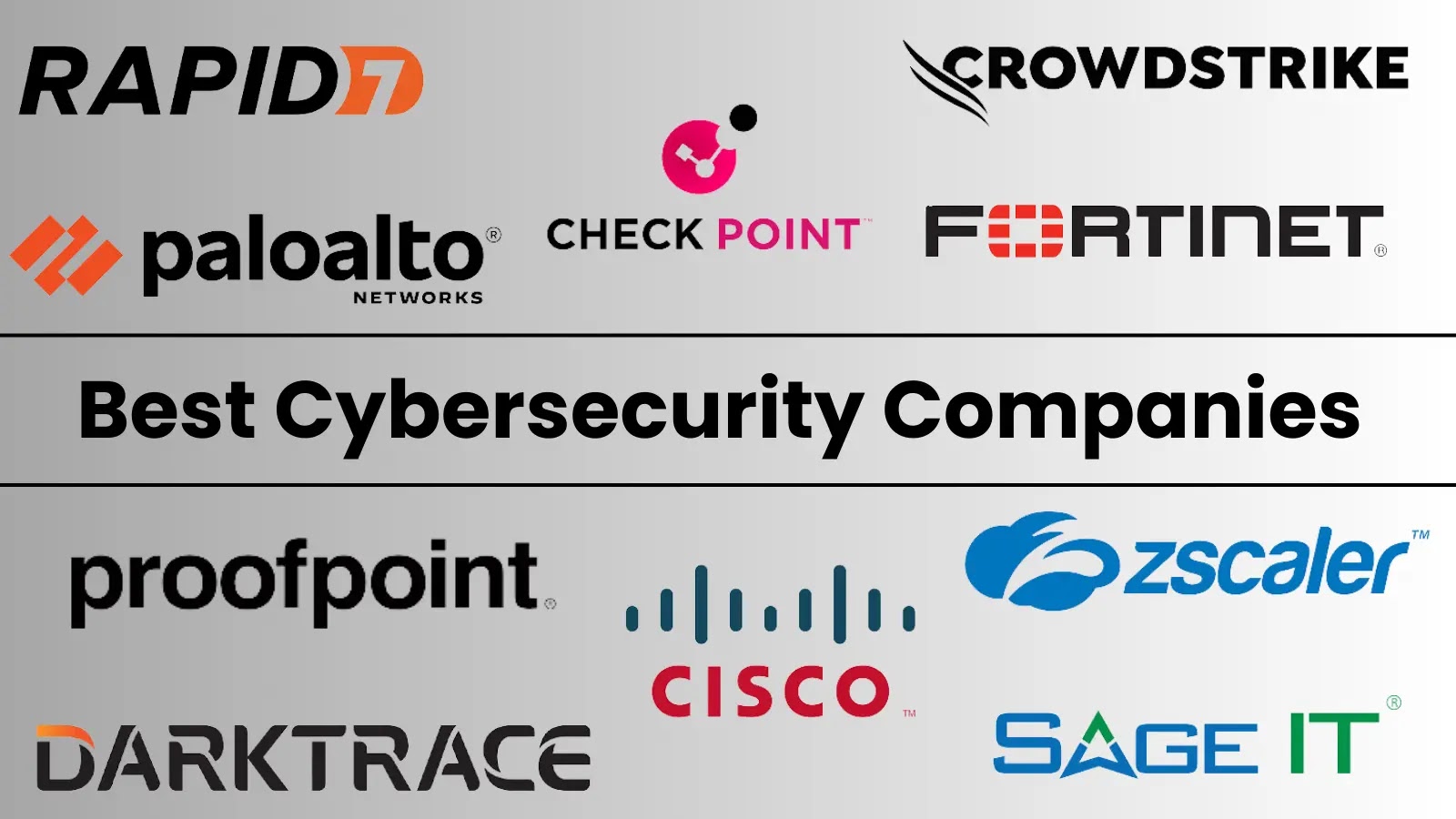
Top 10 Cybersecurity Companies to Consider in 2026
Navigating the Cyber Labyrinth: Top Cybersecurity Companies for 2026
The relentless drumbeat of cyber threats continues to escalate, pushing organizations to their breaking point. With an alarming average of 1,636 weekly cyberattacks and a staggering 98% of web applications vulnerable, the landscape is treacherous. The grim reality of 118 days to detect a breach amplifies exposure, while 30% of executives confess to inadequate budgets for robust defenses. In this high-stakes environment, selecting the right cybersecurity partner isn’t merely an option; it’s a strategic imperative. This analysis identifies the top cybersecurity companies poised to deliver advanced threat detection, streamline operations, and implement multi-layered protections, ensuring resilience against the evolving threat landscape into 2026 and beyond.
The Urgency of Advanced Threat Detection
The traditional perimeter defense is obsolete. Modern adversaries employ sophisticated tactics, often bypassing conventional security measures. Firms excelling in advanced threat detection leverage artificial intelligence (AI) and machine learning (ML) to identify anomalous behaviors, zero-day exploits, and stealthy intrusions that might otherwise go unnoticed. This proactive stance is crucial for reducing the average breach detection time, a persistent vulnerability for many organizations.
- AI-Powered Analytics: Companies that can sift through vast datasets to uncover subtle threat indicators.
- Behavioral Anomaly Detection: Identifying deviations from normal user or system activity to flag potential compromises.
- Zero-Day Exploit Protection: Capabilities to protect against previously unknown vulnerabilities, such as those targeted by attacks like CVE-2023-38829 in WinRAR or CVE-2023-34362 affecting MOVEit Transfer.
Streamlining Security Operations: The SSO Imperative
Resource constraints and skill shortages plague many security teams. The most effective cybersecurity companies offer solutions that not only detect threats but also streamline security operations (SecOps). This includes integrating disparate security tools, automating incident response, and providing clear, actionable intelligence. Efficient SecOps reduce the burden on overwhelmed teams, allowing them to focus on strategic initiatives rather than manual triage.
- Unified Security Platforms: Consolidating security tools into a single pane of glass for better visibility and control.
- Automated Incident Response (SOAR): Orchestrating security workflows and automating repetitive tasks to accelerate response times.
- Threat Intelligence Integration: Providing real-time threat intelligence feeds to contextualize alerts and prioritize threats.
Multi-Layered Defenses: Beyond the Firewall
A robust security posture demands a multi-layered approach. Relying on a single line of defense is an invitation for attackers. Leading cybersecurity firms champion comprehensive strategies that encompass email security, data loss prevention (DLP), endpoint protection, and cloud security, among others. These interlocking defenses create a resilient framework designed to withstand diverse attack vectors.
- Advanced Email Security: Protecting against phishing, spear-phishing, and Business Email Compromise (BEC) attacks, which are common initial compromise vectors.
- Data Loss Prevention (DLP): Monitoring and preventing sensitive data from leaving the organization’s control, mitigating risks associated with insider threats and accidental disclosures.
- Endpoint Detection and Response (EDR)/Extended Detection and Response (XDR): Offering granular visibility and control over endpoints, including laptops, servers, and mobile devices.
- Cloud Security Posture Management (CSPM): Ensuring secure configurations and compliance within cloud environments, a critical aspect given the widespread adoption of cloud services.
Key Considerations When Evaluating Cybersecurity Providers
Beyond the core offerings, organizations must carefully evaluate potential partners based on several critical factors. A truly effective cybersecurity solution adapts to the unique needs and evolving threat landscape of each client.
- Proactive Threat Research: Does the company actively research new threats and vulnerabilities, integrating findings into their products?
- Scalability and Flexibility: Can the solution scale with your organization’s growth and adapt to changing infrastructure?
- Integration Capabilities: How well does the solution integrate with existing security tools and business applications?
- Customer Support and Expertise: What level of support and professional services do they offer? Can they provide expertise when your in-house team is stretched thin?
- Compliance and Regulatory Alignment: Does the solution help meet industry-specific compliance requirements (e.g., GDPR, HIPAA, PCI DSS)?
Remediation Actions for Strengthening Your Security Posture
While external partnerships are vital, internal actions form the bedrock of a strong security posture. Addressing fundamental vulnerabilities and implementing best practices will significantly reduce your attack surface.
- Regular Vulnerability Assessments and Penetration Testing: Proactively identify weaknesses in your systems and applications.
- Employee Security Awareness Training: Educate staff on common cyber threats like phishing and social engineering.
- Patch Management: Implement a rigorous schedule for applying security patches and updates; neglecting this leaves systems vulnerable to known exploits like CVE-2023-28252 in Windows.
- Strong Access Controls: Implement multi-factor authentication (MFA) and the principle of least privilege.
- Incident Response Plan: Develop and regularly test a comprehensive incident response plan to minimize the impact of a breach.
Looking Ahead: The Top Cybersecurity Companies to Watch in 2026
While specific rankings can shift, the following types of companies, often leaders in their respective domains, are anticipated to remain at the forefront of cybersecurity innovation. These companies distinguish themselves through their breadth of offerings, technological prowess, and commitment to addressing complex organizational challenges. Please note, this is illustrative and not an exhaustive list:
| Company Type / Focus Area | Anticipated Strengths | Key Solutions (Illustrative) |
|---|---|---|
| Unified XDR Platforms | Comprehensive threat detection & response across hybrid environments. | Endpoint, Network, Cloud, Identity, Email XDR |
| Cloud Security Specialists | Deep expertise in securing complex cloud native architectures. | CSPM, CWPP, CIEM, Cloud DLP |
| Identity & Access Management (IAM) Leaders | Robust identity governance, privileged access management. | MFA, SSO, PAM, Identity Analytics |
| Data Security & Privacy Innovators | Advanced data encryption, data security posture management. | DLP, Data Masking, Encryption, Data Discovery |
| Managed Security Services Providers (MSSP) | 24/7 outsourced security operations, threat hunting, incident response. | SOC-as-a-Service, MDR, vCISO services |
| Application Security (AppSec) Firms | Securing the software development lifecycle from code to production. | SAST, DAST, IAST, WAF, API Security |
| Network Security Transformers | Next-generation firewalls, SASE, zero-trust network access. | NGFW, SD-WAN, ZTNA, CASB |
| Cyber Resilience & Recovery | Focus on business continuity, backup, and disaster recovery. | Immutable Backups, Cyber Recovery Vaults, Incident Recovery Platforms |
| Government & Critical Infrastructure Security | Specialized solutions for highly regulated and targeted sectors. | ICS/SCADA Security, National Cyber Defense Solutions |
| Open Source & Community-Driven Security | Leveraging collective intelligence for innovative threat detection. | Community-backed threat intelligence, open-source security tools for specific niches |
Conclusion: Strategic Partnerships for Cyber Resilience
The cybersecurity landscape demands vigilance and expertise. Organizations facing an average of 1,636 weekly attacks and 98% web app vulnerability cannot afford to operate in isolation. Partnering with a leading cybersecurity company capable of delivering advanced threat detection, operational streamlining, and multi-layered protections like email security and DLP is not just beneficial; it’s essential for survival and growth. As 2026 approaches, a strategic approach to cybersecurity, supported by the right technological partners, will be the differentiator between robust defense and critical compromise.




