5 SOC Challenges You Can Eliminate with a Single Improvement
Unveiling SOC Agility: How One Strategic Upgrade Transforms Operations
Security Operations Centers (SOCs) are the frontline defenders in the increasingly complex cybersecurity landscape. Their relentless work safeguards critical assets, but SOC teams frequently grapple with a cascade of challenges – from alert fatigue to elusive threats. Imagine a scenario where these pervasive obstacles could be significantly diminished, even eliminated, through a singular, focused improvement. This isn’t a hypothetical ideal; it’s a tangible reality achievable through the strategic adoption of high-quality threat intelligence.
The ability to anticipate, identify, and neutralize threats before they inflict damage is the holy grail for any security team. High-quality threat intelligence provides precisely this foresight, acting as a force multiplier for SOC effectiveness. It transforms reactive defense into proactive security, allowing analysts to operate with precision and confidence. Let’s explore five critical SOC challenges that are fundamentally reshaped and overcome by integrating superior threat intelligence.
Challenge 1: Overwhelmed by Alert Volume and False Positives
One of the most persistent drains on SOC resources is the sheer volume of alerts generated by security tools, many of which turn out to be false positives. Analysts spend an inordinate amount of time sifting through this noise, leading to burnout and the risk of legitimate threats being missed amidst the clutter. This “alert fatigue” is a direct impediment to efficient incident response.
Remediation with Threat Intelligence: High-quality threat intelligence acts as an intelligent filter. By correlating incoming alerts with known malicious indicators – such as suspicious IP addresses, domains, file hashes, or TTPs (Tactics, Techniques, and Procedures) – SOC analysts can rapidly differentiate between benign activity and genuine threats. This immediate context reduces false positives significantly, allowing analysts to focus their efforts on actionable intelligence rather than investigative dead ends. For instance, an alert flagging unusual network traffic to an IP address identified in a current threat intelligence feed as a command-and-control server (e.g., associated with a recent APT campaign like those exploiting vulnerabilities such as CVE-2023-38831) becomes instantly high-priority.
Challenge 2: Slow and Inefficient Threat Detection
Detecting sophisticated threats in a timely manner is paramount. Without robust threat intelligence, SOC teams often rely on signature-based detection or manual analysis, which can be slow and easily bypassed by novel attack methods. The “dwell time” – the period an attacker remains undetected within a network – directly correlates with potential damage.
Remediation with Threat Intelligence: Real-time threat intelligence empowers SOCs to detect emerging threats much faster. It provides IOCs (Indicators of Compromise) and TTPs associated with new malware variants, phishing campaigns, or zero-day exploits (e.g., previously unknown vulnerabilities like CVE-2024-0001 before public disclosure). This proactive knowledge allows security tools to be configured with the latest threat signatures, improving their detection capabilities. Furthermore, analysts can proactively hunt for these indicators within their network, effectively shortening dwell times and preventing broader compromise.
Challenge 3: Limited Visibility into Emerging Threats
The threat landscape is dynamic, with new attack vectors and adversary techniques constantly evolving. Many SOCs struggle to maintain comprehensive awareness of these emerging threats, leaving them vulnerable to attacks that haven’t been seen before or are specifically tailored to bypass existing defenses.
Remediation with Threat Intelligence: High-quality threat intelligence feeds offer immediate insights into new threats, attack campaigns, and adversary profiles. This includes intelligence on novel malware strains, active nation-state campaigns, and industry-specific threats. For example, intelligence detailing the exploitation of a new vulnerability like CVE-2024-5678 in a popular enterprise application allows an organization to implement immediate defensive measures, even before official patches are released or widely deployed. This expanded visibility enables preemptive defensive actions and more informed risk assessments.
Challenge 4: Ineffective Incident Response and Containment
When an incident does occur, effective and swift response is crucial to minimize damage. Without adequate context or understanding of the threat, incident response teams can waste valuable time on misguided containment strategies or incomplete eradication efforts, potentially leaving backdoors open for future attacks.
Remediation with Threat Intelligence: Threat intelligence provides critical context during incident response. Knowing the adversary’s TTPs, their typical objectives, and other IOCs associated with their campaigns allows responders to understand the full scope of an attack. This informs more effective containment strategies, such as isolating specific infected systems or blocking known C2 channels. For instance, if an incident is linked to a specific threat actor known for using particular persistence mechanisms (CVE-2022-12345 often involves specific registry key modifications), remediation efforts can be precisely targeted for comprehensive eradication.
Challenge 5: Difficulty in Prioritizing and Resource Allocation
With finite resources, SOC teams must prioritize their efforts. Without an accurate understanding of the most pressing threats and vulnerabilities, resources can be misallocated, leading to suboptimal security posture and inefficient operations. This includes prioritizing vulnerability remediation, patching cycles, or specific security control enhancements.
Remediation with Threat Intelligence: High-quality threat intelligence provides a data-driven basis for risk prioritization. By understanding which threats are most relevant to their organization’s industry, assets, and technology stack, SOCs can allocate resources more effectively. Intelligence that highlights active exploitation of certain vulnerabilities (e.g., CVE-2023-45678 in software widely used within the organization) allows security teams to prioritize patching and mitigation efforts with precision, focusing on threats that pose the greatest immediate danger. This strategic prioritization moves from a reactive “patch everything” mentality to a proactive, risk-informed approach.
The Quantum Leap with High-Quality Threat Intelligence
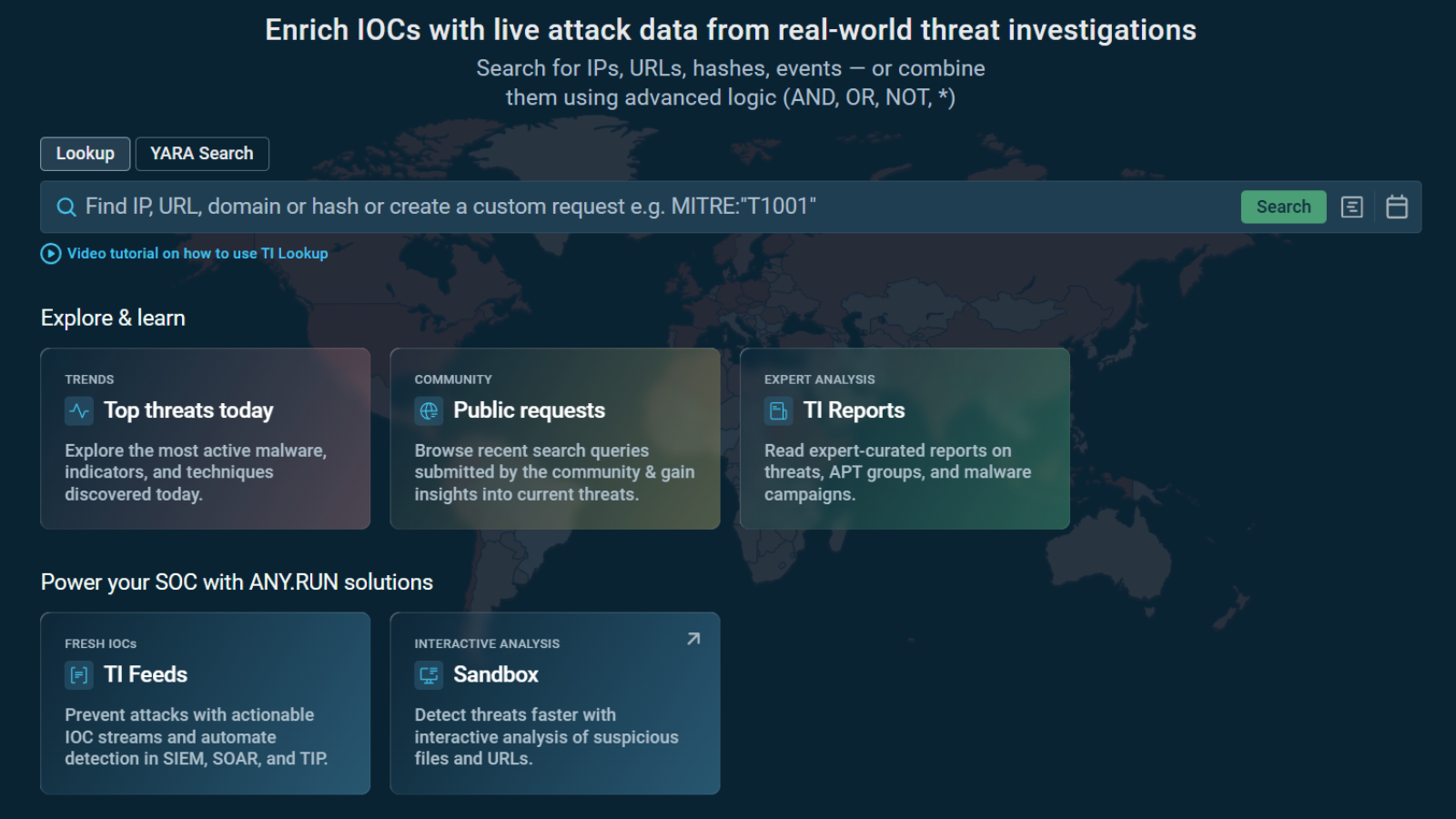
The transformation driven by high-quality threat intelligence is profound. As highlighted by observations from leading platforms like ANY.RUN, organizations that adopt robust threat intelligence solutions report significant improvements across their security operations. It’s the singular catalyst that enables SOC teams to move beyond merely reacting to threats to anticipating and neutralizing them. By providing accurate, real-time data on malicious indicators and adversary behaviors, threat intelligence empowers analysts, reduces operational overhead, and strengthens the overall security posture. It’s an indispensable component for any modern security expert aiming for a proactive, resilient defense.