
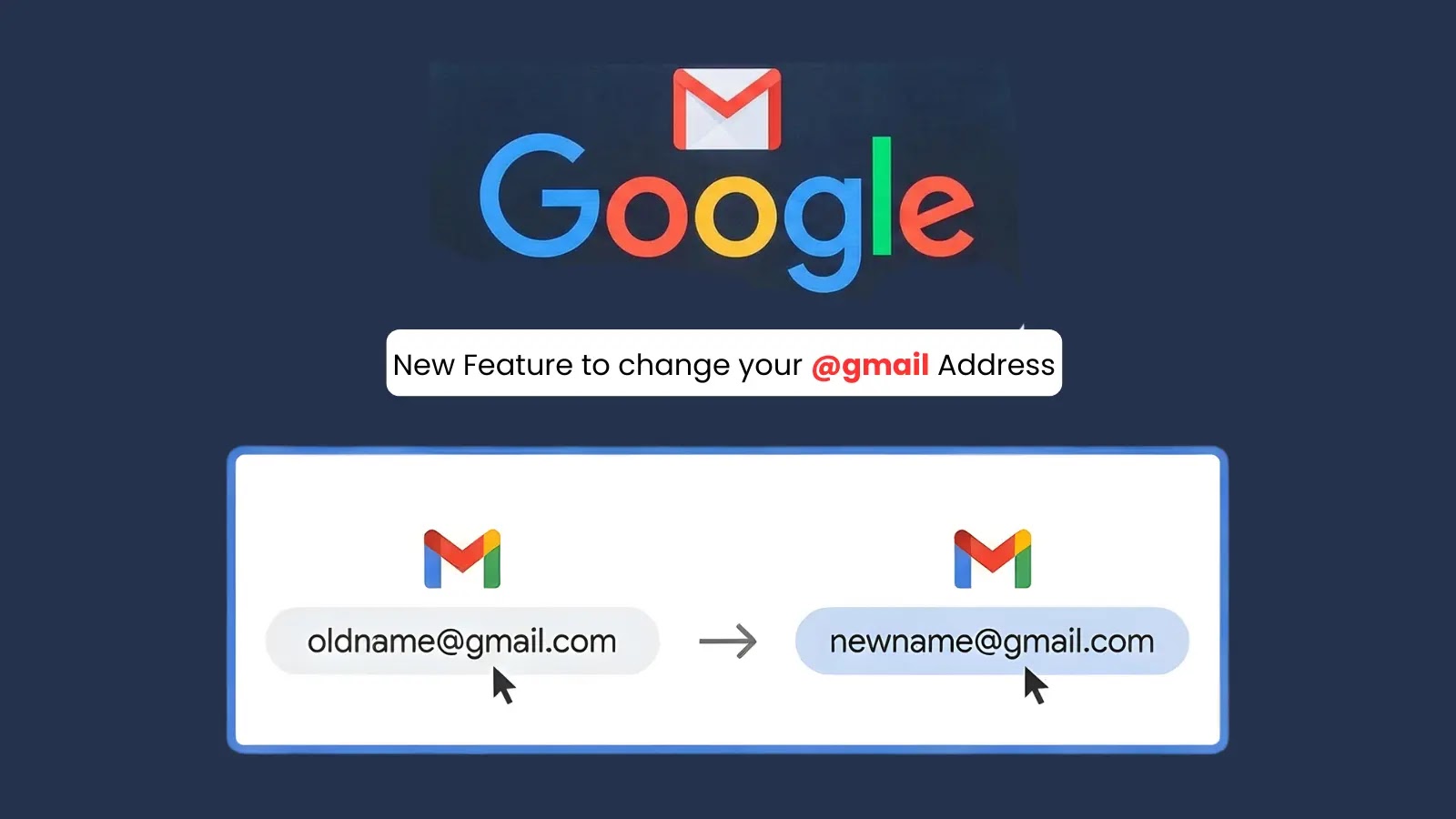
Google Rolls Out Long-Awaited @gmail.com Email Change Feature for Users
For many years, the choice of a Google email address has felt like a permanent tattoo in the digital realm. An ill-considered username, perhaps chosen in haste or during a less discerning phase, often meant a difficult dilemma: either live with the regret or embark on the arduous process of migrating years of crucial data and digital identity to an entirely new account. This persistent pain point for millions of users has finally been addressed as Google initiates the gradual rollout of a long-awaited feature: the ability to change an existing @gmail.com email address associated with a Google Account.
The Long-Awaited @gmail.com Email Change Feature
Google is progressively activating a new functionality that allows users to modify their primary @gmail.com email address to a new @gmail.com address without the need to create an entirely new Google Account. This development marks a significant shift from Google’s previous stance, where the primary email address, once established, was largely immutable. The previous workaround for a desired change involved creating a new Google Account and then attempting to transfer data, a process fraught with potential data loss and significant administrative overhead.
This new feature directly addresses the user desire to maintain their historical data, including emails, photos, documents, and other associated services, while updating their digital identifier. It’s a testament to user feedback and a recognition of the evolving nature of online identities.
Addressing User Pain Points and Data Preservation
The inability to simply change an @gmail.com address has been a common source of frustration. Users who initially created accounts with less professional or outdated usernames were often stuck. The alternatives were unappealing: either maintain an email address that no longer suited their personal or professional brand, or undertake a complex migration that risked fragmentation of their digital lives. This often meant losing context of old conversations, disrupting professional networks, or simply enduring an undesirable username for years.
With this new rollout, Google is empowering users to curate their digital presence more effectively. The preservation of historical data – years of correspondence, cherished photographs, and accumulated cloud storage – is a critical aspect of this change. It ensures continuity and minimizes disruption, a significant win for user experience and data integrity.
Implications for Security and Identity Management
While primarily a convenience feature, the ability to change primary email addresses also has subtle implications for security and identity management. For instance, in scenarios where an email address might have been compromised or linked to unwanted associations, changing it can offer a fresh start without the drastic measure of abandoning an entire ecosystem. It simplifies the process of dissociating from past digital footprints while maintaining access to essential services.
It’s important for users to understand that while the email address changes, the underlying Google Account ID remains the same. This means linked services and application permissions are generally sustained, streamlining the transition. From a cybersecurity perspective, this feature itself does not introduce new vulnerabilities. Rather, it offers a more flexible approach to identity management, which can indirectly contribute to better security hygiene by enabling users to maintain a current and preferred digital identity.
Key Takeaways
- Google is gradually rolling out the ability to change the @gmail.com email address associated with a Google Account.
- This feature allows users to update their primary email while retaining all associated data, including emails, photos, and documents.
- It addresses a significant user pain point related to undesirable or outdated usernames.
- The change offers improved flexibility in managing online identities without compromising existing data or digital ecosystems.




