
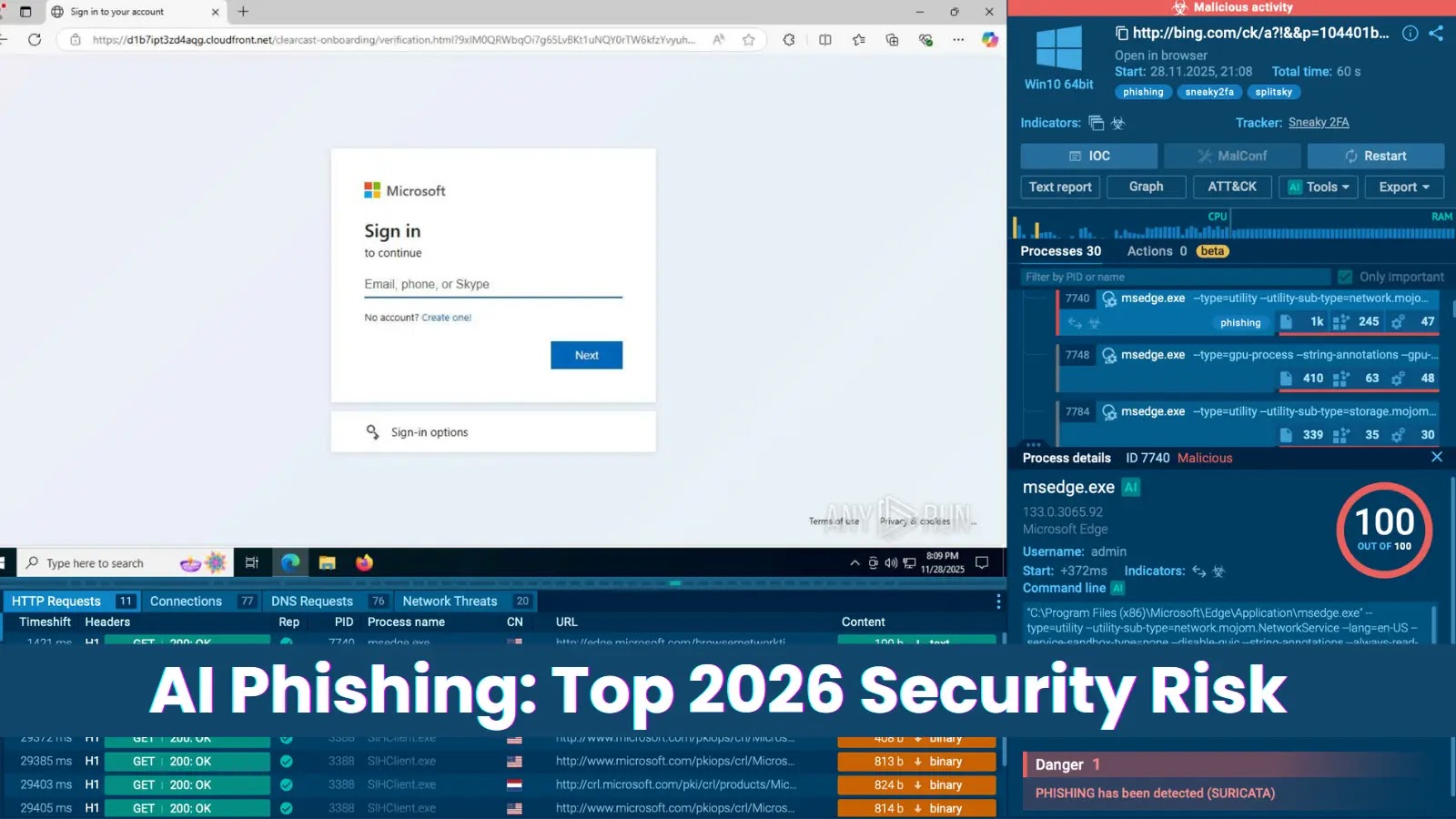
AI Phishing Is Your Company’s Biggest Security Risk in 2026: Here’s How to Stop It
The days of easily identifiable phishing emails are over. Gone are the glaring grammatical errors, the obviously suspicious links, and the poorly disguised attempts at fraud. We’ve entered a new era of digital deception, one where artificial intelligence has become the attacker’s most potent weapon. By 2026, AI-powered phishing won’t just be an annoyance; it will be your company’s most significant cybersecurity threat, capable of breaching defenses and compromising data with unprecedented sophistication. Ignoring this evolving danger is no longer an option.
The Evolution of Phishing: Smarter, Slicker, and More Dangerous
For years, cybersecurity awareness training focused on identifying the tell-tale signs of a phishing attempt. Employees were taught to look for misspelled words, generic greetings, and unusual sender addresses. This guidance, while effective against traditional attacks, is increasingly obsolete. AI has transformed phishing into an art form. These advanced attacks are:
- Polished and well-written: AI content generation tools eliminate grammatical errors and awkward phrasing, crafting emails that are indistinguishable from legitimate corporate communications.
- Contextually aware: Large Language Models (LLMs) can be fed data about an organization or individual, allowing them to tailor messages that exploit specific projects, personnel, or recent events, making them highly convincing.
- Designed to evade traditional security: The sophisticated language and seemingly legitimate links in AI-generated phishing emails often bypass rule-based email filters and basic threat intelligence systems.
- Difficult for employees to detect: When an email appears to come from a known colleague or a trusted vendor, uses perfect language, and references relevant business topics, even diligent employees can be fooled.
This new breed of phishing doesn’t just target credentials; it can be used for sophisticated business email compromise (BEC) scams, data exfiltration, and the deployment of advanced malware, such as ransomware variants that recently exploited vulnerabilities like CVE-2023-38827 in WinRAR through seemingly innocuous attachments.
Why Traditional Defenses Are Falling Short
Many organizations rely on a multi-layered security approach, which typically includes email gateways, spam filters, and endpoint detection and response (EDR) solutions. While these are crucial components of a robust cybersecurity posture, they are struggling to keep pace with AI phishing:
- Signature-based detection is blind: AI generates unique, novel email content for each attack, rendering static signatures ineffective.
- Advanced threat protection can be outsmarted: While advanced threat protection (ATP) solutions use behavioral analysis, AI can mimic legitimate human behavior or leverage social engineering tactics that bypass automated analysis.
- The human element remains the weakest link: Even with strong technical controls, an employee succumbing to a highly convincing AI-phishing email can negate all other defenses.
Remediation Actions: Fortifying Your Defenses Against AI Phishing
Addressing the AI phishing threat requires a proactive and adaptive strategy that blends advanced technology with continuous human education.
Technological Enhancements:
- Implement Advanced Email Security Platforms: Upgrade to platforms that leverage AI and machine learning themselves to detect anomalies in email content, sender behavior, and link analysis, going beyond traditional signature-based detection.
- Zero-Trust Architecture for Email: Employ a zero-trust approach where every email, even from internal sources, is treated as potentially malicious until verified. This could involve stricter authentication for internal emails and robust link scanning before delivery.
- AI-Powered Threat Intelligence: Integrate threat intelligence feeds that specifically track AI-generated phishing trends and tactics. This proactive information sharing can help anticipate new attack vectors.
- Continuous Email Sandboxing: Implement robust sandboxing solutions that can detonate suspicious attachments and links in a safe environment to observe their behavior before they reach an endpoint.
- Multi-Factor Authentication (MFA) Everywhere: While not directly a phishing prevention, MFA significantly reduces the impact of successful credential phishing attempts. Ensure MFA is mandated for all critical systems and accounts, including CVE-2023-2825 related vulnerabilities if those systems are not patched.
Human and Process-Based Defenses:
- Next-Generation Security Awareness Training: Move beyond basic phishing quizzes. Implement AI-driven phishing simulation campaigns that mirror real-world, sophisticated AI phishing attacks. Train employees to identify contextual cues, verify requests through alternative channels (e.g., calling the sender on a known good number), and understand the psychology behind social engineering. This training should be continuous and adaptive.
- Develop Strong Reporting Protocols: Empower employees to report suspicious emails without fear of reprimand. Ensure a clear, easy-to-use reporting mechanism is in place, and that reported emails are promptly analyzed by security teams.
- Incident Response Plan Review: Thoroughly review and update your incident response plan to specifically address AI-phishing incidents, including compromised accounts, data breaches resulting from social engineering, and potential ransomware deployments.
- Foster a Security-First Culture: Emphasize that cybersecurity is everyone’s responsibility. Regular communication from leadership about the evolving threat landscape and the importance of vigilance can significantly reduce risk.
| Tool Name | Purpose | Link |
|---|---|---|
| Proofpoint Email Security | Advanced email protection, threat intelligence, and user awareness training. | https://www.proofpoint.com/ |
| Microsoft Defender for Office 365 | Email and collaboration security that includes advanced phishing protection. | https://www.microsoft.com/en-us/security/business/microsoft-365-defender/office-365-atp |
| Cofense PhishMe | Phishing simulation and security awareness training platform. | https://cofense.com/product-services/phishme/ |
| KnowBe4 | Security awareness training and simulated phishing platform. | https://www.knowbe4.com/ |
The Path Forward: Vigilance and Adaptation
The rise of AI phishing demands a fundamental shift in how organizations approach cybersecurity. It’s no longer enough to guard against the threats of yesterday. Companies must anticipate and adapt to the advanced tactics employed by AI-powered attackers. This means investing in cutting-edge security technologies, fostering an aggressive security awareness culture, and continually refining incident response capabilities. The fight against AI phishing will be ongoing, but with a proactive and informed strategy, your company can significantly reduce its risk and safeguard its critical assets against the most sophisticated threats of 2026 and beyond.




