
Microsoft Investigating Issue Impacting Exchange Online, Teams, and M365 Suite
Downtime in business-critical services isn’t just an inconvenience; it’s a direct threat to productivity, communication, and ultimately, an organization’s bottom line. When those services are provided by industry giants like Microsoft, the ripple effects can be felt globally. As expert cybersecurity analysts, we understand the critical implications that even brief outages can have. This past Wednesday evening, Microsoft acknowledged a significant service incident impacting its core M365 ecosystem, leading to widespread disruptions across essential applications like Exchange Online and Microsoft Teams.
Microsoft Confirms M365 Service Incident
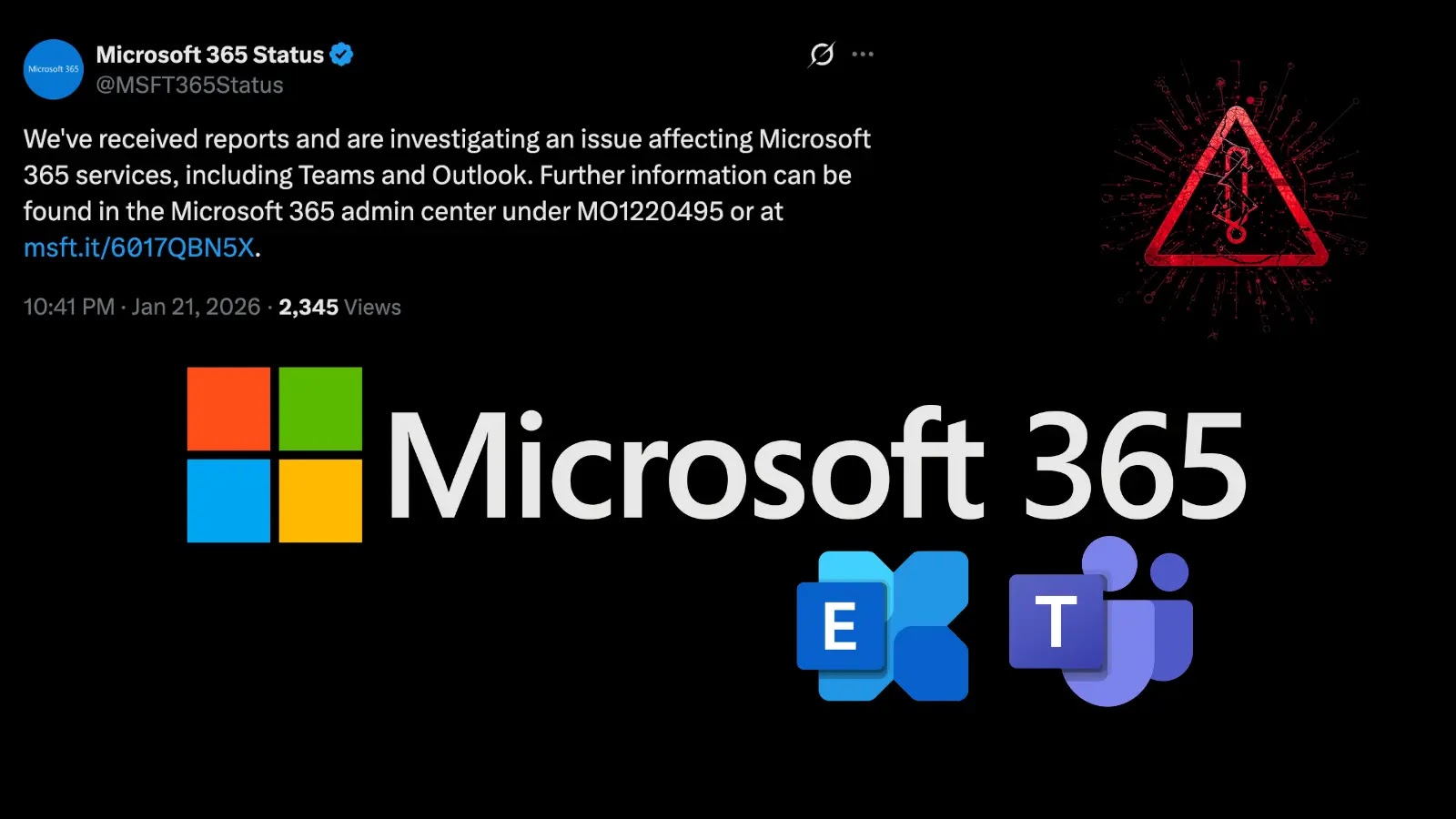
Microsoft has confirmed it is actively investigating a new service incident affecting multiple core services within the Microsoft 365 ecosystem. The company acknowledged the disruption following reports of connectivity issues and service degradation for users relying on its cloud-based productivity tools. The incident, tracked under Issue ID MO1220495, officially began on January […], indicating a widespread impact across its cloud infrastructure. As reported by Cybersecurity News, the issue rapidly escalated, drawing immediate attention from IT departments worldwide.
Impact on Core Microsoft 365 Services
The service degradation encompassed a broad range of critical applications central to modern business operations. Users reported difficulties with:
- Exchange Online: A cornerstone of email communication, disruptions here meant delayed or undelivered emails, impacting internal and external correspondence.
- Microsoft Teams: This collaborative platform experienced connectivity issues, affecting meetings, chat functionalities, and file sharing – processes vital for remote and hybrid work environments.
- Broader M365 Suite: While Exchange Online and Teams were prominently cited, the overarching “M365 Suite” implies potential knock-on effects across other integrated services such as SharePoint Online, OneDrive for Business, and potentially even Azure Active Directory authentication mechanisms, though specific details beyond MO1220495 are pending.
For organizations heavily reliant on Microsoft’s cloud infrastructure, such an incident translates into significant operational hurdles. Even temporary outages can lead to lost work, communication breakdowns, and a direct impact on customer service capabilities.
Understanding the Nature of Cloud Outages
Service incidents of this magnitude, while relatively rare for a platform as robust as Microsoft 365, underscore the complexities inherent in large-scale cloud computing. These disruptions can stem from a multitude of factors, including:
- Network Infrastructure Issues: Problems within Microsoft’s global network backbone can fragment connectivity to various data centers.
- Software Deployment Errors: A faulty update or configuration change can propagate rapidly across distributed systems, affecting service availability.
- Hardware Failures: While redundancy is built-in, a cascade of hardware failures in a critical region can lead to widespread impact.
- Security Incidents: Though less common for general outages, a sophisticated cyberattack targeting core services could also manifest as service degradation, impacting availability. At this stage, Microsoft has not indicated a security breach as the cause for MO1220495.
Microsoft’s rapid acknowledgment and the active investigation, tracked under a specific incident ID, demonstrate their established protocols for managing such events. The focus now shifts to root cause analysis and implementing long-term preventative measures.
Remediation Actions and Best Practices for Organizations
While an organization cannot directly resolve a Microsoft-side outage, there are crucial remediation actions and best practices to minimize impact and ensure business continuity:
- Monitor Microsoft Service Health Dashboard: Regularly check the official Microsoft 365 Service Health Dashboard for real-time updates on active incidents. This is the authoritative source of truth during an outage.
- Establish Alternative Communication Channels: During a Teams or Exchange outage, have pre-defined alternative communication methods (e.g., telephone trees, non-M365-based messaging apps, or even SMS) for critical personnel.
- Implement Data Redundancy and Backup Strategies: While M365 offers its own redundancy, consider third-party backup solutions for critical data stored in SharePoint and OneDrive.
- Educate Users on Downtime Protocols: Train employees on how to act during service disruptions, including reporting procedures and alternative workflows for critical tasks.
- Review Disaster Recovery Plans: Regularly update and test your organization’s disaster recovery and business continuity plans to account for cloud service disruptions.
Conclusion
The recent Microsoft 365 service incident, tracked as MO1220495, serves as a pertinent reminder of the interconnectedness of modern digital operations and the potential vulnerabilities within even the most robust cloud ecosystems. While Microsoft actively investigates and resolves these issues, organizations must remain vigilant, proactive in their preparedness, and implement robust strategies to mitigate the impact of such widespread service disruptions. Understanding the nature of these incidents and having clear contingency plans are paramount for maintaining operational resilience in an increasingly cloud-dependent world.




