
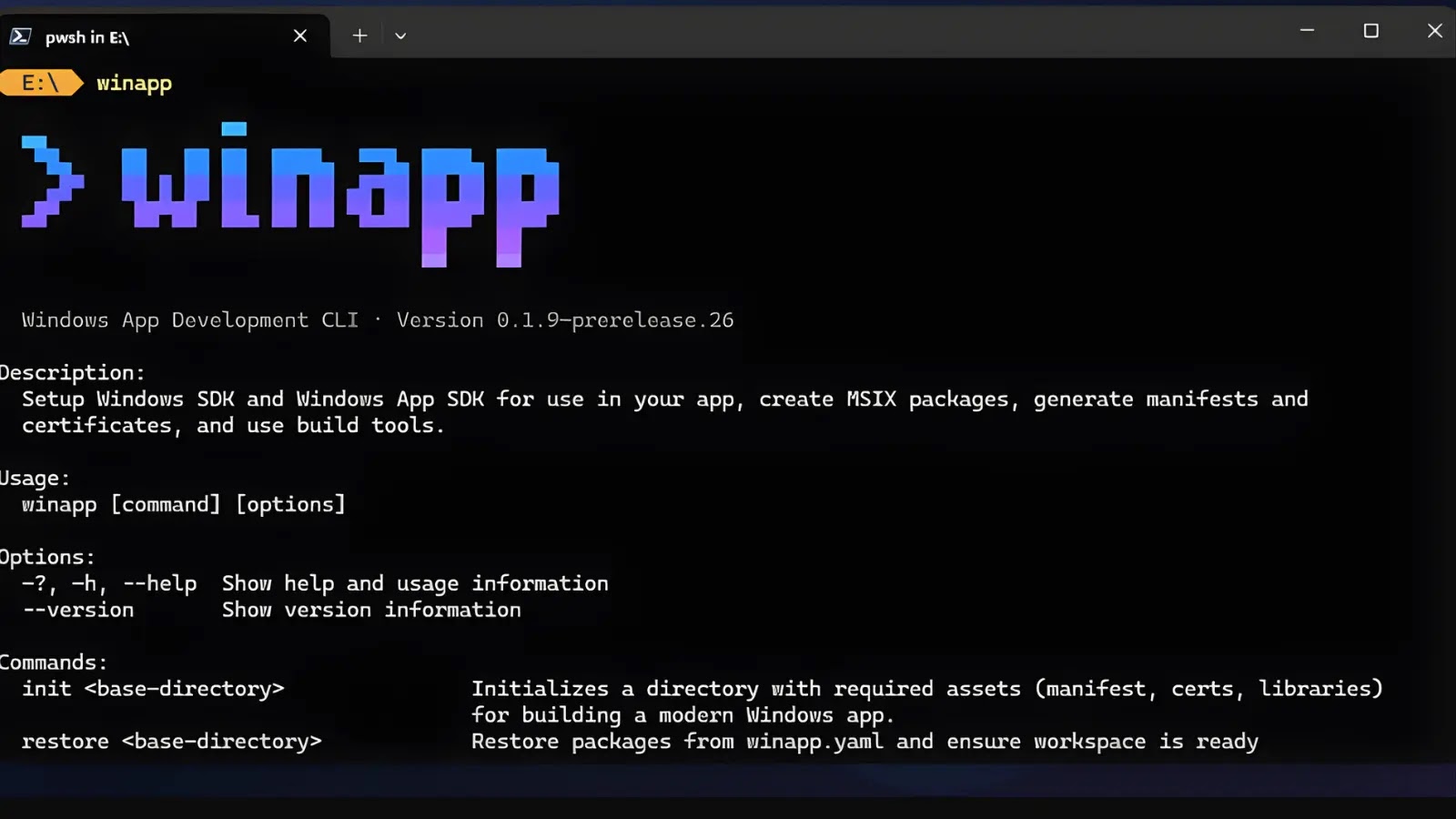
Microsoft Launches Open-Source WinApp CLI to Streamline Windows App Development
In the dynamic realm of software development, efficiency and accessibility are paramount. Microsoft has once again demonstrated its commitment to fostering innovation by unveiling the public preview of WinApp CLI (winapp), a new open-source command-line interface. This powerful tool is engineered to significantly streamline Windows application development, particularly for those developers operating outside the traditional confines of Visual Studio or MSBuild.
The introduction of winapp signals a deliberate move by Microsoft to lower barriers for entry and enhance the development experience across a broader spectrum of toolchains and frameworks. For cybersecurity analysts, understanding such initiatives is crucial, as they directly impact the attack surface and security posture of new applications being built.
What is WinApp CLI?
WinApp CLI, or winapp, is an open-source command-line tool released by Microsoft, hosted on GitHub. Its primary objective is to simplify the process of developing Windows applications for developers utilizing a diverse array of frameworks. This includes web developers leveraging Electron, C++ experts working with CMake, and builders using .NET, Rust, or Dart.
Historically, accessing modern Windows APIs could be a complex endeavor without tight integration with Microsoft’s proprietary development environments. WinApp CLI aims to democratize access to these powerful functionalities, enabling developers from various backgrounds to seamlessly integrate them into their Windows applications.
Bridging Frameworks and Modern Windows APIs
The beauty of winapp lies in its versatility. It acts as a crucial bridge, connecting disparate development ecosystems to the rich set of modern Windows APIs. This means:
- Web Developers (Electron): Can now more easily incorporate native Windows features into their Electron-based applications, leading to richer user experiences and potentially better performance.
- C++ Developers (CMake): For those who prefer the flexibility and control offered by CMake,
winappprovides a streamlined path to leverage advanced Windows capabilities without deep diving into Visual Studio project configurations. - .NET, Rust, Dart Developers: These communities gain enhanced access to the platform’s native features, fostering greater innovation and enabling the creation of more robust and integrated Windows applications.
This initiative directly addresses a long-standing need within the development community for greater interoperability and reduced friction when building for the Windows platform with non-Microsoftcentric toolchains.
The Open-Source Advantage and Community Impact
Microsoft’s decision to release WinApp CLI as open-source is a significant move. Hosting it on GitHub not only ensures transparency but also invites collaborative development and community contributions. This approach typically leads to:
- Faster Iteration and Improvement: A global community of developers can contribute bug fixes, new features, and improvements, accelerating the tool’s evolution.
- Enhanced Security Through Scrutiny: Open-source projects benefit from widespread review, which can help identify and rectify potential security vulnerabilities more quickly.
- Greater Trust and Adoption: Developers are often more inclined to adopt tools that are open-source, as they offer transparency and the ability to customize or audit the code themselves.
From a cybersecurity perspective, the open-source nature means that organizations can inspect the tool’s codebase for any potential supply chain vulnerabilities, adding a layer of assurance. While winapp itself is a development tool, its security directly impacts the applications built with it, making this transparency invaluable.
Implications for App Development and Security
The ease of access to modern Windows APIs through WinApp CLI has several crucial implications:
- Increased Feature Richness: Developers can more readily integrate features like Windows notifications, system integrations, and device access, leading to more powerful and seamlessly integrated applications.
- Standardization and Best Practices: By providing a consistent CLI for accessing Windows APIs, Microsoft promotes a more standardized approach to development, potentially leading to fewer idiosyncratic implementations and, consequently, fewer security vulnerabilities.
- Potential for Wider Adoption of Secure APIs: If
winappmakes it easier to use newer, more secure APIs over deprecated ones, it could indirectly contribute to a stronger overall security posture for Windows applications. - New Attack Surface Considerations for Analysts: As more applications leverage these modern APIs via
winapp, security analysts will need to be aware of the common pitfalls and secure coding practices associated with these specific APIs. This is not about a new vulnerability inwinappitself, but rather the expanded usage patterns it enables.
There is no specific CVE associated with WinApp CLI at its public preview stage (e.g., CVE-UNKNOWN), as it’s a development tool rather than a known vulnerability. However, developers should always follow secure coding guidelines when integrating any APIs, regardless of the tool used.
Key Takeaways for Developers and Security Professionals
- Microsoft’s WinApp CLI is a significant open-source initiative designed to simplify Windows app development across diverse frameworks.
- It lowers the barrier for web, C++, .NET, Rust, and Dart developers to access modern Windows APIs.
- The open-source nature fosters collaboration, accelerates development, and enhances security through community scrutiny.
- While
winappitself is not a vulnerability, its widespread adoption will influence the landscape of Windows application development and necessitate a focus on secure API integration and best practices. - Developers should explore
winappon GitHub to understand its capabilities and contribute to its evolution.
The launch of WinApp CLI underscores Microsoft’s commitment to a more inclusive and efficient development ecosystem for Windows. For seasoned developers and vigilant security analysts alike, understanding and engaging with such tools is essential for navigating the evolving landscape of computing.




