
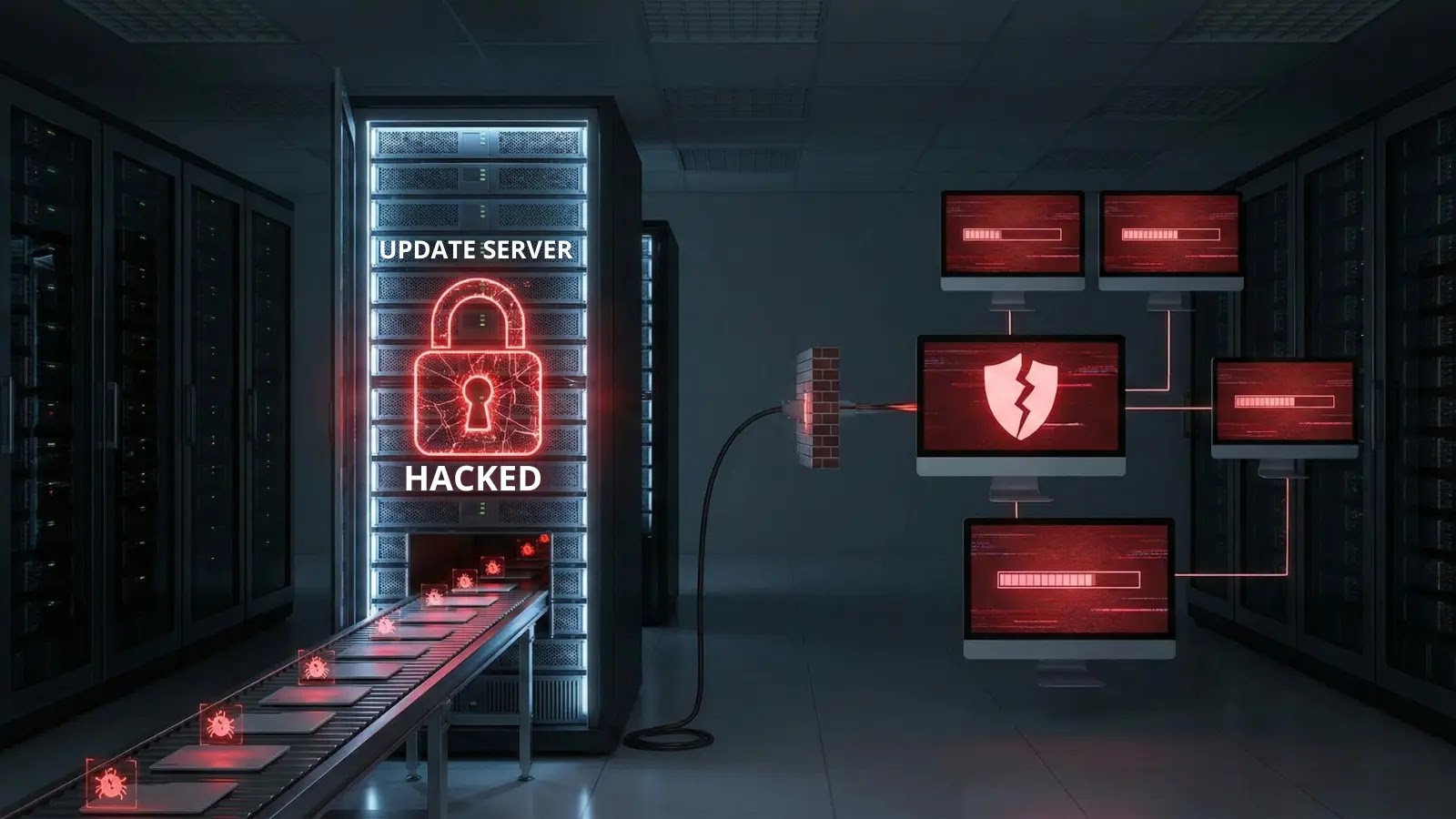
eScan Antivirus Update Server Hacked to Push Malicious Update packages
A Critical Cybersecurity Breach: eScan Antivirus Update Server Hacked
The digital landscape is a constant battleground, where even the most trusted tools can become vectors for attack. A chilling incident has surfaced, highlighting the sophisticated tactics employed by threat actors to compromise fundamental security infrastructure. On January 20, 2026, cybersecurity firm Morphisec unveiled a critical supply chain attack targeting MicroWorld Technologies’ eScan antivirus product. This breach saw malicious actors successfully hijack eScan’s legitimate update servers to distribute trojanized update packages, effectively turning a security solution into a conduit for malware delivery.
Understanding the eScan Supply Chain Attack
This incident represents a severe supply chain compromise, a type of attack where adversaries infiltrate an organization’s software development or update distribution process. In the case of eScan, the threat actors exploited the trust placed in the antivirus vendor’s infrastructure. By compromising the update server, they were able to inject malicious code into what appeared to be legitimate software updates. When users or enterprise systems sought to update their eScan antivirus, they unknowingly downloaded and executed these trojanized packages.
The core of this attack involved a “trojanized update.” This means the seemingly benign update file contained hidden malicious payloads. Once installed, these multi-stage malware packages would then begin their nefarious activities, potentially compromising the integrity and confidentiality of data across enterprise and consumer endpoints globally. This type of attack is particularly potent because it bypasses traditional perimeter defenses, leveraging the established trust in an essential security application.
The Impact of a Compromised Antivirus
The implications of an antivirus solution being used to push malware are profound. An antivirus program is typically granted extensive privileges on a system to perform its protection duties, including deep system scans and file modifications. When this very tool is compromised, it effectively disarms the target, rendering the antivirus software ineffective and even weaponizing it against the user. This creates a gaping security vulnerability, leaving systems exposed to a wide range of threats that the antivirus was designed to prevent.
Enterprises and individual users alike depend heavily on antivirus software for their first line of defense. A breach of this magnitude not only compromises immediate security but also erodes trust in cybersecurity vendors and the digital ecosystem as a whole. The attackers’ ability to leverage existing, trusted update mechanisms highlights the evolving sophistication of cyber threats and the need for rigorous security measures across the entire software supply chain.
Remediation Actions for eScan Users
Given the severity of this supply chain compromise, immediate and decisive action is crucial for any organization or individual using eScan antivirus. While a specific CVE ID for this incident has not yet been publicly assigned, the nature of the attack demands a comprehensive response.
- Isolate Affected Systems: Immediately disconnect any systems running eScan antivirus from network access. This prevents further spread of potential malware.
- Full System Scans with Alternative Security Software: Perform thorough scans of all affected endpoints using a reputable, different antivirus or endpoint detection and response (EDR) solution.
- Re-imaging or Clean Installation: For critical systems or those showing signs of advanced compromise, a complete re-imaging or clean installation of the operating system is the safest course of action.
- Review Logs and Network Traffic: Scrutinize system logs, network traffic, and security alerts for any unusual activity preceding or following the reported date of the compromise (January 20, 2026). Look for outbound connections to suspicious IP addresses or unexpected process creations.
- Patch Management Review: While eScan updates were the vector here, review your overall patch management strategy to ensure updates are validated and authenticated where possible.
- Implement Multi-Layered Security: Relying on a single security product is inherently risky. Implement a multi-layered security approach including firewalls, intrusion detection/prevention systems (IDS/IPS), and robust endpoint protection.
- Educate Users: While less direct for this specific attack, continuous security awareness training for users remains vital to identify phishing attempts or suspicious downloads.
Detection and Analysis Tools
Identifying and mitigating sophisticated supply chain attacks requires a suite of robust cybersecurity tools. The following table outlines some categories of tools relevant for detecting and analyzing incidents like the eScan compromise:
| Tool Category | Purpose | Examples |
|---|---|---|
| Endpoint Detection and Response (EDR) | Real-time monitoring and analysis of endpoint activities to detect and respond to threats. | Carbon Black, CrowdStrike Falcon, SentinelOne |
| Network Intrusion Detection/Prevention Systems (IDS/IPS) | Monitors network traffic for suspicious activity and blocks malicious connections. | Snort, Suricata, Palo Alto Networks NGFW |
| Security Information and Event Management (SIEM) | Aggregates and analyzes security logs from various sources to provide a centralized view of security events. | Splunk, IBM QRadar, Microsoft Sentinel |
| Threat Intelligence Platforms (TIP) | Provides actionable intelligence on known threats, indicators of compromise (IOCs), and attack methodologies. | Anomali, Recorded Future, Mandiant Advantage |
| Binary Analysis Tools | Analyzes executable files for malicious code, anomalies, and potential backdoors. | IDA Pro, Ghidra, YARA |
The Continuing Evolution of Supply Chain Attacks
The eScan incident serves as a stark reminder of the escalating threat posed by supply chain attacks. These breaches exploit the interconnectedness of modern software development and distribution, making them incredibly difficult to detect and defend against. As businesses increasingly rely on third-party software and services, the attack surface expands, demanding a more proactive and holistic approach to cybersecurity.
Organizations must adopt a “assume breach” mentality and focus on robust incident response plans, continuous monitoring, and the validation of all software components, even those from trusted vendors. The battle against sophisticated adversaries requires constant vigilance and an adaptive security posture to protect critical infrastructure from becoming the next vector of attack.




