
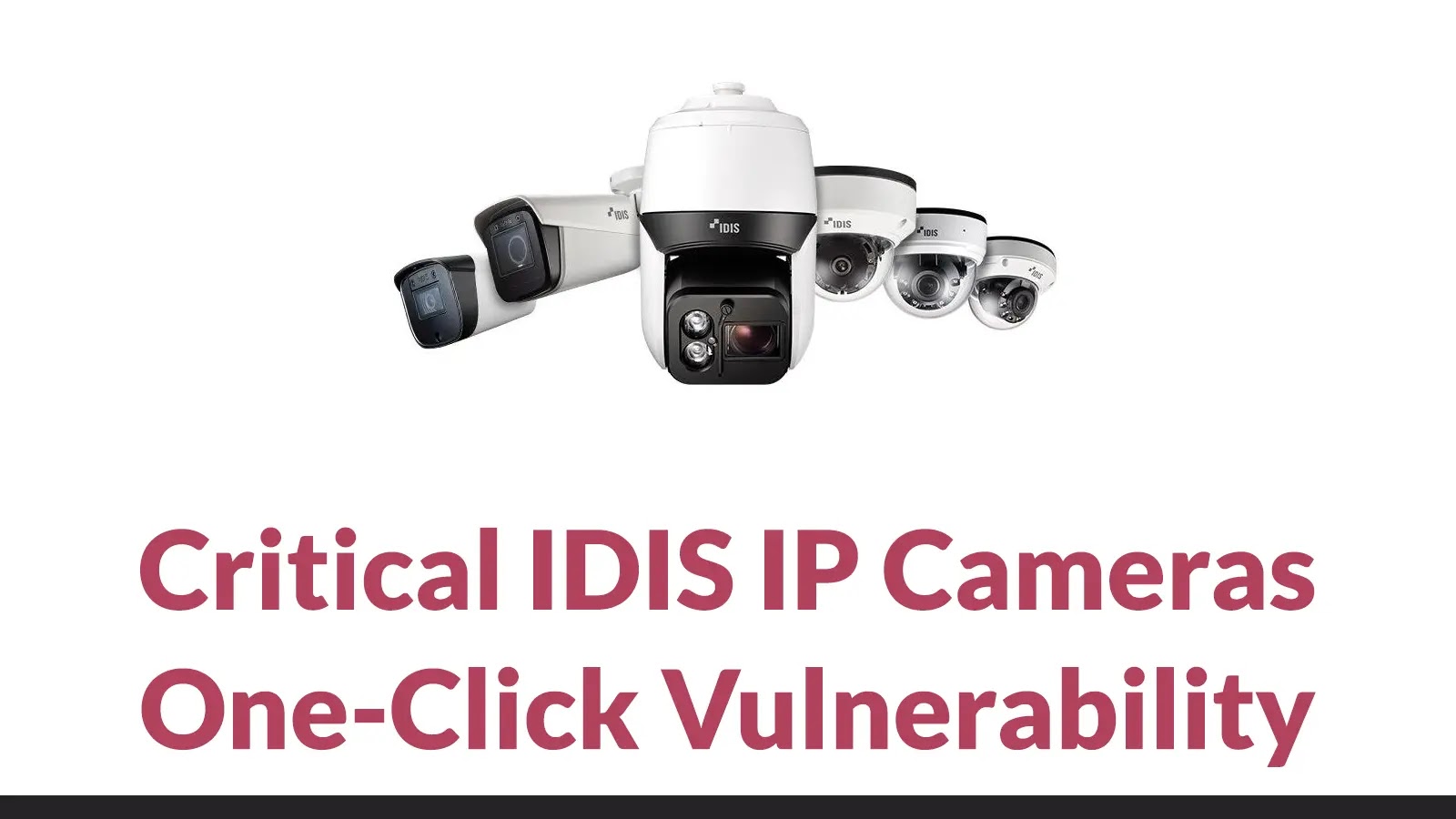
Critical IDIS IP Cameras One-Click Vulnerability Leads to full Compromise of Victim’s Computer
Critical IP Camera Vulnerability Exposes Operations to Full Compromise
A severe security flaw has emerged within IDIS IP cameras, presenting a critical threat to organizations relying on these surveillance systems. This one-click vulnerability allows attackers to gain complete control over a victim’s computer, creating a direct pathway to sensitive data and critical infrastructure.
The impact of such a vulnerability extends far beyond a compromised camera. Enterprises, manufacturing facilities, and even military installations utilize IDIS IP cameras for critical monitoring. A successful exploit could lead to espionage, disruption of operations, or even physical security breaches. Understanding the nature of this threat, its mechanics, and crucial remediation steps is paramount for any organization using IDIS surveillance solutions.
Understanding CVE-2025-12556: The IDIS Cloud Manager Threat
The vulnerability, tracked as CVE-2025-12556, specifically targets the IDIS Cloud Manager (ICM) Viewer. This Windows-based application is widely used to monitor surveillance feeds from IDIS IP cameras deployed across various sectors. The “one-click” nature of the exploit is particularly alarming, as it significantly lowers the barrier for attackers to succeed. This isn’t a complex, multi-stage attack; rather, it capitalizes on a simple user interaction.
While specific technical details of the exploit’s mechanism are often withheld to prevent further exploitation before patches are fully deployed, the description suggests a likely scenario where a specially crafted link or file, when clicked by a user of the ICM Viewer, triggers arbitrary code execution on their machine. This could be achieved through vulnerabilities in how the application handles external content, parses specific file types, or interacts with underlying system processes.
Impact and Potential Attack Scenarios
The consequences of a successful exploit leveraging CVE-2025-12556 are severe and multifaceted:
- Full System Compromise: An attacker gains control over the victim’s computer, allowing them to install malware, harvest credentials, access sensitive files, and pivot to other systems on the network.
- Espionage and Data Theft: Surveillance feeds themselves could be intercepted or manipulated. Furthermore, access to the compromised machine could lead to the exfiltration of confidential business data, intellectual property, or classified information.
- Operational Disruption: For manufacturing or critical infrastructure facilities, a compromised machine could be used to disrupt operations, affecting production lines, control systems, or critical services.
- Ransomware Deployment: The compromised endpoint becomes a prime target for ransomware deployment, leading to significant financial losses and operational downtime.
- Network Lateral Movement: Once inside a network via the compromised workstation, attackers can use it as a launchpad for further attacks, moving laterally to access servers, databases, or other high-value assets.
The broad deployment of IDIS IP cameras in sensitive environments makes this vulnerability a critical concern for IT and security professionals.
Remediation Actions
Immediate action is required to mitigate the risk posed by CVE-2025-12556. Organizations should implement the following steps without delay:
- Patch Immediately: The most crucial step is to apply any available patches or firmware updates released by IDIS. Monitor official IDIS security advisories and support channels for these updates.
- Isolate ICM Viewer Workstations: If immediate patching isn’t feasible, consider isolating machines running the IDIS Cloud Manager Viewer from sensitive network segments or the broader internet.
- Implement Strict Whitelisting: Employ application whitelisting to prevent unauthorized executables from running on workstations that utilize the ICM Viewer.
- Enhance Endpoint Detection and Response (EDR): Ensure EDR solutions are actively monitoring ICM Viewer workstations for suspicious activity, process execution, and network connections.
- User Awareness Training: Educate users who operate the ICM Viewer about the dangers of clicking unknown links or opening unsolicited files, even from seemingly legitimate sources.
- Network Segmentation: Re-evaluate enterprise network segmentation, ensuring that surveillance networks and workstations are properly segregated from core business systems.
- Regular Backups: Maintain regular, secure backups of critical data to minimize the impact of a potential ransomware attack following a compromise.
Tools for Detection and Mitigation
| Tool Name | Purpose | Link |
|---|---|---|
| Endpoint Detection and Response (EDR) Solutions | Detect and respond to malicious activity on endpoints, including arbitrary code execution. | Gartner Peer Insights (EDR) |
| Network Intrusion Detection/Prevention Systems (NIDS/NIPS) | Monitor network traffic for signatures of known attacks and suspicious patterns. | Snort |
| Vulnerability Management Platforms | Identify and track vulnerabilities within your IT infrastructure, including outdated software. | Tenable.io |
| Application Whitelisting Tools | Prevent unauthorized applications from executing on endpoints. | Windows Defender Application Control (WDAC) |
Protecting Your Surveillance Infrastructure
The IDIS IP camera vulnerability is a stark reminder that even seemingly isolated surveillance systems can become critical entry points for sophisticated attacks. The “one-click” nature of CVE-2025-12556 underscores the importance of a layered security approach and proactive vulnerability management.
Organizations must focus on timely patching, robust endpoint protection, and rigorous user training to defend against such pervasive threats. Beyond immediate remediation, a comprehensive security strategy should involve regular security audits of all connected devices, thorough network segmentation, and a continuous monitoring program to detect and respond to potential compromises effectively. Vigilance and swift action are the strongest defenses against vulnerabilities that enable full system compromise.




