
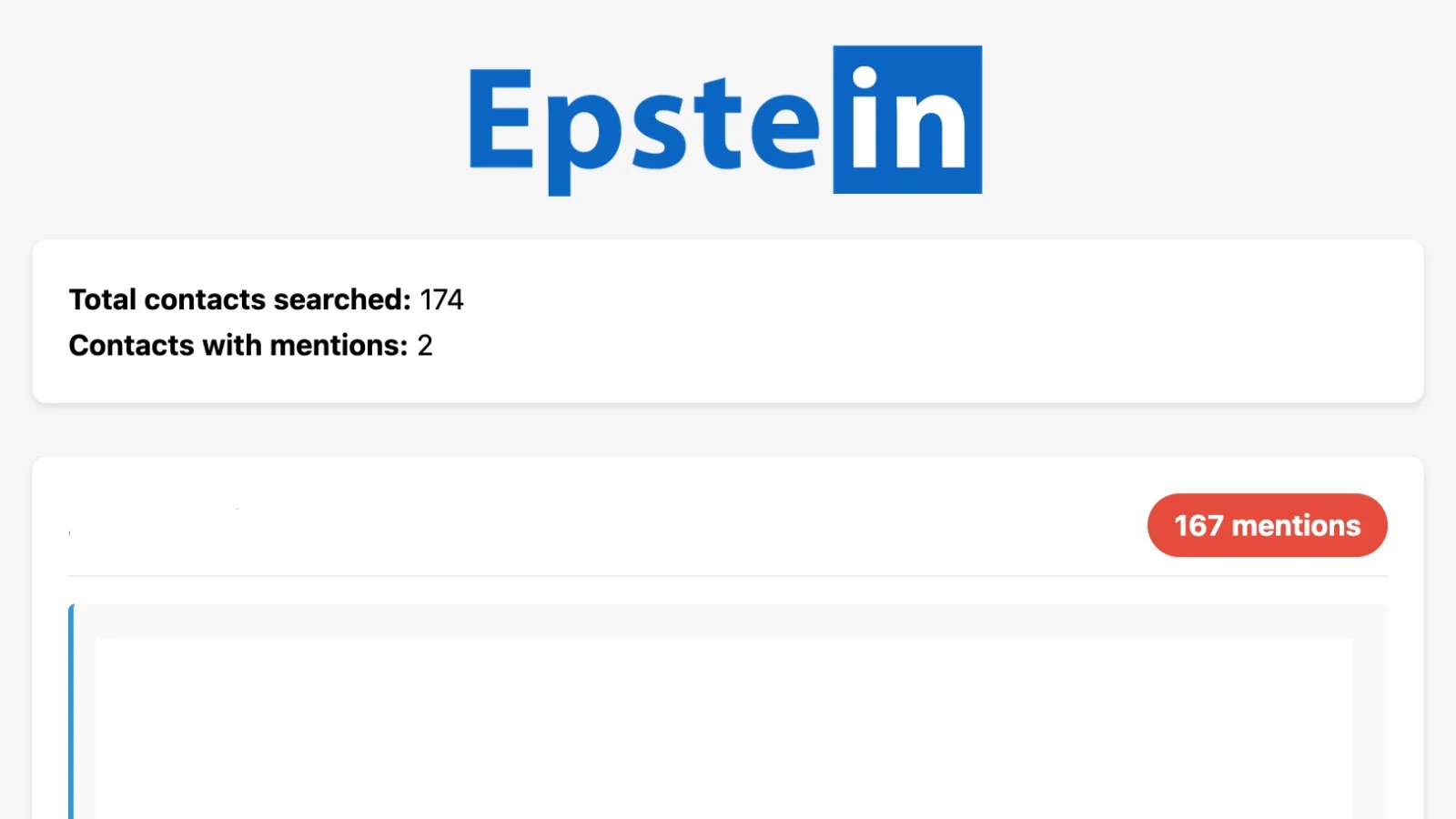
New Epstein Tool Searches LinkedIn Connections Against 3.5 Million Pages Epstein Files
Unveiling Connections: How a New Python Tool Scans LinkedIn Against Epstein Files
The recent release of over 3.5 million pages of Jeffrey Epstein court documents by the U.S. Department of Justice has sparked widespread interest and concern. Amidst the deluge of information, a new open-source Python tool named EpsteIn has emerged, offering a unique and potentially crucial capability: the ability to cross-reference LinkedIn connections against this massive dataset. This development highlights the growing intersection of open-source intelligence (OSINT), network validation, and the profound implications of public records.
What is EpsteIn and How Does it Work?
Developed by Christopher Finke, EpsteIn is an innovative Python tool designed for privacy-conscious users. Its primary function is to enable individuals to determine if any of their LinkedIn connections are mentioned within the extensive Epstein files. Unlike cloud-based solutions that might raise data privacy concerns, EpsteIn operates entirely locally on the user’s machine. This design choice is critical, ensuring that sensitive personal data, such as LinkedIn connection lists, never leaves the user’s control.
The tool achieves its objective by:
- Indexing Mentions: EpsteIn methodically indexes mentions of individuals within the 3.5 million pages of court documents. This indexing process creates a searchable database on the user’s local system.
- LinkedIn Integration: Users securely provide the tool with access to their LinkedIn connection data.
- Cross-Referencing: EpsteIn then cross-references names from the user’s LinkedIn connections against its locally indexed database of names from the Epstein files.
The Drive for Privacy in OSINT Tools
The architect of EpsteIn, Christopher Finke, has deliberately prioritized privacy in its design. In an era where data breaches and privacy violations are commonplace, local execution of such a sensitive tool is a significant advantage. This approach mitigates risks associated with uploading personal network data to third-party servers, which could be vulnerable to attacks or misuse. The interest in EpsteIn underscores a broader trend: the increasing demand for OSINT tools that empower users with information while respecting their privacy and data security.
The development also reflects the public’s desire for transparency and accountability, leveraging publicly available information to conduct personal due diligence. For security analysts and IT professionals, understanding and utilizing such tools, while maintaining ethical boundaries, can be a valuable skill in risk assessment and network analysis.
Why EpsteIn Matters for IT Professionals and Security Analysts
While EpsteIn’s immediate utility is personal, its existence and the underlying concepts have broader implications for IT professionals and security analysts:
- OSINT Prowess: It exemplifies the power and utility of open-source intelligence in uncovering hidden connections and validating networks.
- Supply Chain and Third-Party Risk: In a professional context, similar analytic approaches could be adapted to vet individuals or organizations within a supply chain or as third-party vendors, albeit with robust ethical guidelines and appropriate authorization.
- Data Handling Best Practices: The tool’s privacy-centric design serves as a powerful reminder of the importance of local data processing for sensitive information.
- Ethical Considerations: While powerful, the use of such tools requires careful ethical consideration, particularly when dealing with personal connections and sensitive public records.
Remediation Actions and Best Practices
While EpsteIn is not a vulnerability, its emergence highlights general best practices for professionals interacting with public records and OSINT:
- Strict Data Governance: Implement clear policies for handling sensitive personal data, even when sourced from public records.
- Ethical OSINT Frameworks: Develop and adhere to ethical guidelines for conducting OSINT investigations, ensuring actions are within legal and moral boundaries.
- Privacy-by-Design Principles: When developing internal tools or selecting third-party solutions, prioritize tools that adhere to privacy-by-design principles, similar to EpsteIn’s local execution model.
- Regular Network Review: Periodically review professional networks on platforms like LinkedIn to ensure connections align with professional standards and organizational policies.
Conclusion
The EpsteIn Python tool represents a significant moment in the intersection of public archives, personal networking, and open-source intelligence. By enabling individuals to privately cross-reference their LinkedIn connections against the vast Epstein files, it underscores the ongoing quest for transparency and accountability. For IT professionals and security analysts, it serves as a compelling case study on the capabilities of OSINT, the paramount importance of privacy in data handling, and the considerations necessary when navigating public data for validation and risk assessment.
For more details on the EpsteIn tool and its functionalities, you can refer to the original article at Cyber Security News.




