
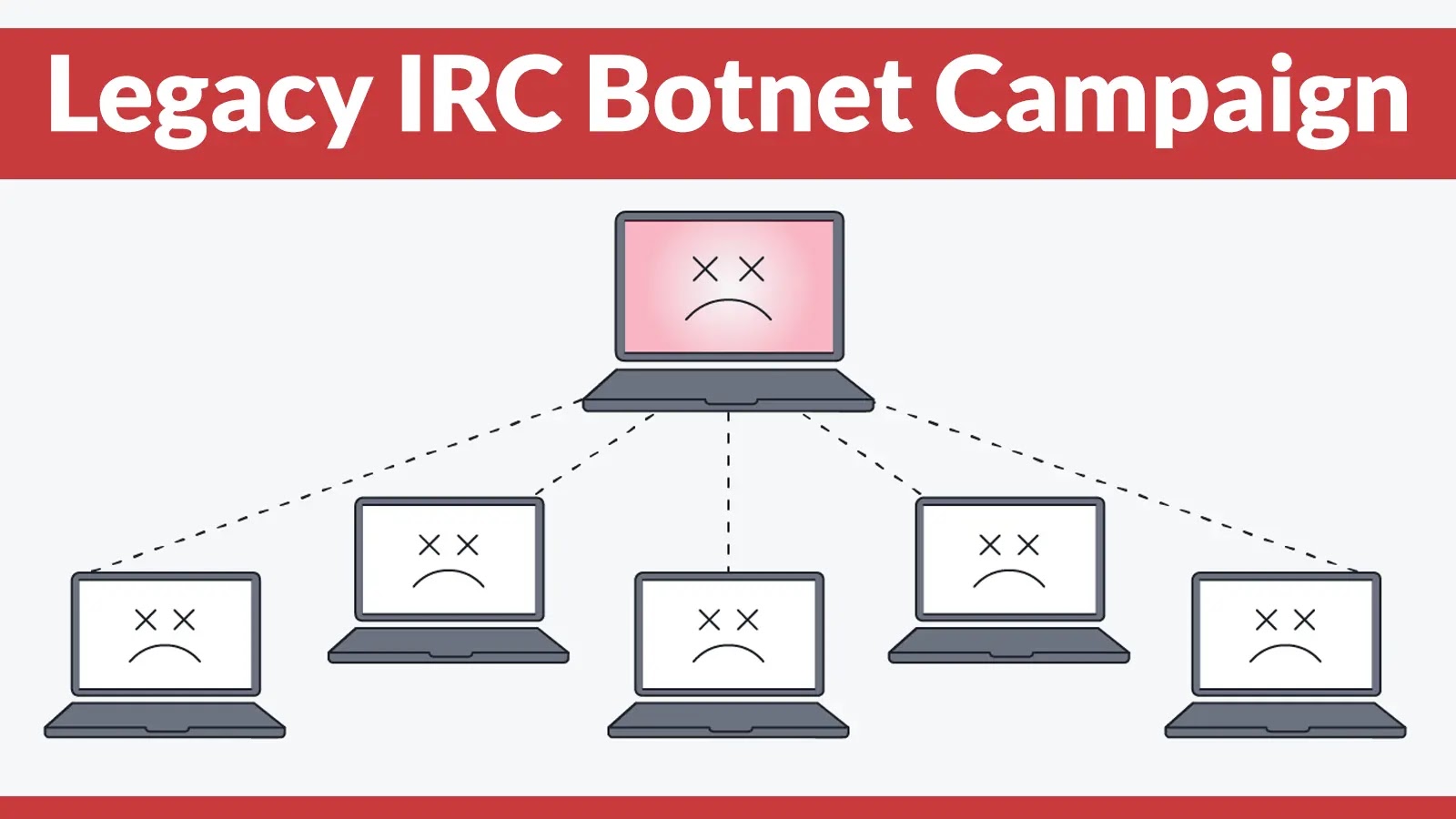
Legacy IRC Botnet Campaign Uses Automated SSH Compromise Pipeline to Enroll Linux Hosts at Scale
The silent hum of servers, the backbone of modern enterprise, often conceals a sinister undercurrent. In the ever-evolving landscape of cyber threats, a legacy attack vector is experiencing a troubling resurgence. We’re observing a sophisticated and automated campaign leveraging a familiar foe – the IRC botnet – to compromise Linux hosts at an alarming scale. This isn’t just another opportunistic scan; it’s a meticulously crafted pipeline targeting SSH, turning vulnerable servers into cogs in a larger, malicious machine. Understanding this new wave of attacks is paramount for any organization reliant on Linux infrastructure.
The Rise of SSHStalker: IRC Botnets Revived
Recent observations, particularly in early 2026 honeypot intrusions, reveal the emergence of a new Linux botnet dubbed SSHStalker. What makes SSHStalker particularly noteworthy is its blend of old and new: it brings back the classic Internet Relay Chat (IRC) protocol for command and control (C2) while employing highly automated techniques to compromise servers via Secure Shell (SSH). This isn’t a blast from the past in a charming, nostalgic way; it’s a stark reminder that even seemingly antiquated protocols can be repurposed for modern threats.
The primary success factor for SSHStalker lies in its brute-force efficiency against common security weaknesses. The botnet systematically targets Linux machines by guessing weak, default, or reused passwords for SSH access. Once a foothold is established, the compromised host is quickly enrolled into the botnet, transforming it into a launchpad for further network scans and the installation of additional malicious components. This automated compromise pipeline allows SSHStalker to expand its dominion with remarkable speed and stealth.
Automated SSH Compromise Pipeline: How It Works
The core mechanism of SSHStalker’s expansion relies on a well-orchestrated, automated process:
- Initial Foothold: The attackers leverage large-scale scanning techniques to identify publicly exposed SSH services.
- Brute-Force and Credential Stuffing: Against identified targets, SSHStalker employs automated tools to attempt to log in using dictionary attacks, brute-force methods, and credential stuffing (reusing leaked username/password combinations). Weak or default credentials are its primary weakness to exploit.
- Payload Delivery: Upon successful authentication, the botnet drops its malicious payload. In observed instances, this has included Golang-based binaries, known for their cross-platform compatibility and ease of deployment.
- Bot Enrollment: The newly compromised server is then configured to connect back to the IRC C2 infrastructure, integrating it into the botnet.
- Lateral Movement and Expansion: The enlisted bot then participates in further reconnaissance and attack campaigns, scanning for new SSH targets to expand the botnet. This creates a self-propagating infection chain, enabling rapid scale.
The Peril of Legacy Protocols and Weak Security
The SSHStalker campaign underscores several critical cybersecurity vulnerabilities:
- IRC for C2: The use of IRC, while considered legacy by many, grants attackers a degree of stealth and resilience. IRC channels can be dynamic and distributed, making it challenging to shut down the C2 infrastructure entirely. Furthermore, traffic detection for IRC might be less scrutinized than more modern C2 protocols.
- Weak SSH Security: The fundamental issue remains the prevalence of weak SSH passwords and poor password hygiene. Organizations continue to expose SSH services with credentials that can be easily guessed or brute-forced, serving as an open invitation to attackers like SSHStalker.
- Lack of Multi-Factor Authentication (MFA): The absence of MFA on SSH access points significantly amplifies the risk. Even if a password is breached, MFA would provide an additional, crucial layer of defense.
- Unpatched Systems: While the primary vector here is weak credentials, it’s always worth noting that unpatched Linux systems can offer additional avenues for compromise once SSHStalker gains a foothold. Maintaining robust patch management is essential.
Remediation Actions and Proactive Defense
Defending against SSHStalker and similar automated botnet campaigns requires a multi-layered approach focusing on hardening your SSH infrastructure and robust security practices.
- Strong Passwords and Key-Based Authentication: Mandate complex, unique passwords for all SSH accounts. Even better, enforce SSH key-based authentication and disable password-based logins entirely. This significantly reduces the attack surface for brute-force attempts.
- Multi-Factor Authentication (MFA): Implement MFA for all SSH access. Solutions like Google Authenticator or hardware tokens add a critical extra layer of security, even if a password or key is compromised.
- Limit SSH Exposure: Do not expose SSH services to the public internet unless absolutely necessary. Utilize VPNs, bastion hosts, or IP whitelisting to restrict access to trusted networks and administrators only.
- Change Default SSH Port: While not a security panacea, changing the default SSH port (22) to a non-standard port can reduce the volume of automated scanning attempts.
- Regular Auditing and Logging: Implement robust logging for SSH access attempts and regularly review these logs for suspicious activity, including failed login attempts and unusual access patterns. Utilize tools like Fail2ban to automatically block IP addresses after multiple failed login attempts.
- Intrusion Detection/Prevention Systems (IDS/IPS): Employ IDS/IPS solutions that can monitor network traffic for suspicious SSH activity, including unusual connection patterns or brute-force attempts.
- Regular Updates and Patching: Keep your Linux operating systems and all installed software up to date. While SSHStalker primarily exploits weak credentials, outdated software can present other vulnerabilities.
- Security Awareness Training: Educate IT staff and administrators about the importance of strong, unique passwords, MFA, and the risks associated with exposing critical services to the internet.
There are no specific CVEs directly associated with the SSHStalker botnet itself, as it primarily exploits weak credentials and misconfigurations rather than a software vulnerability. However, its methods align with common attack patterns. For generalized information on SSH vulnerabilities, you can refer to common weakness enumerations, though specific CVEs would apply to particular SSH daemon implementations. For example, issues in SSH have historically been tracked, such as CVE-2016-0777 (information disclosure in OpenSSH client), but these are different from the credential-based attacks SSHStalker primarily uses.
Key Takeaways for Robust Linux Security
The SSHStalker campaign highlights a critical intersection of legacy attack methodologies and modern automation. It serves as a stark reminder that fundamental security hygiene remains paramount. Organizations must prioritize strong authentication mechanisms, stringent access controls, and continuous monitoring of their Linux infrastructure. The ability of such botnets to rapidly enroll hosts at scale means that a single point of failure – a weak password – can quickly cascade into a widespread compromise. Proactive defense, rather than reactive incident response, is the only sustainable strategy against these relentless threats.




