
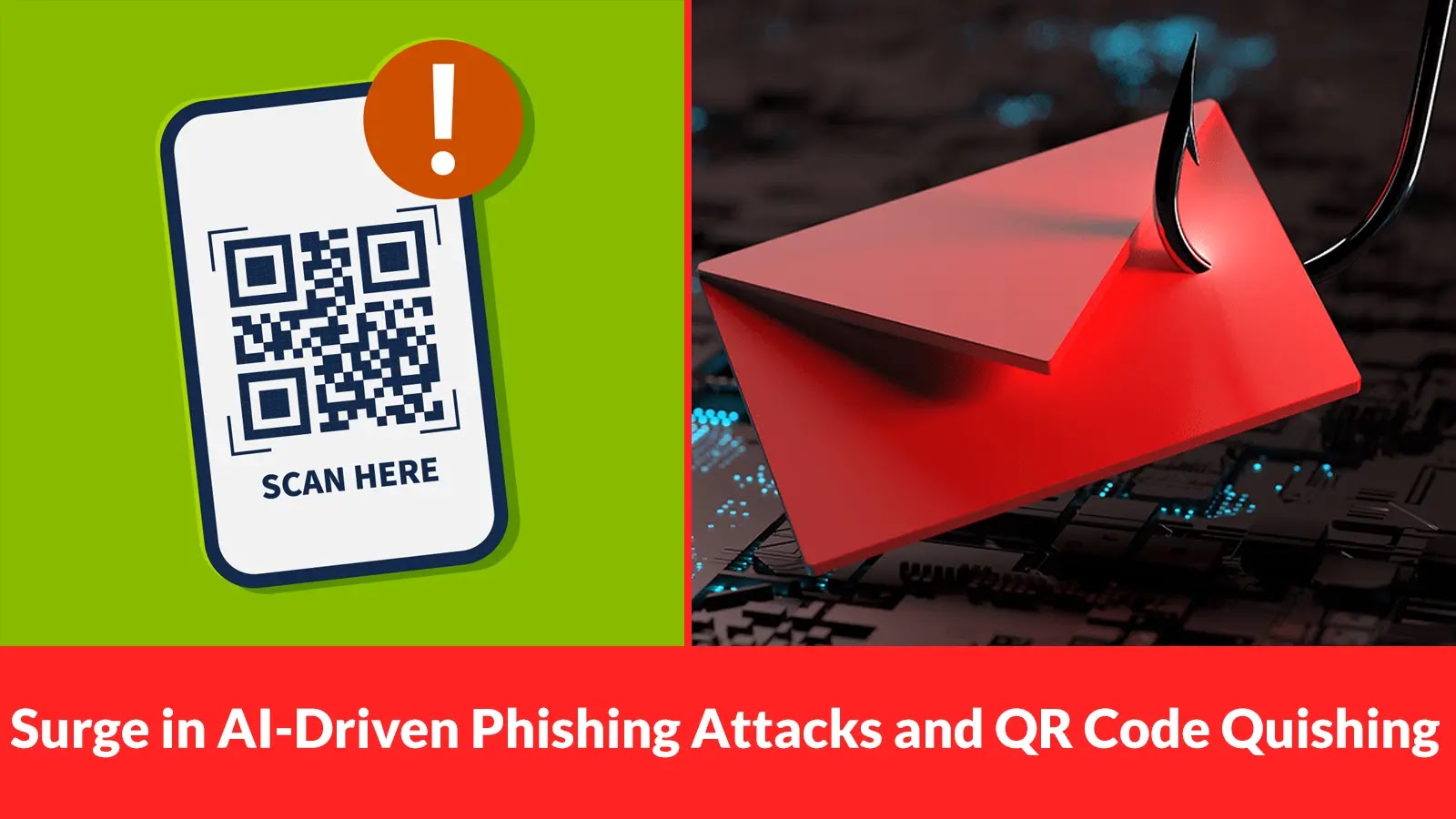
Surge in AI-Driven Phishing Attacks and QR Code Quishing in 2025 Spam and Phishing Report
The AI-Powered Phishing Surge: What the 2025 Spam and Phishing Report Reveals
The digital threat landscape is shifting, with artificial intelligence increasingly weaponized by cybercriminals. A recent report, focusing on spam and phishing trends for 2025, spotlights a significant escalation in AI-driven attacks, particularly concerning advanced phishing tactics and a concerning rise in QR code “quishing.” This analysis delves into the critical findings, offering insights into these emerging threats and, crucially, detailing actionable remediation strategies for organizations and individuals alike.
AI’s Role in Phishing Evolution
The sophistication of phishing attacks has reached new heights, largely due to the integration of AI. Generative AI models are now capable of crafting highly convincing spear-phishing emails, impersonating known contacts or organizations with unprecedented accuracy. These AI-powered campaigns can dynamically adapt their language, tone, and even cultural nuances to maximize their chances of success, making traditional detection methods less effective. The sheer volume and personalized nature of these attacks present a formidable challenge to even the most vigilant security protocols.
QR Code Quishing: A New Attack Vector Emerges
Beyond traditional email-based phishing, the report highlights an alarming surge in “quishing” – phishing attempts executed through malicious QR codes. Cybercriminals are embedding seemingly legitimate QR codes in various contexts: physical posters, direct mail, or even within seemingly benign digital communications. Once scanned, these codes redirect victims to imposter websites designed to harvest credentials or install malware. The ease of deployment and the perceived trustworthiness of QR codes make quishing a particularly insidious threat. For instance, an attacker might replace a legitimate QR code for a restaurant menu with a malicious one, leading unsuspecting patrons to a data-stealing site.
Malicious Software Distribution through Pirated Content
A consistent and highly effective tactic highlighted in the report is the distribution of malicious software through pirated games and cracked applications. This method continues to be a gold mine for threat actors. By leveraging the widespread desire for free access to premium content, attackers bypass initial user suspicions. The report specifically mentions a new campaign exploiting this trend, distributing complex threats directly to personal devices. While specific CVEs are still being cataloged for these latest campaigns, users should be aware that downloading unofficial software significantly elevates their risk exposure. Past campaigns often exploited vulnerabilities in the installation process or bundled trojans with the “cracked” software, sometimes leveraging zero-day exploits before public disclosure, making it difficult to assign a specific CVE until it’s patched and reported.
Remediation Actions and Cybersecurity Best Practices
Mitigating the risks posed by AI-driven phishing and quishing requires a multi-faceted approach, combining robust technological defenses with continuous user education. Proactive measures are essential for safeguarding digital assets.
- Advanced Email Security Gateways: Implement email security solutions equipped with AI and machine learning capabilities to detect sophisticated phishing attempts that bypass traditional filters. These systems should analyze email content, sender reputation, and behavioral anomalies.
- Multi-Factor Authentication (MFA): Enforce MFA across all critical accounts. Even if credentials are compromised via phishing, MFA acts as a crucial secondary defense layer, preventing unauthorized access.
- Endpoint Detection and Response (EDR): Deploy EDR solutions to monitor endpoints for suspicious activities, detect malware, and respond to threats in real-time, especially considering the risks from pirated software.
- Security Awareness Training: Conduct regular, engaging training sessions for all employees. Emphasize the dangers of AI-driven phishing, the mechanics of quishing, and the risks associated with downloading pirated software. Teach users to scrutinize sender details, report suspicious emails, and verify QR codes before scanning.
- QR Code Verification Protocols: Establish internal protocols for verifying the legitimacy of QR codes, especially in corporate environments. Educate users to hover over QR codes with a trusted scanner app if possible, or verify URLs manually before clicking links from scanned codes.
- Software Whitelisting and Patch Management: Implement strict software whitelisting policies to prevent unauthorized applications, including pirated software, from running on corporate devices. Maintain rigorous patch management to address known vulnerabilities promptly. For example, staying updated on patches for operating systems and popular applications can mitigate risks from vulnerabilities like CVE-2023-21554, a critical remote code execution vulnerability that attackers could exploit.
- Incident Response Plan: Develop and regularly test a comprehensive incident response plan for phishing and malware outbreaks, ensuring rapid detection, containment, and recovery.
Tools for Detection and Mitigation
Leveraging the right tools is crucial for enhancing an organization’s defensive posture against these evolving threats.
| Tool Name | Purpose | Link |
|---|---|---|
| Proofpoint Email Protection | Advanced email security, phishing detection, and threat intelligence. | https://www.proofpoint.com/us/products/email-protection |
| Microsoft Defender for Endpoint | EDR for endpoint security, threat detection, and automated investigation. | https://www.microsoft.com/en-us/security/business/microsoft-defender-for-endpoint |
| KnowBe4 Security Awareness Training | Comprehensive security awareness training and simulated phishing campaigns. | https://www.knowbe4.com/ |
| CrowdStrike Falcon Insight | Cloud-native EDR and Extended Detection and Response (XDR) platform. | https://www.crowdstrike.com/products/endpoint-security/falcon-insight-edr/ |
| Cisco Secure Email | Email security gateway with threat protection and data loss prevention. | https://www.cisco.com/c/en/us/products/security/email-security/index.html |
Looking Ahead: Adapting to the AI-Enhanced Threat Landscape
The rise of AI-driven phishing and QR code quishing signals a critical evolution in cyber warfare. As illuminated by the 2025 Spam and Phishing Report, cybercriminals are relentlessly innovating, using advanced technologies to bypass defenses and exploit human vulnerabilities. Organizations and individuals must prioritize robust security measures, including advanced technological safeguards and persistent security awareness education. Proactive vigilance and a commitment to continuous adaptation are not merely advisable; they are imperative for navigating the complexities of an increasingly AI-enhanced threat landscape.




