
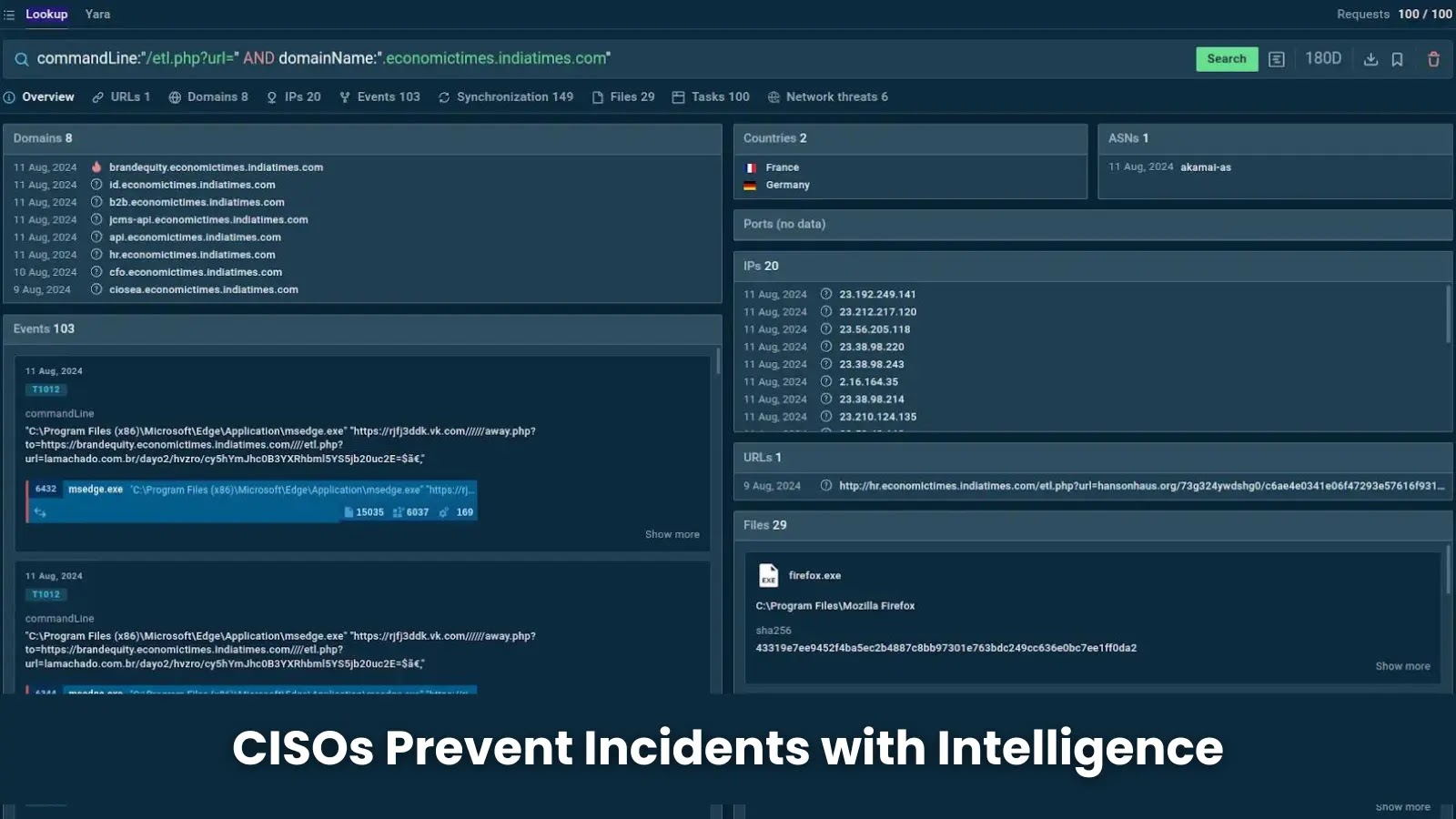
How CISOs Can Prevent Incidents with the Right Threat Intelligence
Somewhere, right now, a sophisticated threat actor is meticulously probing the defenses of an organization that believes itself impenetrable. This company has invested heavily in an advanced firewall, a robust EDR solution, and a SIEM churning out thousands of alerts daily. Its dedicated Security Operations Center (SOC) team maintains a vigilant two-shift rotation. Yet, despite these efforts, an initial foothold will soon escalate to lateral movement, data exfiltration, culminating in a regulatory notification, a grim board presentation, and a damaging headline. The breach is already in motion. Are you equipped to stop it?
The core issue isn’t a lack of effort; it’s a critical deficit in timing and intelligence. By the time many organizations detect an active intrusion, the average dwell time for attackers still spans days, and the financial repercussions routinely extend into the millions. CISOs in 2026 confront a stark paradox: cybersecurity budgets are at an all-time high, but the threat landscape is expanding at an even more rapid pace, often outstripping the capacity of those budgets. This scenario leads to an proliferation of tools, an overwhelming volume of alerts, and increased noise – effectively leaving less time to address what truly matters.
The solution isn’t simply more detection. It’s earlier, smarter prevention. And this pivotal shift demands one crucial element above all else: actionable threat intelligence.
The Evolving Threat Landscape and CISO’s Challenge
The modern cyber threat environment is characterized by its agility, sophistication, and relentless pressure. Advanced Persistent Threats (APTs), nation-state actors, and financially motivated cybercriminal groups constantly refine their tactics, techniques, and procedures (TTPs). Organizations are under siege from ransomware (e.g., attacks exploiting vulnerabilities like CVE-2023-38891 in WinRAR or CVE-2023-27350 in PaperCut MF/NG), supply chain attacks, and sophisticated phishing campaigns. The sheer volume of incoming alerts from various security tools often creates analysis paralysis within SOC teams, obscuring genuine threats amidst the noise.
CISOs are tasked with safeguarding sprawling digital estates that encompass on-premise infrastructure, multi-cloud environments, remote workforces, and an ever-growing array of IoT devices. Traditional perimeter-based defenses are no longer sufficient against attackers who skillfully exploit vulnerabilities and leverage social engineering to bypass detection. Effective cybersecurity in this era moves beyond mere reaction; it demands proactive foresight fueled by superior intelligence.
The Power of Actionable Threat Intelligence
Actionable threat intelligence transforms raw data into strategic insights, allowing CISOs to anticipate, prevent, and respond to threats more effectively. It moves organizations from a reactive stance to a proactive defense posture. This isn’t just about indicators of compromise (IOCs) like malicious IP addresses or hash values; it encompasses a broader spectrum:
- Strategic Intelligence: High-level analysis of threat actor capabilities, motivations, and common targets. This informs long-term security strategy and investment decisions.
- Tactical Intelligence: Information on specific TTPs used by threat actors, helping security teams understand how adversaries operate. This guides defensive playbook development and incident response planning.
- Operational Intelligence: Details about specific attack campaigns, including IOCs, exploited vulnerabilities (e.g., CVE-2023-46805 and CVE-2024-21887 in Ivanti Connect Secure), and attack infrastructure. This is critical for immediate threat detection and blocking.
When integrated correctly, this intelligence allows organizations to understand not just what is happening, but why and who is behind it, enabling targeted defenses.
Integrating Threat Intelligence for Proactive Prevention
To truly prevent incidents, CISOs must embed threat intelligence into every layer of their security operations:
1. Proactive Vulnerability Management
Threat intelligence provides context to vulnerability scanning results. Instead of patching everything, intelligence identifies which vulnerabilities (e.g., a critical flaw like CVE-2024-24919 in Palo Alto Networks PAN-OS) are actively being exploited “in the wild” or are being targeted by relevant threat actors. This allows teams to prioritize patching efforts, focusing resources on the most immediate and dangerous risks.
2. Enhanced Detection and Response
Feeding real-time IOCs and TTPs into SIEM, EDR, and other security tools significantly improves their detection capabilities. Security analysts can create stronger detection rules, hunt for specific adversary behaviors, and reduce false positives by understanding the true context of alerts. This shortens dwell time and accelerates incident response.
3. Strategic Security Investments
Understanding emerging threats and adversary capabilities through strategic threat intelligence helps CISOs make informed decisions about technology investments. It ensures that security budgets are allocated to solutions that address the most pertinent and evolving risks, rather than reacting to yesterday’s threats.
4. Improved Incident Response Planning
By simulating attack scenarios based on known adversary TTPs, organizations can refine their incident response plans and practice critical playbooks. This preparedness minimizes the impact of actual breaches by ensuring a swift and coordinated response.
5. Educating the Human Firewall
Threat intelligence can inform targeted security awareness training. If intelligence indicates a rise in sophisticated spear-phishing campaigns leveraging a particular social engineering technique, awareness programs can be tailored to equip employees with the knowledge to identify and report such attempts effectively.
Remediation Actions for CISOs
To leverage threat intelligence effectively and move towards proactive prevention, CISOs should consider the following actions:
- Invest in a Reputable Threat Intelligence Platform (TIP): Evaluate TIPs that offer comprehensive feeds (strategic, tactical, operational), integrate with existing security tools, and provide actionable insights, not just raw data.
- Develop a Dedicated Threat Intelligence Function: Establish a team or allocate resources to collect, analyze, and disseminate threat intelligence relevant to your organization’s specific threat landscape.
- Integrate Intelligence with Security Operations: Ensure seamless feeding of IOCs and TTPs into your SIEM, EDR, SOAR, and firewall rulesets. Automate where possible to accelerate response.
- Contextualize Vulnerability Management: Use threat intelligence to prioritize patching efforts. Focus on vulnerabilities (e.g., CVE-2024-3400 in Palo Alto Networks GlobalProtect Gateway) that are actively exploited or of high interest to relevant threat groups.
- Conduct Regular Threat Hunting: Proactively search for signs of adversary activity within your network, using threat intelligence as a guide, rather than solely relying on alerts.
- Foster Information Sharing: Participate in industry-specific ISACs/ISAOs and other trusted communities to share and receive threat intelligence.
Conclusion
For CISOs in today’s complex cybersecurity landscape, the emphasis must shift from purely detecting incidents to actively preventing them. This paradigm shift is not achievable through increased spending on more detection tools alone. It requires a strategic commitment to earlier, smarter prevention, fundamentally powered by actionable threat intelligence. By effectively integrating strategic, tactical, and operational intelligence into every facet of their security program, organizations can move beyond reactive defense to a proactive posture, significantly reducing the likelihood and impact of breaches. The battle against cyber adversaries is a continuous intelligence game, and those who play it smartest will ultimately prevail.




