
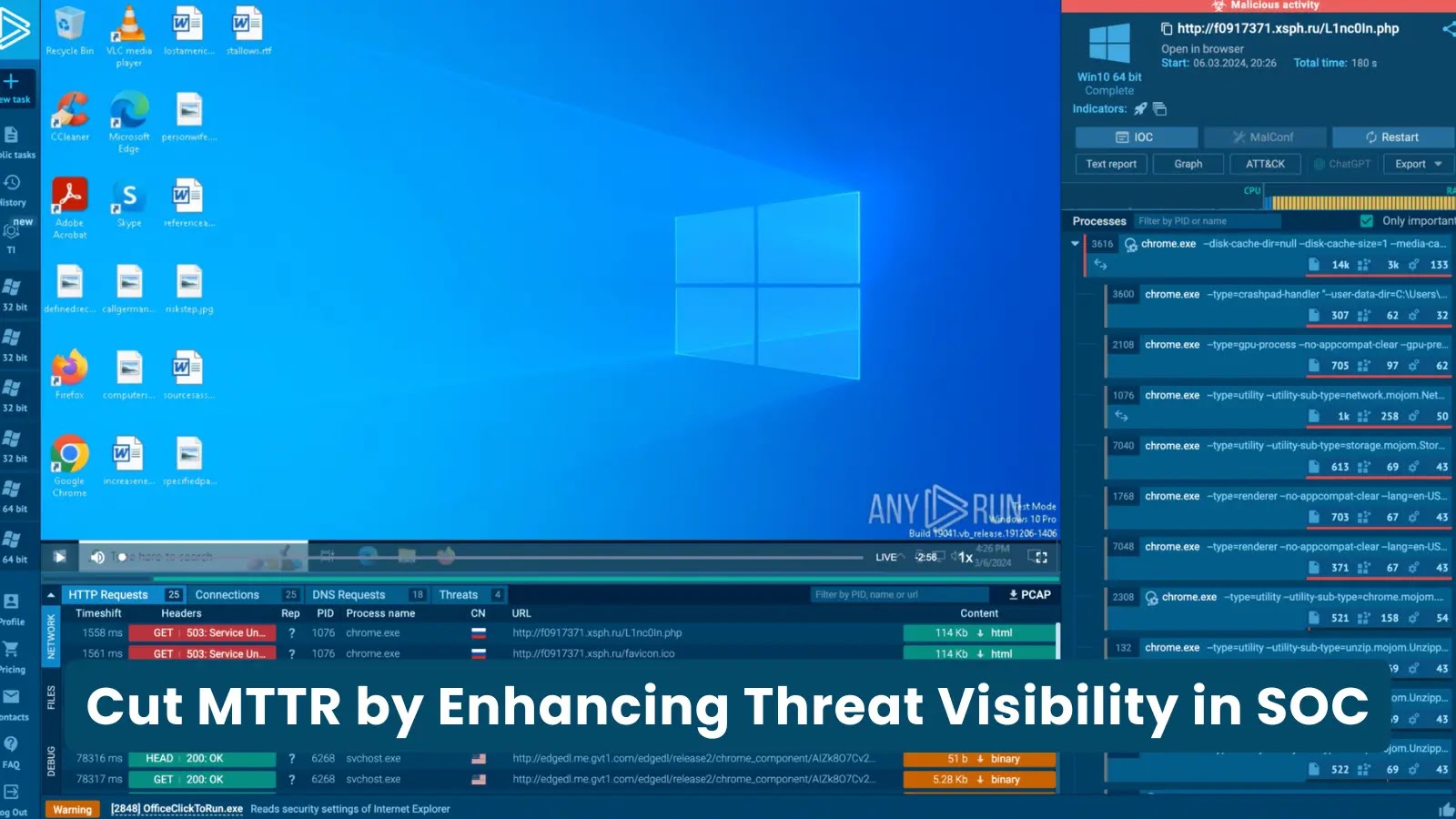
How to Cut MTTR by Improving Threat Visibility in Your SOC
Elevating SOC Efficacy: Bolstering Threat Visibility to Reduce MTTR
The security operations center (SOC) faces an unrelenting barrage of threats. Amidst this constant pressure, one key performance indicator (KPI) has transcended its technical classification to become a critical measure of an organization’s defensive posture: Mean Time to Respond (MTTR). While often discussed in boardrooms and technical forums, the true impact of MTTR, particularly its relationship with threat visibility, warrants a deeper examination.
MTTR, at its core, quantifies the average time between a threat’s inception and its complete resolution. A lower MTTR signifies a more agile, effective, and ultimately, a more resilient security apparatus. But achieving this lower MTTR isn’t a simple matter of speed; it hinges profoundly on the clarity and comprehensiveness of threat visibility within the SOC.
Understanding the Impact of Poor Threat Visibility on MTTR
Inadequate threat visibility is a significant impediment to achieving a low MTTR. When security analysts lack a complete picture of an incident, the detection, containment, eradication, and recovery phases are all extended. This elongated response time can lead to increased data breaches, greater financial losses, and significant reputational damage.
- Delayed Detection: Without sufficient telemetry across an organization’s attack surface, malicious activities can persist undetected for extended periods. This ‘dwell time’ directly inflates MTTR.
- Inefficient Investigation: Disparate or incomplete data sources force analysts to spend valuable time manually correlating information, hindering their ability to understand the scope and impact of a threat quickly.
- Suboptimal Containment: Lacking visibility into affected systems or user accounts can result in incomplete containment efforts, allowing threats to resurface or spread further.
- Prolonged Eradication and Recovery: A fuzzy understanding of the attack vector and persistence mechanisms makes accurate threat eradication difficult, prolonging recovery efforts and increasing the risk of re-infection.
Key Pillars of Enhanced Threat Visibility
Improving threat visibility within the SOC requires a multi-faceted approach, integrating various tools and strategies to create a unified and comprehensive view of the security landscape.
- Endpoint Detection and Response (EDR): EDR solutions provide continuous monitoring and data collection from endpoints, offering deep insights into processes, network connections, and file system changes. This granular data is crucial for early detection and rapid investigation of endpoint-specific threats.
- Network Detection and Response (NDR): NDR platforms monitor network traffic for suspicious patterns, anomalies, and known attack signatures. By analyzing north-south and east-west traffic, NDR can identify lateral movement, command and control (C2) communications, and data exfiltration attempts.
- Security Information and Event Management (SIEM): SIEM systems aggregate logs and security events from diverse sources across the IT environment, normalizing and correlating them to identify potential incidents. A well-tuned SIEM is fundamental for centralizing visibility and triggering alerts based on predefined rules or behavioral anomalies.
- Cloud Security Posture Management (CSPM) and Cloud Workload Protection Platforms (CWPP): As organizations increasingly leverage cloud resources, visibility into cloud environments becomes paramount. CSPM helps identify misconfigurations and policy violations, while CWPP protects workloads running in the cloud from targeted attacks.
- User and Entity Behavior Analytics (UEBA): UEBA solutions establish baselines of normal user and entity behavior, then flag deviations that could indicate malicious activity. This is particularly effective at detecting insider threats or compromised credentials.
Implementing a Unified Approach to Visibility
Fragmented visibility tools, while individually valuable, can still lead to blind spots and operational inefficiencies if not integrated effectively. A unified approach focuses on consolidating data and orchestrating responses.
- Data Normalization and Correlation: Ensure that data from all visibility sources is normalized into a common format, allowing for seamless correlation and analysis within the SIEM or a dedicated Security Orchestration, Automation, and Response (SOAR) platform.
- Threat Intelligence Integration: Incorporate external threat intelligence feeds to enrich internal security data. Knowing about emerging threats, indicators of compromise (IOCs), and attack techniques (e.g., those detailed in APT reports or associated with specific CVEs like CVE-2023-38831, a critical remote code execution vulnerability in WinRAR that has been widely exploited) can significantly improve detection capabilities.
- Automated Workflows: Leverage SOAR platforms to automate repetitive tasks, such as initial alert triage, data enrichment, and containment actions. This frees up analysts to focus on more complex investigations.
- Regular Security Audits and Penetration Testing: Proactively identify gaps in visibility by conducting regular security audits and penetration tests. These exercises can simulate real-world attacks and highlight where current monitoring capabilities fall short.
Remediation Actions: Practical Steps for SOC Teams
To directly impact MTTR through improved visibility, SOC teams should implement the following:
- Consolidate and Integrate Security Tools: Reduce tool sprawl by focusing on platforms that offer comprehensive coverage and strong integration capabilities.
- Establish Clear Logging Policies: Ensure consistent and sufficient logging across all critical systems, applications, and networks.
- Develop Robust Alerting Mechanisms: Fine-tune alerts to minimize false positives while ensuring critical threats are promptly flagged. Contextual enrichment of alerts with threat intelligence is vital.
- Invest in Analyst Training: Equip security analysts with the skills to effectively utilize advanced visibility tools and interpret complex security data.
- Run Regular Incident Response Drills: Practice incident response scenarios based on various threat types to identify and address weaknesses in visibility and response workflows.
- Implement Deception Technologies: Deploy honeypots and other deception tools to lure attackers and gain early insight into their tactics, techniques, and procedures (TTPs).
By proactively addressing these challenges and continuously enhancing threat visibility, SOCs can significantly reduce their MTTR, transforming from reactive units into proactive bastions of organizational security.




