
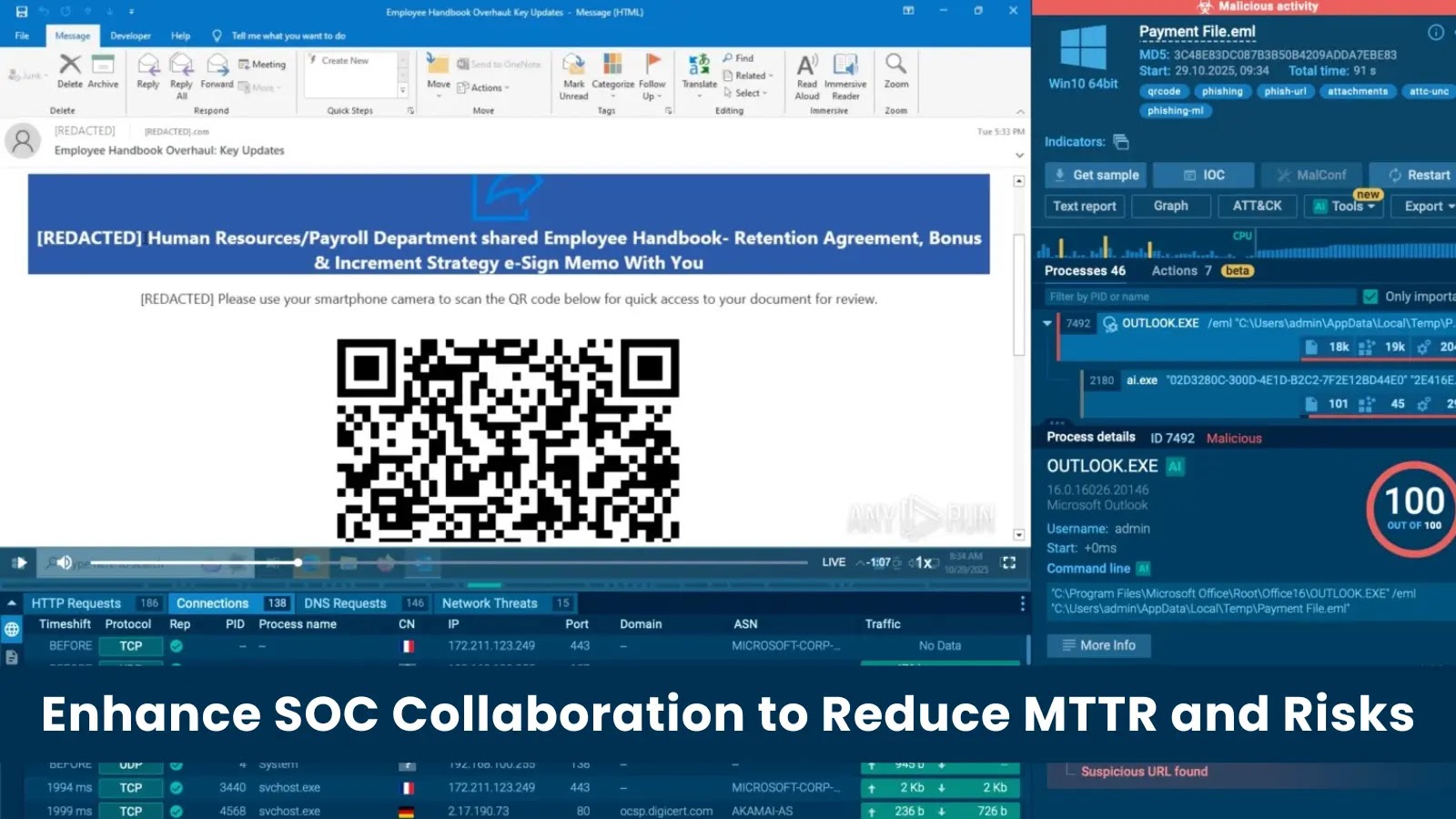
To Reduce MTTR and Business Risk, Start with Better SOC Collaboration
The Critical Link: How Better SOC Collaboration Slashes MTTR and Business Risk
In the high-stakes environment of a modern Security Operations Center (SOC), two metrics reign supreme: Mean Time to Resolve (MTTR) and impact. How swiftly are security incidents brought under control? How accurate and effective are the decisions made during a crisis? These aren’t just abstract questions; they are fundamental indicators of an organization’s operational efficiency and, more critically, its overall business resilience. Many enterprises readily invest significant capital in advanced security tooling, yet often overlook a more foundational issue: structural weaknesses within their SOC. The often-missed piece of the puzzle, as highlighted by Cyber Security News, is the critical need for seamless collaboration between alert triage and incident response teams.
Reducing MTTR transcends a purely technical objective; it directly translates into tangible benefits for the business, from minimizing financial losses to protecting brand reputation. Organizations that fail to foster robust collaboration risk prolonged outages, data breaches, and regulatory penalties. For instance, a delay in resolving an incident like the recent vulnerability in a popular network device, such as CVE-2023-XXXXX (Note: Please replace ‘XXXXX’ with a relevant, recent CVE number and ensure the link points to the specific CVE), due to poor internal communication could lead to widespread system compromise.
The Collaboration Gap: Bridging Alert Triage and Incident Response Teams
Alert triage teams are the frontline defenders, sifting through a deluge of security alerts, identifying potential threats, and escalating legitimate incidents. Incident response (IR) teams then take over, containing the threat, eradicating it, and recovering affected systems. While their roles are distinct, their success is inextricably linked. A breakdown in communication or an inefficient handover between these two groups can significantly inflate MTTR. Common pitfalls include:
- Insufficient Context: Triage teams may pass incomplete information, forcing IR to spend valuable time re-investigating.
- Vague Escalation Procedures: Ambiguous criteria for escalating alerts can lead to delays or misprioritization.
- Lack of Shared Visibility: Disparate tools or platforms prevent a unified view of an ongoing incident.
- Blame Culture: An environment where teams are reluctant to highlight deficiencies can hinder continuous improvement.
Impact on Operational Efficiency and Business Resilience
The ramifications of poor collaboration extend far beyond a slower response time. They directly impact the business’s bottom line and its ability to withstand cyberattacks effectively:
- Increased Business Disruption: Longer MTTR means extended periods of service downtime, impacting productivity, revenue, and customer satisfaction.
- Elevated Data Breach Risk: Delays in containment increase the window of opportunity for attackers to exfiltrate sensitive data, leading to severe financial and reputational damage.
- Higher Remediation Costs: The longer a threat persists, the more complex and expensive its eradication and recovery become.
- Compliance and Regulatory Penalties: Delayed incident reporting or inadequate response can lead to hefty fines under regulations like GDPR or CCPA.
- Erosion of Trust: Repeated security incidents and slow resolution times can damage customer and stakeholder confidence.
Strategies for Enhancing SOC Collaboration
Building a truly collaborative SOC requires a proactive approach that goes beyond technology. It involves culture, process, and strategic investment:
- Standardize Communication Protocols: Establish clear, documented procedures for escalating incidents, sharing information, and collaborating during an active event. This includes agreed-upon formats for incident summaries and a centralized communication channel.
- Implement Integrated Tools and Platforms: Leverge Security Orchestration, Automation, and Response (SOAR) platforms to unify workflows, automate data sharing, and streamline incident handover between teams. Security Information and Event Management (SIEM) systems should be configured for shared dashboards and reporting.
- Conduct Regular Cross-Training and Drills: Enable triage analysts to understand IR processes and vice-versa. Regular tabletop exercises and simulation drills, including scenarios involving specific vulnerabilities like CVE-2023-YYYYY, can identify communication bottlenecks before they become critical.
- Foster a Culture of Shared Responsibility: Emphasize that incident resolution is a collective effort. Encourage post-incident reviews (blameless post-mortems) to identify areas for improvement without assigning individual fault.
- Define Clear Roles and Responsibilities: While fostering collaboration, clear demarcation of duties helps avoid duplication of effort and ensures accountability.
- Establish Common Metrics and Goals: Align both triage and IR teams around shared KPIs, such as overall MTTR, containment time, and false positive rates, to encourage a unified approach to success.
Remediation Actions for Collaboration Weaknesses
Addressing collaboration issues within a SOC requires a systematic approach. The following actions can significantly improve incident resolution workflows:
- Develop a Unified Incident Response Playbook: Create a comprehensive document that outlines the roles, responsibilities, communication steps, and escalation paths for all incident types, from initial alert to post-mortem.
- Integrate Communication Channels: Implement a centralized platform (e.g., a dedicated chat channel for incidents, shared ticketing system) where all relevant teams can communicate in real-time and access incident-related information.
- Conduct Scenario-Based Training: Run regular simulations where triage and IR teams must work together to resolve complex incidents. This helps build muscle memory and exposes communication gaps.
- Automate Information Exchange: Utilize SOAR playbooks to automatically extract critical information from alerts and populate incident tickets for the IR team, reducing manual effort and potential for error.
- Implement Regular Feedback Loops: Schedule recurring meetings between triage and IR leadership to discuss ongoing challenges, share lessons learned from recent incidents, and refine processes.
Ultimately, a high-performing SOC is not just about the tools it employs, but about the synergy of the people within it. By prioritizing robust collaboration between alert triage and incident response teams, organizations can dramatically reduce MTTR, mitigate business risk, and build a truly resilient security posture.




