
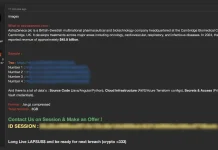
AstraZeneca Data Breach – LAPSUS$ Group Allegedly Claims Access to Internal Data
The digital defenses of a global pharmaceutical giant have reportedly been breached, sending ripples through the cybersecurity community. This time, the alleged orchestrators are the notorious LAPSUS$ group, claiming to have infiltrated AstraZeneca’s internal systems. The emergence of a claimed 3GB internal data dump for sale suggests a concerning evolution in LAPSUS$’s tactics, shifting towards direct monetisation of pilfered data. This incident underscores the relentless and evolving threat landscape faced by critical sectors, including pharmaceuticals.
LAPSUS$: A Resurgence and Shift in Tactics
The LAPSUS$ hacking collective has, for some time, been a significant force in the cyber threat arena, known for their audacious and often high-profile breaches targeting major technology firms. Their typical modus operandi involved gaining initial access, exfiltrating sensitive data, and then leveraging that data for extortion, often through direct contact with victims or public shaming. This alleged AstraZeneca breach, however, hints at a potential pivot. The reported attempt to sell a compressed 3GB internal data dump on the dark web indicates a move towards a “pay-to-access” extortion model, where the value lies not just in the data itself but in the exclusive access granted to potential buyers. This strategy could open new avenues for monetisation and distribution of compromised information.
AstraZeneca Under Siege: The Alleged Breach Details
While specific details are still emerging, the allegation from LAPSUS$ points to a successful intrusion into AstraZeneca’s internal infrastructure. The claim of possessing a 3GB compressed data dump is a substantial indicator of a significant compromise, potentially encompassing sensitive corporate information, research data, or employee records. A breach of this magnitude, particularly within the pharmaceutical sector, has far-reaching implications. It not only poses a direct risk to AstraZeneca’s intellectual property and operational integrity but could also impact patient data privacy if such information was compromised. The lack of specific CVEs in the initial reporting suggests this may not be a simple exploit of a known vulnerability but rather a more complex attack chain potentially involving social engineering or credential theft.
Impact and Implications for the Pharmaceutical Sector
The pharmaceutical industry is a prime target for cybercriminals due to the immense value of intellectual property, research and development data, and sensitive patient information. A breach like the one allegedly perpetrated against AstraZeneca can lead to significant financial losses, reputational damage, and a loss of public trust. Furthermore, compromised research data could undermine years of scientific effort, while the exposure of corporate strategies could give competitors an unfair advantage. This incident serves as a stark reminder that even well-resourced organisations with robust security postures are not immune to sophisticated threat actors like LAPSUS$.
Remediation Actions for Enhanced Cybersecurity
Organisations, especially those in critical sectors, must proactively strengthen their cybersecurity defenses against evolving threats. While the full extent of the AstraZeneca breach is still under investigation, general remediation actions are crucial:
- Implement Multi-Factor Authentication (MFA): Enforce MFA across all systems and services, especially for remote access and privileged accounts, to significantly reduce the risk of credential-based attacks.
- Regular Security Audits and Penetration Testing: Conduct frequent external and internal penetration tests and security audits to identify and address vulnerabilities before threat actors can exploit them.
- Employee Security Awareness Training: Continuously train employees on identifying and reporting phishing attempts, social engineering tactics, and other common attack vectors.
- Robust Endpoint Detection and Response (EDR): Deploy and actively monitor EDR solutions to detect and respond to suspicious activities on endpoints in real-time.
- Network Segmentation: Implement strict network segmentation to limit lateral movement within the network in case of a breach, containing the impact.
- Data Loss Prevention (DLP): Utilize DLP solutions to monitor and control data in motion, at rest, and in use, preventing sensitive information from leaving the organisational perimeter.
- Incident Response Plan (IRP): Develop, regularly review, and practice a comprehensive incident response plan to ensure a swift and effective reaction to security incidents.
- Patch Management: Maintain a rigorous patch management program to ensure all systems and software are up-to-date with the latest security patches.
Conclusion
The alleged LAPSUS$ breach impacting AstraZeneca highlights the persistent and adapting nature of cyber threats. It underscores the critical need for robust cybersecurity measures, continuous vigilance, and a proactive approach to security by organisations worldwide. As threat actors refine their techniques, from direct extortion to selling access to stolen data, businesses must similarly evolve their defenses to protect their invaluable assets and maintain trust in an increasingly interconnected digital landscape.




