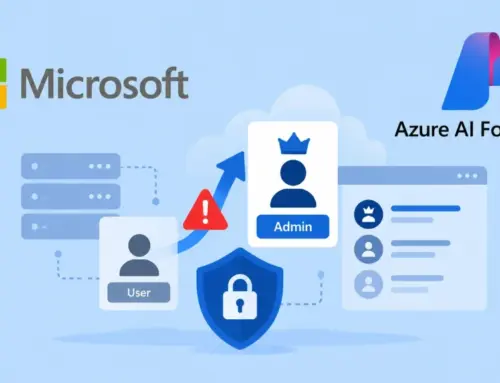
Microsoft Details New Security Safeguards for Generative AI Models on Azure AI Foundry
Navigating the AI Frontier: Microsoft’s Enhanced Security for Generative Models in Azure AI Foundry
The explosive growth of generative artificial intelligence presents unprecedented opportunities, but it also ushers in a complex new landscape of security challenges. Organizations leveraging these powerful models must now contend with an evolving threat surface that bridges traditional software supply chain vulnerabilities with the unique risks inherent to AI. Microsoft has responded directly to this critical need by detailing a robust framework of security safeguards specifically designed to protect generative AI models hosted on its Azure AI Foundry platform.
This initiative directly addresses the growing concern among enterprises regarding the integrity, confidentiality, and reliability of their AI investments. As generative AI becomes increasingly integral to business operations, ensuring its security is no longer merely an IT concern, but a fundamental aspect of organizational resilience and trust.
Understanding the Core Security Challenges of Generative AI
Generative AI models, by their very nature, introduce new vectors for attack and exploitation. Unlike traditional software, their vulnerabilities can stem not just from coding errors, but from the data they are trained on, the prompts they receive, and the very output they produce. Key challenges include:
- Prompt Injections: Malicious inputs designed to manipulate the model’s behavior or extract sensitive training data.
- Model Poisoning: Introduction of malicious data into the training set to subtly alter the model’s output or introduce biases.
- Data Exfiltration: Exploiting the model to inadvertently reveal confidential information it was trained on.
- Bias and Fairness Issues: Reinforcement or amplification of harmful biases present in training data, leading to discriminatory or unethical outputs.
- Supply Chain Risks: Vulnerabilities within the various components, libraries, and datasets used to build and deploy generative AI models.
Microsoft’s Multi-Layered Security Approach for Azure AI Foundry
Microsoft’s new safeguards for Azure AI Foundry demonstrate a comprehensive, multi-layered approach to securing generative AI. These measures extend beyond conventional cybersecurity practices, integrating AI-specific protections throughout the model lifecycle. The core tenets of their strategy focus on:
- Secure Development Lifecycle for AI: Implementing security best practices from the initial design phase of AI models, including secure coding, regular security reviews, and vulnerability management adapted for AI components.
- Data Governance and Privacy Controls: Robust mechanisms to manage, protect, and track the data used for training and inference. This includes strict access controls, data anonymization techniques, and compliance adherence.
- Prompt and Output Safeguards: Techniques to filter and validate user prompts, detect and mitigate adversarial inputs, and monitor model outputs for potential misuse or harmful content. This often involves real-time scanning and content moderation.
- Model Integrity and Trustworthiness: Measures to ensure the authenticity and reliability of the AI models themselves, protecting against tampering, unauthorized modifications, and ensuring traceability of model versions.
- Threat Detection and Response: Continuous monitoring of AI systems for anomalous behavior, potential attacks, and real-time incident response capabilities tailored to AI-specific threats.
- Transparency and Explainability: Tools and processes that help users understand how AI models make decisions, fostering trust and enabling better identification of biases or errors.
These safeguards are not merely theoretical; they are integrated into the Azure AI Foundry platform, providing a secure environment for organizations to develop, deploy, and scale their generative AI applications with confidence.
Remediation Actions for Organizations Leveraging Generative AI
While Microsoft provides foundational security within Azure AI Foundry, organizations must also adopt their own best practices to create a comprehensive defense strategy. Proactive measures are crucial:
- Implement Strict Access Controls: Apply the principle of least privilege to all users and services interacting with generative AI models and their underlying data.
- Regularly Audit and Monitor: Continuously monitor application logs, model inputs, and outputs for suspicious patterns or anomalies. Leverage AI-specific monitoring tools where available.
- Sanitize and Validate Inputs: Implement robust input validation and sanitization filters to prevent prompt injections and other adversarial attacks.
- Employ Content Filtering for Outputs: Use AI-powered content filtering to review and potentially block harmful, biased, or sensitive outputs from generative models before they reach end-users.
- Secure Your Data Supply Chain: Vet all data sources, open-source libraries, and third-party components used in building your AI models for vulnerabilities. This mirrors traditional software supply chain security but with an AI lens.
- Define Responsible AI Usage Policies: Establish clear ethical guidelines and usage policies for your generative AI applications, and ensure all stakeholders understand and adhere to them.
- Stay Informed on AI Security Research: The field of AI security is rapidly evolving. Regularly review research, attend webinars, and engage with the security community to stay ahead of emerging threats. For instance, understanding concepts like adversarial examples (e.g., as discussed in research related to CVE-2022-29007, though not directly AI vulnerability, it highlights the attack surface for complex systems) is critical.
- Consider Model Observability Tools: Leverage tools that provide insights into model behavior, allowing for quicker detection of drift, bias, or malicious manipulation.
Conclusion: Building Trust in the Age of Generative AI
Microsoft’s commitment to enhancing security for generative AI models on Azure AI Foundry is a significant step forward in establishing a trusted environment for this transformative technology. By providing a detailed framework of safeguards, they empower businesses to innovate with generative AI while proactively managing inherent risks. However, enterprise-level security is a shared responsibility. Organizations must complement these platform-level protections with their own diligent security practices, robust governance, and a continuous commitment to staying informed about the evolving threat landscape. Securing generative AI is not a one-time task; it is an ongoing journey essential for fostering confidence and realizing the full potential of artificial intelligence.