
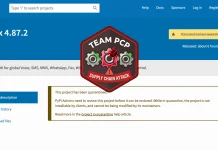
Telnyx PyPI Package With 742,000 downloads Compromised in TeamPCP Supply Chain Attack
Telnyx PyPI Package Compromised in TeamPCP Supply Chain Attack
A critical incident has unfolded within the Python Package Index (PyPI), directly impacting the official Telnyx Python SDK. As cybersecurity professionals are acutely aware, software supply chain attacks represent a significant threat vector, and this latest event is a stark reminder of their potent danger. The Telnyx package, boasting a substantial 742,000 downloads, was compromised as part of an ongoing, weeks-long campaign attributed to the sophisticated threat actor group, TeamPCP.
The Compromise: Malicious Versions and Timelines
On March 27, 2026, at precisely 03:51 UTC, malicious versions 4.87.1 and 4.87.2 of the telnyx package were surreptitiously uploaded to PyPI. These versions were not benign updates; they carried a payload designed for silent execution at the time of import. This method of compromise is particularly insidious as it allows the malicious code to run immediately upon a developer or system simply importing the compromised library into their project, often without any immediate noticeable change in expected functionality.
The scale of this attack is considerable given the package’s wide adoption. Any project or developer that pulled these specific versions during the window of compromise would have been susceptible to the embedded malicious content. This underscores the importance of rigorous supply chain security practices and proactive monitoring for anomalous package updates.
Understanding Supply Chain Attacks and TeamPCP
A supply chain attack targets an organization by finding vulnerabilities in its upstream suppliers or service providers. In this context, PyPI acts as a critical link in the software supply chain for Python developers. By injecting malicious code into a widely used package like Telnyx’s SDK, TeamPCP bypassed direct network defenses and targeted downstream users relying on the integrity of open-source repositories.
TeamPCP has been identified as the orchestrator behind this escalating campaign. While the specific motives behind their operations can vary, such attacks often aim for data exfiltration, system compromise, or establishing persistent access within target environments. The sustained nature of their campaign indicates a well-resourced and determined adversary.
Potential Impact of the Compromise
The “silent execution at import time” characteristic of the payload is highly concerning. Depending on the nature of the malicious code, the impact could range from:
- Data Exfiltration: Compromised systems could have sensitive data, API keys, credentials, or other proprietary information siphoned off to attacker-controlled infrastructure.
- Remote Code Execution (RCE): The payload could establish a backdoor, granting TeamPCP unauthorized remote access and control over affected systems.
- Further Infection: The compromised package could serve as a beachhead for deploying additional malware, ransomware, or other hostile payloads within the victim’s environment.
- System Disruption: Malicious code could corrupt data, delete files, or disrupt normal operations, leading to significant downtime and operational costs.
Users who imported versions 4.87.1 or 4.87.2 of the telnyx package are at significant risk and should assume compromise.
Remediation Actions for Affected Users
Immediate and decisive action is required for all users and organizations that have integrated the Telnyx Python SDK into their projects, especially if they pulled versions 4.87.1 or 4.87.2 around March 27, 2026.
- Identify Affected Systems: Review your dependency management logs (e.g.,
pip freeze,poetry.lock,requirements.txt) to ascertain if your projects ever installed or updated totelnyx==4.87.1ortelnyx==4.87.2. - Rollback/Upgrade: Immediately rollback to a known good version of the
telnyxpackage (e.g., 4.87.0 or earlier stable versions) or upgrade to the officially sanctioned patched version once confirmed by Telnyx. Do NOT install the compromised versions. - Audit and Scan: Perform a comprehensive security audit of all systems that ran code linked with the compromised package. This includes static application security testing (SAST) and dynamic analysis (DAST) on affected applications.
- Credential Rotation: Assume all credentials, API keys, and secrets that were accessible to or used by applications importing the compromised Telnyx SDK have been compromised. Immediately rotate these credentials.
- Network Monitoring: Enhance network monitoring for any anomalous outbound connections or suspicious activity originating from systems where the compromised package was used.
- Incident Response: Activate your organization’s incident response plan. Isolate affected systems, collect forensic evidence, and conduct a thorough investigation to understand the full scope of the compromise.
- Stay Informed: Monitor official communications from Telnyx and PyPI for further updates and guidance regarding this incident.
Recommended Tools for Detection and Mitigation
Leveraging security tools is crucial for identifying and mitigating risks associated with supply chain compromises.
| Tool Name | Purpose | Link |
|---|---|---|
| Snyk | SCA (Software Composition Analysis) for identifying vulnerable dependencies. | https://snyk.io/ |
| Dependabot (GitHub) | Automated dependency updates and vulnerability alerts. | https://docs.github.com/en/code-security/dependabot/about-dependabot |
| OWASP Dependency-Check | Identifies project dependencies and checks for known vulnerabilities. | https://owasp.org/www-project-dependency-check/ |
| YARA Rules | Customizable pattern matching for malware detection (if specific signatures become available). | https://virustotal.github.io/yara/ |
| OSSEC HIDS | Host-based intrusion detection for file integrity monitoring and log analysis. | https://www.ossec.net/ |
Conclusion
The compromise of the Telnyx PyPI package by TeamPCP serves as a stark reminder of the persistent and evolving threats within the software supply chain. Organizations must prioritize robust security practices, including vigilant dependency management, active vulnerability scanning, and prompt incident response capabilities. The incident reinforces the need for developers to scrutinize third-party dependencies and for security teams to implement comprehensive strategies to detect and mitigate supply chain risks before they lead to widespread compromise. CVE information for this specific incident is likely to be assigned as the investigation progresses. Keep a watch on reputable security advisories for updates on relevant CVEs, which will be accessible via the official CVE database.




