
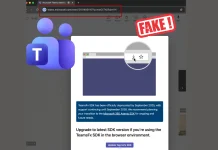
Hackers Using Fake “Microsoft Teams” Domains to Attack Users Via Malicious Payload
The digital landscape, while offering unparalleled connectivity and efficiency, is a constant battleground against evolving cyber threats. A stark reminder of this ongoing struggle comes with recent threat intelligence: cybercriminals are exploiting the very tools designed to enhance collaboration. Specifically, hackers are now launching sophisticated attacks using fake Microsoft Teams domains to infect users with malicious payloads, according to revelations from SEAL Org.
As Microsoft Teams remains an indispensable communication platform for enterprises worldwide, its pervasive use in remote and hybrid work environments makes it a prime target for threat actors. Understanding the mechanics of these new attacks and implementing robust defenses is no longer optional – it’s a critical imperative for maintaining organizational security.
The Deceptive Lure: Fake Microsoft Teams Domains
The core of this attack vector lies in its deceptive simplicity. Cybercriminals are registering and utilizing domains that closely mimic legitimate Microsoft Teams infrastructure. These fake domains are then leveraged in various social engineering schemes, designed to trick unsuspecting corporate users into believing they are interacting with the genuine platform.
The objective is clear: compel users to download what appears to be a legitimate file, update, or application related to Microsoft Teams. In reality, these downloads contain malicious payloads, often designed to establish persistence, exfiltrate data, or deploy further malware like ransomware.
How the Attack Unfolds
- Phishing and Spear-Phishing: Attackers send emails or messages containing links to these fake domains. These communications are often crafted to appear urgent or important, prompting users to click without critical examination.
- Drive-by Downloads: In some scenarios, visiting a malicious or compromised website that silently redirects to a fake Teams domain could initiate a download, even without explicit user interaction in some cases.
- Malicious Payloads: Once downloaded and executed, the payloads can range from information-stealing malware to remote access Trojans (RATs), keyloggers, or even ransomware. These tools allow attackers to gain unauthorized access, monitor activity, or cripple systems.
- Credential Theft: The fake domains might also be used to present a convincing login page for Microsoft Teams, tricking users into entering their corporate credentials, which are then harvested by the attackers.
The Impact of Successful Compromise
A successful attack using this methodology can have devastating consequences for an organization. Beyond the immediate disruption, the potential impacts include:
- Data Breaches: Sensitive corporate data, intellectual property, and personal identifiable information (PII) of employees or customers can be exfiltrated.
- Financial Loss: Ransomware attacks can halt operations and demand significant payments, while business email compromise (BEC) schemes stemming from credential theft can lead to fraudulent transactions.
- Reputational Damage: Data breaches and security incidents erode customer trust and can severely damage a company’s public image.
- Operational Downtime: Remediation efforts and system recovery can lead to prolonged operational interruptions, impacting productivity and revenue.
Remediation Actions and Proactive Defenses
Protecting against these sophisticated social engineering attacks requires a multi-layered approach focusing on technology, processes, and user education.
- User Education and Awareness Training: Regularly train employees to identify phishing attempts, scrutinize unusual links, and verify sender authenticity. Emphasize the importance of never downloading files from unverified sources.
- Strong Email and Web Security: Implement advanced threat protection (ATP) solutions for email and web gateways. These solutions should include URL filtering, sandbox analysis for attachments, and anti-phishing capabilities.
- Domain Monitoring: Proactively monitor for look-alike domains that mimic your organization’s or commonly used service providers’ legitimate domains. Services like those offered by SEAL Org often include such threat intelligence.
- Multi-Factor Authentication (MFA): Enforce MFA for all corporate accounts, especially for accessing communication platforms like Microsoft Teams. This significantly reduces the impact of stolen credentials.
- Endpoint Detection and Response (EDR): Deploy EDR solutions to monitor endpoints for suspicious activity, detect malicious payloads that bypass initial defenses, and enable rapid response to incidents.
- Network Segmentation: Implement network segmentation to limit lateral movement within the network if an endpoint is compromised.
- Regular Software Updates: Ensure all operating systems, applications, and security software are regularly updated and patched to address known vulnerabilities. While this attack primarily targets user behavior, keeping systems hardened is always good practice.
- Secure Browsing Practices: Encourage the use of secure browsers with built-in phishing protection and consider implementing DNS filtering to block access to known malicious domains.
Tools for Detection and Mitigation
| Tool Name | Purpose | Link |
|---|---|---|
| Microsoft Defender for Office 365 | Advanced threat protection for email and Teams, including phishing and malware detection. | Official Product Page |
| Proofpoint Email Security | Comprehensive email threat protection, including advanced phishing and URL rewriting. | Official Product Page |
| KnowBe4 Security Awareness Training | Employee security awareness training and simulated phishing campaigns. | Official Product Page |
| Cisco Umbrella | Cloud-delivered security that blocks access to malicious domains and IPs at the DNS layer. | Official Product Page |
| DomainTools | Domain ownership and threat intelligence, useful for identifying look-alike domains. | Official Product Page |
Conclusion
The emergence of fake Microsoft Teams domains as an attack vector underscores the persistent threat of social engineering, particularly when combined with the widespread adoption of collaboration tools. Organizations must move beyond basic security measures and adopt a proactive, comprehensive strategy that integrates cutting-edge technology with continuous security education for all users. Staying informed about the latest threat intelligence, such as that provided by organizations like SEAL Org, is crucial for anticipating and countering these sophisticated cyber threats.




