
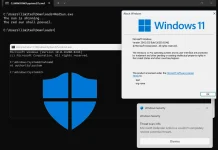
Microsoft Defender 0-Day Vulnerability “RedSun” Enables Full SYSTEM Access
Unmasking RedSun: A Critical Microsoft Defender 0-Day Threat
The cybersecurity landscape has once again been shaken by the discovery of a critical zero-day vulnerability. This time, the spotlight falls on Microsoft Defender, a cornerstone of security for millions of Windows users. Dubbed “RedSun,” this newly disclosed flaw allows an unprivileged user to escalate their privileges to full SYSTEM-level access on a wide range of systems. This isn’t just another vulnerability; it’s a stark reminder of the persistent and evolving threats we face, especially when core security components are targeted. As of its disclosure in April 2026, RedSun remains unpatched, leaving systems exposed.
What is RedSun? Understanding the Microsoft Defender 0-Day
RedSun represents a significant escalation in potential attack vectors. At its core, the vulnerability exploits a flaw within Microsoft Defender, the built-in antivirus and anti-malware solution present across modern Windows operating systems. The most alarming aspect is its ability to grant an attacker, starting with low-level user privileges, full SYSTEM access. This level of access is akin to having complete control over the compromised machine, enabling arbitrary code execution, data exfiltration, system modification, and the establishment of persistent backdoors. This zero-day has been confirmed to impact fully patched systems including Windows 10, Windows 11, and Windows Server 2019 and later, highlighting its widespread potential impact.
The discovery of RedSun closely follows another zero-day exploit within a two-week period in April 2026, underscoring a concerning trend of active exploitation and rapid disclosure of critical vulnerabilities affecting widely used software.
The Impact of SYSTEM-Level Access
Gaining SYSTEM-level access through the RedSun vulnerability is the ultimate prize for an attacker. With these elevated privileges, a malicious actor can:
- Execute Arbitrary Code: Run any program or command on the system, including installing malware, ransomware, or other undesirable software.
- Access and Exfiltrate Sensitive Data: Read, modify, or delete any file on the system, including user data, system configurations, and proprietary information.
- Create Persistent Backdoors: Establish mechanisms to regain access to the system even after reboots or security patches.
- Disable Security Controls: Turn off antivirus, firewalls, and other security measures, making further attacks easier to execute.
- Lateral Movement: Use the compromised system as a launchpad to attack other systems within the network.
This level of compromise can lead to severe business disruption, data breaches, and significant financial and reputational damage.
Remediation Actions and Mitigative Strategies
Given that RedSun is a zero-day vulnerability and currently unpatched, immediate and comprehensive remediation is challenging. However, proactive mitigation strategies are crucial to minimize risk.
- Stay Vigilant for Official Patches: Continuously monitor Microsoft’s official security advisories and prioritize the deployment of any forthcoming patches addressing this vulnerability.
- Implement Principle of Least Privilege (PoLP): Ensure all users and applications operate with the minimum necessary permissions. This reduces the attack surface even if an initial compromise occurs.
- Network Segmentation: Isolate critical systems and sensitive data on separate network segments. This can contain the blast radius of a successful exploit.
- Endpoint Detection and Response (EDR) Solutions: Deploy and
configure advanced EDR solutions to monitor for suspicious activity and
potential privilege escalation attempts. Behavioral analysis can help
detect anomalies indicative of exploitation. - Regular Security Audits and Penetration Testing: Conduct
frequent security audits and penetration tests to identify potential
weaknesses and validate the effectiveness of existing security controls. - Application Whitelisting: Restrict the execution of
unauthorized applications. This can prevent attackers from running
malicious executables even if they gain some level of access. - User Awareness Training: Educate users about phishing
and social engineering tactics, as these are often the initial vectors for
unprivileged access.
Detection and Analysis Tools
While a direct patch for RedSun is pending, leveraging advanced security tools can aid in detecting indicators of compromise (IoCs) and potential exploitation attempts.
| Tool Name | Purpose | Link |
|---|---|---|
| Microsoft Defender for Endpoint | Advanced EDR capabilities for detecting anomalous behavior and potential exploits. | View Details |
| Sysmon | Monitors and logs system activity, helping identify unusual process creation, network connections, and file modifications indicative of compromise. | Download Here |
| Elastic Security (SIEM/EDR) | Collects, analyzes, and correlates security logs from various sources to detect threats and facilitate incident response. | Explore Platform |
| Splunk Enterprise Security | A comprehensive SIEM solution for real-time monitoring, threat detection, and incident investigation. | Learn More |
Conclusion: The Ongoing Battle Against Zero-Days
The RedSun 0-day vulnerability in Microsoft Defender serves as a potent reminder of the dynamic and relentless nature of cyber threats. While the absence of an immediate patch presents a significant challenge, it also underscores the critical importance of a layered security approach. Organizations must remain proactive, implementing robust detection capabilities, adhering to the principle of least privilege, and maintaining constant vigilance for official security updates. As cybersecurity professionals, our role is to anticipate, detect, and respond, continually adapting our defenses to safeguard against sophisticated attacks like RedSun. The fight for secure systems is a continuous journey, and staying informed and prepared is our most potent weapon.




