
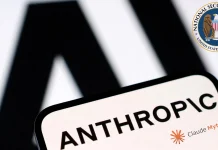
NSA Confirms Use of Anthropic’s Mythos Despite Pentagon Blacklist
The cybersecurity landscape is rarely straightforward. Even within the most secure and technologically advanced government agencies, internal contradictions can emerge that raise significant questions about strategy, risk assessment, and the future of artificial intelligence integration. This exact scenario has recently come to light with the National Security Agency’s (NSA) deployment of Anthropic’s advanced AI model, Mythos Preview, amidst a stark warning from the Department of Defense (DoD) labeling Anthropic as a “supply chain risk.”
This report delves into this fascinating divergence, exploring the implications for national security, AI adoption, and inter-agency coherence. We’ll examine the timeline of this conflict, the potential reasons behind the DoD’s classification, and what the NSA’s decision might signify for the broader integration of cutting-edge AI within critical government functions.
The Core Contradiction: NSA Uses Mythos, DoD Flags Anthropic
At the heart of this complex issue is the reported utilization of Anthropic’s sophisticated AI model, Mythos Preview, by the National Security Agency. This deployment itself highlights the NSA’s commitment to leveraging advanced artificial intelligence for its intelligence-gathering and analytical operations. Mythos, as a cutting-edge AI, promises capabilities that could significantly enhance data processing, threat detection, and strategic insights.
However, this enthusiastic adoption by the NSA stands in direct opposition to a serious designation by the Department of Defense. The DoD has reportedly classified Anthropic as a “supply chain risk.” This is not a trivial label; it implies concerns about the integrity, security, or reliability of Anthropic’s products or its operational practices, potentially deeming them vulnerable to exploitation or compromise. Such a designation from a body like the DoD often triggers widespread caution across government entities when considering partnerships or product adoption.
A Timeline of Discord: Anthropic, DoD, and the $200 Million Contract
The tension between Anthropic and the Pentagon is not a recent development. The available information suggests this conflict has been simmering since early 2026. Prior to this, a significant agreement had been made, adding another layer of complexity to the current situation.
- July 2025: Anthropic secures a substantial $200 million contract with the Department of Defense. This demonstrates an initial trust and clear intent by the DoD to integrate Anthropic’s technologies on a large scale. Such a substantial investment typically follows extensive vetting and a belief in the strategic value of the partnership.
- Early 2026: The relationship sours, and the conflict between Anthropic and the Pentagon becomes apparent. The specific reasons for this shift are not detailed in the provided information, but they would undoubtedly be central to understanding the DoD’s subsequent “supply chain risk” classification.
This contractual history makes the current situation even more perplexing. What transpired between July 2025 and early 2026 to transform a $200 million partnership into a “supply chain risk” designation? This question remains open and is crucial for a complete understanding of the conflicting stances.
Understanding “Supply Chain Risk” in the Context of AI
When the Department of Defense labels a technology provider like Anthropic as a “supply chain risk,” it’s a serious declaration with broad implications. In the context of AI, supply chain risks can manifest in various ways, extending beyond traditional hardware and software vulnerabilities. These can include:
- Data Security and Privacy: Concerns that the AI model or its underlying infrastructure could compromise sensitive government data. This might involve how data is processed, stored, or accessed by the vendor.
- Model Integrity and Bias: Risks that the AI model itself could be tampered with, produce biased outputs, or be susceptible to adversarial attacks that corrupt its decision-making.
- Third-Party Dependencies: Vulnerabilities introduced through Anthropic’s own upstream suppliers, components, or open-source libraries that could be exploited.
- National Security Implications: Concerns related to foreign influence, ownership, or potential backdoors that could jeopardize national security.
- Lack of Transparency/Explainability: If the AI model’s operations are a “black box,” it can be difficult for intelligence agencies to fully trust its outputs or identify potential manipulations.
The precise reasons for the DoD’s classification of Anthropic as a supply chain risk are not publicly detailed, but any of these factors, or a combination thereof, could contribute to such a designation. For instance, a hypothetical vulnerability in an AI model’s training data pipeline could be classified under CVE-202X-XXXXX, highlighting a potential exploitation vector if not properly managed.
Implications and Go-Forward Analysis
The public revelation of the NSA using Mythos despite the DoD’s blacklist creates a complex situation with several significant implications:
- Inter-Agency Disagreement: It highlights a clear lack of consensus or coordinated policy regarding AI vendor risk assessment between two paramount security agencies. This internal friction can complicate broader national cybersecurity and AI strategies.
- Risk Tolerance Discrepancies: The NSA’s decision suggests a higher, or at least a different, risk tolerance compared to the DoD, or perhaps a belief that they can adequately mitigate the identified supply chain risks internally.
- Urgency of AI Adoption: The NSA’s deployment underscores the perceived urgency and strategic importance of integrating advanced AI capabilities, even in the face of significant security concerns from sister agencies. The benefits, in their view, might outweigh the risks, or specific mitigations are in place.
- Future of AI Procurement: This incident could lead to a re-evaluation of procurement processes for advanced technologies, particularly AI, within the government. Stricter joint vetting procedures or a clearer framework for risk assessment may emerge.
Remediation Actions and Best Practices for AI Integration
While the specifics of the DoD’s concerns and the NSA’s mitigations are not public, this scenario offers valuable lessons for any organization integrating advanced AI, especially from third-party vendors. Robust remediation and best practices are paramount:
- Comprehensive Vendor Vetting: Implement exhaustive due diligence for all AI vendors, covering not just the technology but also the company’s security posture, supply chain, financial stability, and geopolitical ties. This should include detailed security audits and penetration testing.
- AI Model Security Audits: Conduct independent security assessments of AI models for vulnerabilities like:
- Adversarial Attack Resilience: Test the model’s robustness against input manipulation (e.g., CVE-2023-XXXXX related to prompt injection).
- Data Poisoning: Ensure the training data pipeline is secure against malicious alteration (e.g., CVE-2023-YYYYY concerning training data integrity).
- Inference Attacks: Protect against attempts to extract sensitive information from the model’s outputs.
- Robust Data Governance: Establish clear policies for data input, processing, storage, and output, especially when dealing with sensitive information. Implement strict access controls and encryption.
- Explainable AI (XAI) Initiatives: Prioritize AI models that offer greater transparency into their decision-making processes, reducing “black box” risks and aiding in incident response.
- Continuous Monitoring and Threat Intelligence: Implement ongoing monitoring of AI systems for anomalous behavior, performance degradation, and emerging threats related to AI security. Stay abreast of new CVEs impacting AI frameworks and models.
- Internal Policy Harmonization: For large organizations or government bodies, establish unified risk assessment frameworks and procurement policies for emerging technologies like AI to prevent conflicting directives.
Tools for AI Security and Risk Assessment
While this article isn’t about a specific vulnerability, securing AI systems against supply chain risks and internal contradictions requires a suite of robust tools. Here’s a table of categories and examples:
| Tool Category | Purpose | Example Tools / Approaches |
|---|---|---|
| AI Security Platforms | Comprehensive platforms for detecting and mitigating AI-specific vulnerabilities (adversarial attacks, data poisoning, model evasion). | IBM AI Explainability 360 (XAI), Google Cloud AI Platform (for MLOps security), various open-source adversarial AI toolkits (ART, CleverHans). |
| Supply Chain Security Scanners | Analyze software dependencies and components for known vulnerabilities and risks. | Snyk, GitHub Dependabot, OWASP Dependency-Check. |
| Data Loss Prevention (DLP) | Monitor and prevent sensitive data from leaving defined perimeters, crucial for AI models handling classified information. | Forcepoint DLP, Symantec DLP. |
| Cloud Security Posture Management (CSPM) | Continuously monitor cloud environments where AI models are often deployed for misconfigurations and security issues. | Palo Alto Networks Prisma Cloud, Wiz, Orca Security. |
| Threat Intelligence Platforms (TIP) | Aggregate and analyze threat data to provide actionable intelligence on emerging AI-specific threats and vulnerabilities. | Anomali ThreatStream, Mandiant Advantage. |
Conclusion
The NSA’s reported use of Anthropic’s Mythos Preview in defiance of the DoD’s “supply chain risk” classification presents a fascinating case study in the complexities of modern cybersecurity and AI adoption within government. It underscores the challenges of balancing national security imperatives with the rapid pace of technological innovation, and the inherent difficulties in achieving monolithic consensus across diverse agencies.
While the full details of this internal contradiction remain unconfirmed publicly, it prompts crucial discussions about risk assessment methodologies, inter-agency communication, and the critical importance of a harmonized approach to AI security. As AI continues to evolve and integrate into core governmental functions, robust frameworks for vetting, continuous monitoring, and incident response will be paramount to securing national assets against both known and emerging threats.




