OilRig Hides C2 Configuration in Google Drive Image Using LSB Steganography
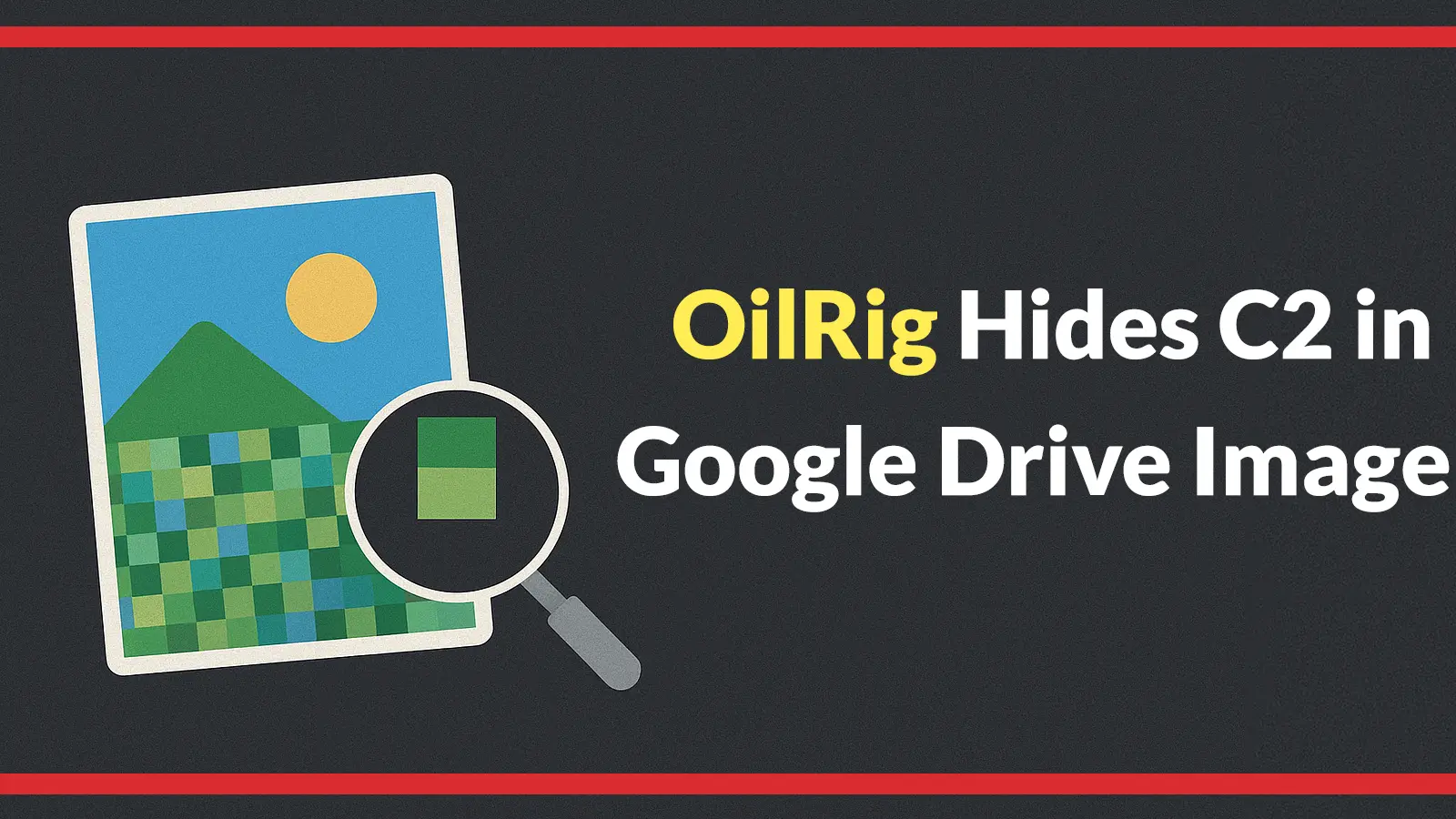
In the intricate world of cyber warfare, advanced persistent threats (APTs) continuously seek innovative methods to evade detection. One such group, the notorious Iranian state-sponsored hacking collective known as OilRig (also tracked as APT34 and Helix Kitten), has recently demonstrated a sophisticated technique that underscores this ongoing cat-and-mouse game. They have been observed embedding their command-and-control (C2) server configurations directly into seemingly innocuous image files hosted on Google Drive, leveraging the subtle art of steganography. This method allows them to maintain a low profile, making traditional detection mechanisms significantly more challenging.
OilRig’s Stealthy Approach: LSB Steganography
OilRig’s latest tactic involves a technique called Least Significant Bit (LSB) steganography. At its core, LSB steganography is a method of hiding data within a digital file, such as an image, audio, or video file, without significantly altering the perceivable output. In the context of images, this involves manipulating the least significant bit of each pixel’s color value. These tiny alterations are typically imperceptible to the human eye, yet they can be used to store a substantial amount of hidden information.
- The threat actors reportedly embed their encrypted C2 server configuration within a standard PNG image file.
- This image is then stored on a legitimate platform like Google Drive, blending in with countless other publicly accessible files.
- The use of LSB ensures that the image file’s appearance remains unchanged, making it difficult for an unsuspecting user or automated security tool to identify it as malicious.
The Role of Google Drive in C2 Infrastructure
Employing Google Drive as a host for their steganographically hidden C2 configurations offers several advantages for OilRig:
- Legitimate Domain Reliance: Traffic to and from Google Drive is generally considered legitimate by network security solutions, making it harder to flag as suspicious.
- Global Availability and Redundancy: Google Drive’s robust infrastructure provides high availability and global reach for their C2 operations.
- Evasion of Traditional Blocking: Organizations are unlikely to block access to Google Drive outright, as it is a widely used business tool, providing a persistent channel for communication.
Understanding Command and Control (C2)
A Command and Control (C2) server is a central component of any sophisticated cyberattack. Once malware has successfully infiltrated a system, it needs to communicate with its orchestrator to receive further instructions, exfiltrate data, or deploy additional malicious payloads. The C2 configuration embedded by OilRig would typically contain vital information such as:
- The IP address or domain name of the C2 server.
- Port numbers for communication.
- Encryption keys or protocols used for secure communication between the compromised host and the C2 server.
- Instructions on how often to check in with the server.
By hiding this critical configuration data within an image, OilRig significantly increases the stealth factor of their operations, making it harder for defenders to detect and disrupt their C2 infrastructure.
Defending Against Steganography and Obfuscated C2
Detecting steganography and obfuscated C2 communication requires a multi-layered security approach. While a specific CVE number related to this OilRig technique is not yet publicly assigned, the general principles of defense remain crucial.
Remediation Actions and Best Practices
Organizations should implement a robust security posture to mitigate the risks posed by sophisticated threats like OilRig:
- Advanced Endpoint Detection and Response (EDR): Utilize EDR solutions that can detect anomalous process behavior, unusual network connections, and file system modifications, even if the initial compromise vector is subtle.
- Network Traffic Analysis (NTA): Implement NTA tools to monitor for suspicious network patterns, especially outbound connections to unusual destinations or traffic anomalies on legitimate services (like Google Drive) that might indicate C2 communication.
- Deep Packet Inspection (DPI): While challenging with encrypted traffic, DPI can sometimes identify protocol anomalies or unexpected traffic patterns that could hint at hidden C2 channels.
- Security Awareness Training: Educate employees about the dangers of phishing, social engineering, and the importance of scrutinizing suspicious links and files, even those appearing to originate from trusted sources.
- Content Disarm and Reconstruction (CDR): Employ CDR solutions to sanitize incoming files, including images, by removing potentially malicious embedded content or reconstructing them in a safe format.
- Threat Intelligence Integration: Stay updated with the latest threat intelligence regarding APT groups like OilRig, including their tactics, techniques, and procedures (TTPs). This information can inform proactive defense strategies.
- Regular Security Audits: Conduct frequent security audits and penetration testing to identify vulnerabilities and weaknesses in your current security architecture.
Relevant Tools for Detection and Analysis
Here are some examples of tools that can assist in detecting and analyzing steganography and suspicious C2 communications:
| Tool Name | Purpose | Link |
|---|---|---|
| StegHide | Open-source steganography tool for embedding and extracting data from various file types. Useful for analysis. | http://steghide.sourceforge.net/ |
| Binwalk | Firmware analysis tool that can identify embedded files and executable code within various file formats. | https://github.com/ReFirmLabs/binwalk |
| Wireshark | Network protocol analyzer for deep inspection of network traffic to identify suspicious C2 patterns. | https://www.wireshark.org/ |
| Volatility Framework | Memory forensics framework for extracting digital artifacts from volatile memory (RAM) dumps, potentially revealing C2 activity. | https://www.volatilityfoundation.org/ |
| YARA Rules | Pattern matching tool used to identify and classify malware samples and families based on textual or binary patterns. Can be used to develope rules for detecting specific stego-encoded data. | https://yara.readthedocs.io/ |
Conclusion
OilRig’s adoption of LSB steganography within Google Drive-hosted images for C2 configuration is a stark reminder of the escalating sophistication in cyberattack vectors. This technique highlights the need for continuous evolution in cybersecurity defenses, moving beyond signature-based detection to encompass behavioral analysis, anomaly detection, and comprehensive threat intelligence. Understanding such novel approaches is paramount for IT professionals and security analysts tasked with safeguarding critical infrastructure and sensitive data against advanced persistent threats.