
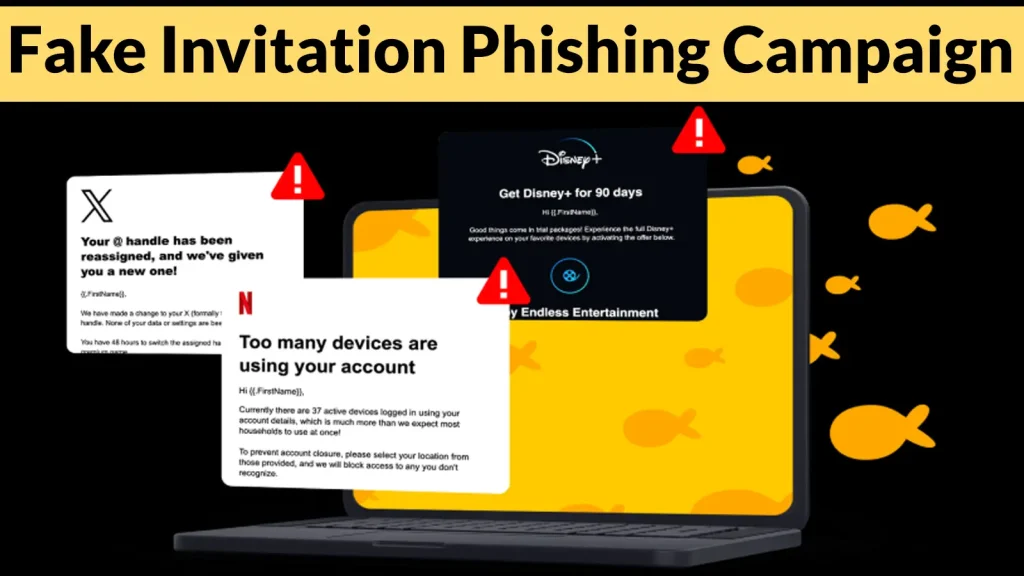
Fake Invitation Phishing Campaign Targets U.S. Organizations With Credential Theft
In the relentless battle against cyber threats, a new alarm has sounded for U.S. organizations. A sophisticated and extensive phishing campaign is actively exploiting the trust associated with event invitations, weaponizing them to steal critical login credentials, intercept one-time passwords (OTPs), and even surreptitiously deploy remote access tools. This isn’t a new threat; security researchers have been tracking its evolution since at least December 2025, revealing a disturbing trend of expanding malicious infrastructure built around a disturbingly effective, repeatable framework.
The Anatomy of Deception: How the Campaign Works
This credential-harvesting operation leverages a common psychological vulnerability: our inherent trust in invitations. Attackers craft convincing, yet entirely fake, event invitations. These aren’t always grand conferences; they could be anything from internal company meetings to industry webinars, designed to pique a recipient’s interest and lower their guard.
- Phishing Lures: Emails are meticulously designed to mimic legitimate event invitations, often copying branding or using familiar language.
- Malicious Domains: A growing network of malicious domains, built on a consistent template, acts as the backend for these attacks. These domains are designed to look authentic, often using slight misspellings or subdomains to impersonate legitimate services.
- Credential Theft: Upon clicking a link in the fake invitation, victims are redirected to a carefully constructed spoofed login page. These pages are indistinguishable from legitimate single sign-on (SSO) portals or webmail interfaces, prompting users to enter their usernames and passwords.
- OTP Interception: For organizations employing multi-factor authentication (MFA), the campaign goes a step further. It’s engineered to intercept one-time passwords, either by prompting the user for it directly on the fake page or by using sophisticated proxy tools that stand between the user and the legitimate service.
- Remote Access Tool Installation: In some instances, the campaign aims to trick users into downloading and installing remote access tools (RATs). This allows attackers persistent access to the compromised system, enabling further reconnaissance, data exfiltration, or lateral movement within the network.
Why “Fake Invitations” Are So Effective
The success of this campaign lies in its exploit of human behavior and organizational trust. Here’s why it’s so potent:
- Contextual Relevance: Invitations often come from familiar sources or address topics relevant to an individual’s professional role, making them less likely to be scrutinized.
- Urgency and Curiosity: The desire not to miss out on an important event or to learn more about a topic of interest can override caution.
- Bypassing Traditional Defenses: While email security gateways can flag known malicious links, the continuous creation of new malicious domains with varied content makes full detection challenging.
- Exploiting Trust in MFA: Even with MFA, if users are tricked into entering their OTP on a fraudulent site, the second factor is compromised, rendering it ineffective.
Remediation Actions and Proactive Defense
Combating this type of phishing campaign requires a multi-layered approach focusing on technology, policy, and user education.
- Robust Email Security Gateways (ESGs): Implement and continuously update ESGs with advanced threat protection, sandboxing, and URL rewriting capabilities. Configure them to aggressively flag suspicious links and attachments.
- MFA Beyond OTPs: While OTPs add a layer of security, consider moving towards more phishing-resistant MFA methods like FIDO2/WebAuthn hardware tokens (e.g., YubiKey) or certificate-based authentication.
- Endpoint Detection and Response (EDR)/Extended Detection and Response (XDR): Deploy EDR/XDR solutions to detect and respond to suspicious activity on endpoints, including the installation of unauthorized remote access tools.
- User Awareness Training: Conduct regular, realistic phishing simulations and provide ongoing training to educate employees on how to identify phishing attempts, especially those involving fake invitations and login pages. Emphasize hovering over links before clicking and verifying sender authenticity.
- Domain Monitoring: Implement solutions to monitor for newly registered domains that might be impersonating your organization or common services used by your employees.
- Incident Response Plan: Ensure a well-defined incident response plan is in place to swiftly address credential compromise, including immediate password resets, session termination, and thorough forensic analysis.
Essential Tools for Detection and Mitigation
| Tool Name | Purpose | Link |
|---|---|---|
| PhishMe (Cofense) | Phishing simulation & security awareness training | https://cofense.com/ |
| Proofpoint Email Protection | Advanced email security gateway, URL defense, attachment sandboxing | https://www.proofpoint.com/us/products/email-and-collaboration-security/email-protection |
| Microsoft Defender for Office 365 | Email threat protection, Safe Links, Safe Attachments | https://www.microsoft.com/en-us/security/business/microsoft-365-defender/advanced-threat-protection |
| YubiKey (Hardware MFA) | Phishing-resistant multi-factor authentication (FIDO2/WebAuthn) | https://www.yubico.com/products/ |
| CrowdStrike Falcon Insight XDR | Endpoint detection & response, threat hunting, malware protection | https://www.crowdstrike.com/products/falcon-platform/falcon-insight-xdr/ |
Staying Ahead of the Curve
This persistent fake invitation phishing campaign underscores the evolving sophistication of cybercriminals. It’s a stark reminder that even well-implemented security measures can be circumvented if user education and adaptive defenses are not equally prioritized. Stay vigilant, educate your workforce, and continuously review and update your cybersecurity posture to defend against these insidious threats.




