AI-Powered Free Security-Audit Checklist for 2026 – ISO 27001, SOC 2, NIST, NIS 2 and GDPR Compliance
Navigating the 2026 Audit Landscape: Your AI-Powered Security Checklist Advantage
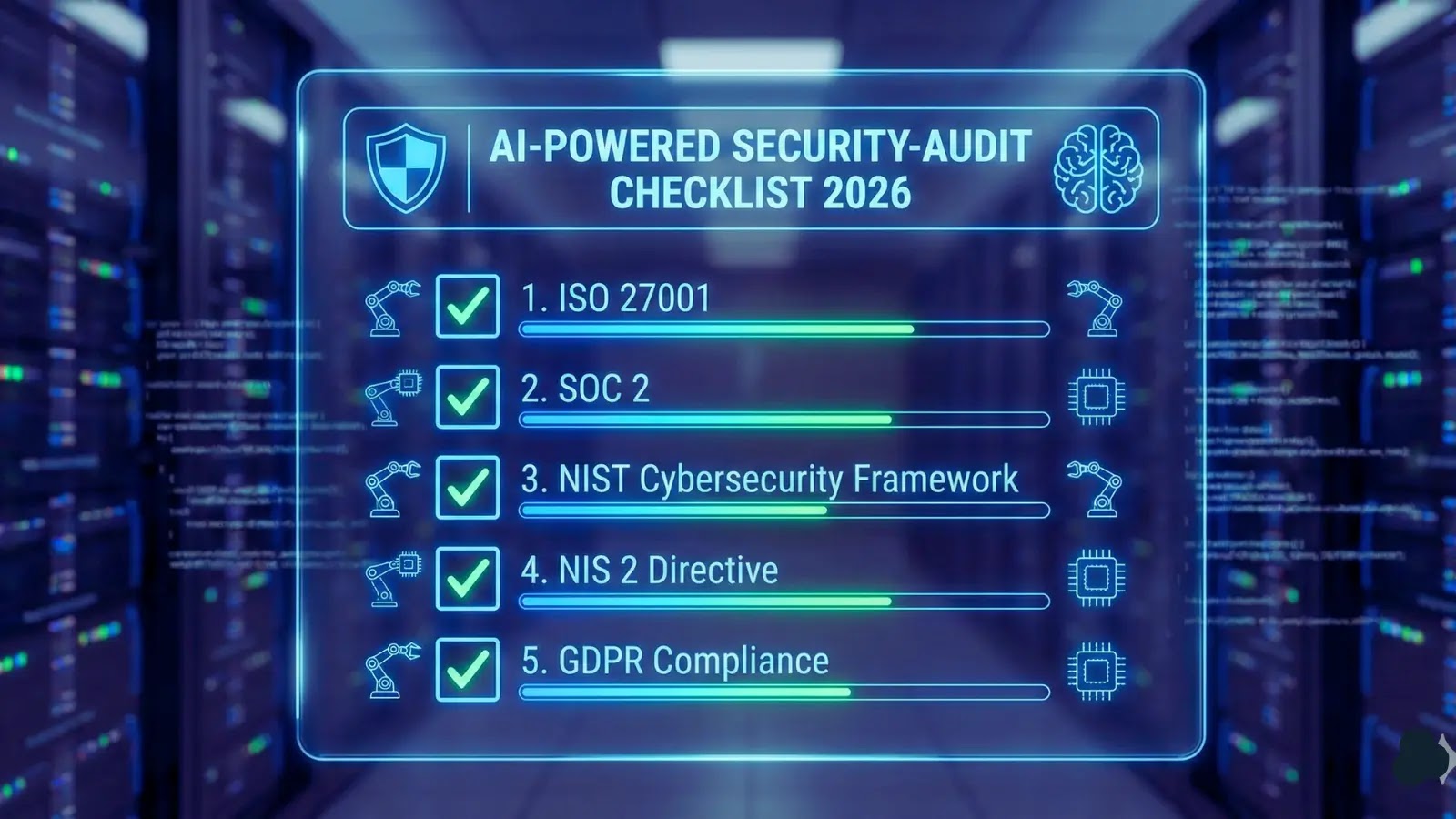
The year 2026 is rapidly approaching, and with it, an increasing complexity in cybersecurity compliance and regulatory audits. Many organizations still find themselves battling audit preparation with methods that feel more suited to 2005 – manual spreadsheet tracking, fragmented evidence, copy-pasting from outdated responses, and lengthy internal communication loops. Meanwhile, the demands are escalating across the board: updated ISO 27001:2022, rigorous SOC 2 principles, comprehensive NIST CSF frameworks, the looming NIS 2 Directive, and the persistent requirements of GDPR. Supplier audits and demanding customer inquiries further add to this intricate web of compliance.
The reality is stark: “being compliant” in 2026 demands a radical shift from traditional, reactive approaches to proactive, intelligent strategies. An AI-powered security audit checklist isn’t just a convenience; it’s a critical tool for navigating this complex landscape efficiently and effectively. This article delves into how such a checklist can transform your compliance posture, streamline audit preparations, and ensure sustained adherence to critical security standards.
The Evolving Compliance Ecosystem: ISO 27001, SOC 2, NIST, NIS 2, and GDPR
Understanding the current and future state of cybersecurity compliance is paramount. Each framework and regulation addresses distinct aspects of information security, but all demand diligent evidence and robust controls.
- ISO 27001:2022: The international standard for information security management systems (ISMS) has seen a significant update. The 2022 revision emphasizes a broader range of controls, increased focus on risk management, and clarity on organizational context. Organizations must demonstrate a mature and continually improving ISMS.
- SOC 2: Service Organization Control 2 reports are crucial for service providers handling customer data. These audits assess controls related to security, availability, processing integrity, confidentiality, and privacy. Maintaining SOC 2 compliance often means continuous monitoring and robust internal processes.
- NIST CSF (Cybersecurity Framework): Developed by the National Institute of Standards and Technology, the CSF provides a flexible, risk-based approach to managing cybersecurity risks. It guides organizations in identifying, protecting, detecting, responding to, and recovering from cyber incidents.
- NIS 2 Directive: The Network and Information Security 2 Directive expands the scope of critical entities requiring robust cybersecurity measures and incident reporting across the EU. It introduces stricter enforcement and reporting obligations for a wider range of sectors, including digital providers, energy, transport, health, and more. Companies failing to comply face substantial penalties.
- GDPR (General Data Protection Regulation): This foundational EU regulation governing data privacy and protection remains a cornerstone of data handling practices. Adherence to GDPR principles regarding data minimization, purpose limitation, transparency, and data subject rights is non-negotiable for any organization processing personal data of EU residents.
Managing compliance across these diverse requirements without intelligent tooling is a monumental task, prone to errors and inefficiencies.
The 2005 Audit Prep Problem in 2025
The core issue highlighted by industry experts is the sheer inertia in audit preparation methodologies. Many organizations, even those with advanced technological infrastructures, regress to manual, analog processes when it comes to compliance. The scenario often plays out like this:
- Excel Spreadsheet Overload: A maze of spreadsheets attempts to track controls, evidence, and audit findings, leading to version control nightmares and data fragmentation.
- Scattered Evidence: Relevant documentation, policies, and screenshots are stored across various departmental drives, cloud services, and individual hard drives, making consolidation a Herculean effort.
- Copy-Paste from Old Answers: To save time, previous audit responses are often repurposed, risking irrelevance due to updated standards or changes in organizational processes. This can lead to misrepresentation and audit failures.
- Long Coordination Loops: The manual coordination required to gather information from different teams, review it, and consolidate it often results in protracted and inefficient communication, delaying the audit process significantly.
This outdated approach not only consumes valuable resources but also introduces significant risk, as it becomes challenging to demonstrate a consistent and verifiable compliance posture.
Introducing the AI-Powered Security Audit Checklist for 2026
An AI-powered security audit checklist offers a transformative solution, moving organizations from reactive to proactive compliance management. Such a system leverages artificial intelligence and machine learning to automate, streamline, and intelligently assist in audit preparation and ongoing compliance.
- Intelligent Control Mapping: AI can cross-reference controls across multiple frameworks (ISO 27001, SOC 2, NIST, NIS 2, GDPR) to identify overlaps and unique requirements, eliminating redundant work and ensuring comprehensive coverage.
- Automated Evidence Aggregation: By integrating with existing systems (e.g., identity management, vulnerability scanners, cloud platforms), AI can automatically identify, categorize, and even, in some cases, collect relevant evidence, reducing manual effort dramatically.
- Dynamic Checklist Generation: Instead of static lists, AI can generate dynamic, tailored checklists based on an organization’s specific industry, size, and applicable regulations, ensuring relevance and efficiency.
- Gap Analysis and Remediation Recommendations: AI can analyze collected data against compliance standards, identify gaps, and even suggest specific remediation actions, potentially even linking to relevant best practices or policy templates. For instance, if CVE-2023-38831, a critical vulnerability in a web application firewall, is detected, the AI could recommend specific patching or configuration updates.
- Continuous Compliance Monitoring: Beyond audit preparation, AI-driven systems can provide real-time insights into compliance status, alerting teams to potential deviations before they become critical issues.
- Streamlined Collaboration: Centralized platforms powered by AI ensure that all stakeholders are working with the same, up-to-date information, simplifying review cycles and approvals.
Remediation Actions: Implementing an AI-Powered Approach
Transitioning to an AI-driven compliance strategy requires thoughtful planning and execution. Here are key remediation actions to consider:
- Assess Current State: Document existing audit preparation processes, identifying bottlenecks, manual efforts, and areas of highest risk. Understand the scope of your compliance requirements today and anticipated for 2026.
- Research and Select a Platform: Evaluate AI-powered GRC (Governance, Risk, and Compliance) platforms that offer strong support for your specific regulatory landscape (ISO 27001, SOC 2, NIST, NIS 2, GDPR). Look for features like automated evidence collection, cross-framework mapping, and intuitive dashboards.
- Integrate Key Systems: Plan for integration with your existing IT infrastructure, including cloud environments (AWS, Azure, GCP), identity providers (Okta, Azure AD), vulnerability management tools, and project management systems. This is crucial for automated evidence gathering.
- Define Control Ownership: Clearly assign ownership for each control within your organization. The AI platform can then route requests and escalate issues to the appropriate personnel.
- Pilot Program: Start with a pilot program for a specific audit or compliance framework. This allows your team to familiarize themselves with the new tooling and refine processes before a full organizational rollout.
- Develop Training and Documentation: Provide comprehensive training for all users of the new system. Create clear documentation on how to use the platform for audit preparation, evidence submission, and continuous monitoring.
- Embrace Continuous Improvement: Leverage the analytics and insights provided by the AI platform to continuously refine your security controls and compliance processes. Regular reviews of audit findings and control effectiveness are paramount.
Conclusion: Securing Your Future with Intelligent Compliance
The traditional, manual approach to security audits is no longer sustainable in the face of escalating regulatory demands and the ever-present threat landscape. For organizations to thrive in 2026 and beyond, adopting an AI-powered security audit checklist is not merely an option but a strategic imperative. It promises to transform burdensome, error-prone processes into efficient, intelligent, and continuously compliant operations.
By leveraging AI for intelligent control mapping, automated evidence aggregation, dynamic checklist generation, and proactive gap analysis, organizations can significantly reduce audit fatigue, enhance their security posture, and confidently demonstrate adherence to ISO 27001:2022, SOC 2, NIST CSF, NIS 2, and GDPR. The future of compliance is intelligent, and the time to embrace it is now.