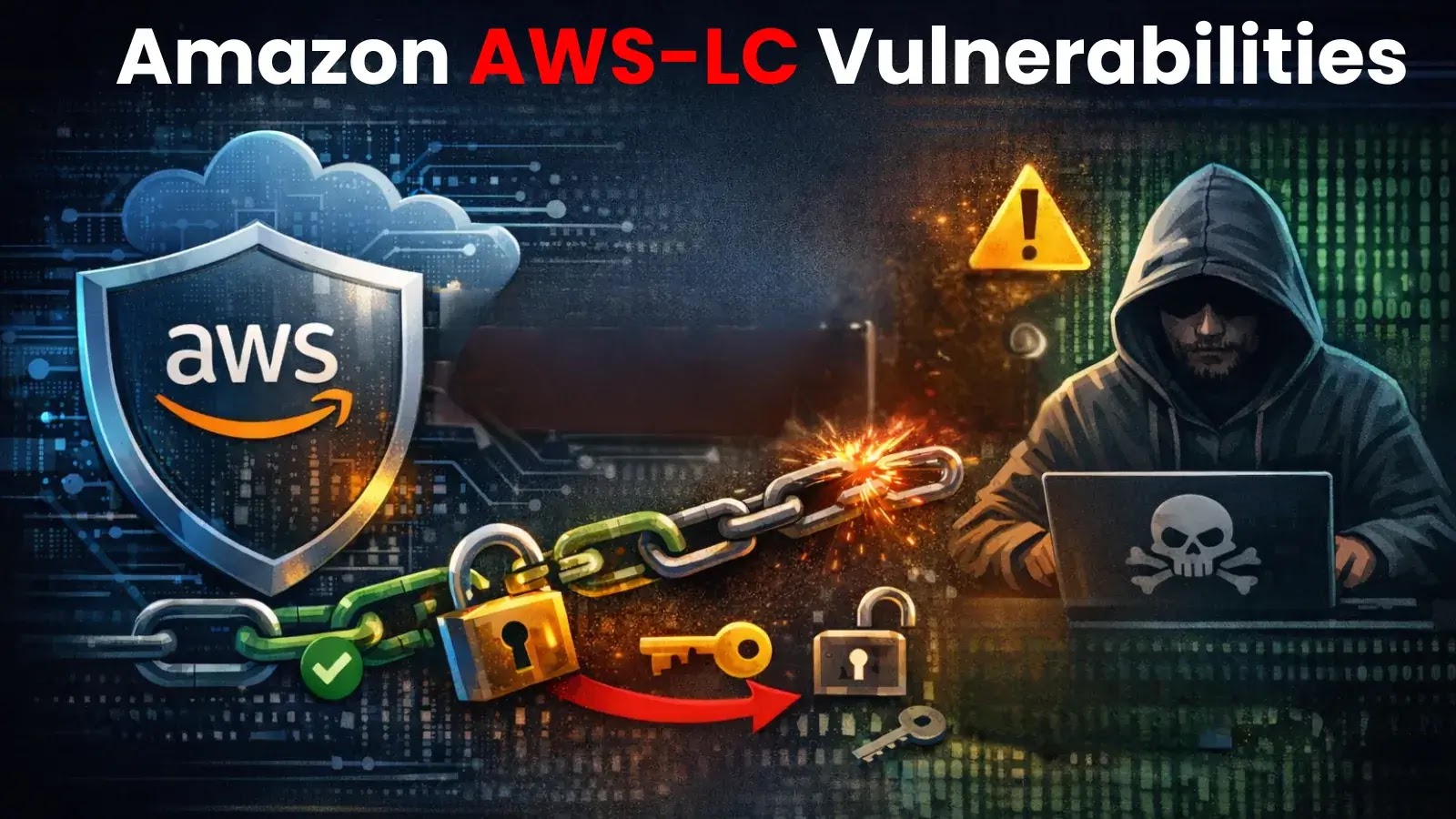
Amazon AWS-LC Vulnerabilities Allows Attackers to Bypass Certificate Chain Verification
The integrity of cryptographic operations underpins the security of nearly every digital interaction. When critical vulnerabilities surface in foundational cryptographic libraries, the implications can be far-reaching, eroding trust and exposing sensitive data. Such is the case with a recent disclosure concerning AWS-LC, Amazon’s open-source, general-purpose cryptographic library. These vulnerabilities highlight a concerning flaw that could allow unauthenticated attackers to bypass crucial certificate chain verification and exploit timing side-channels, posing a significant risk to affected environments.
Published on March 2, 2026, this security bulletin shines a spotlight on lapses in cryptographic integrity within AWS-LC. For organizations leveraging AWS services, or integrating systems that rely on AWS-LC, understanding these vulnerabilities and implementing timely remediation is paramount.
Understanding the AWS-LC Vulnerabilities
The disclosed security bulletin addresses three distinct vulnerabilities within the AWS-LC cryptographic library. At its core, the most critical flaw permits unauthenticated attackers to subvert certificate chain verification. This bypass mechanism is particularly dangerous as it undermines one of the fundamental pillars of secure communication: the ability to reliably authenticate the identity of a communicating party. Without proper certificate validation, an attacker could potentially impersonate legitimate services, intercept communications, or serve malicious content without detection.
Beyond the certificate bypass, the bulletin also points to the exploitation of timing side-channels. Timing attacks, while often more complex to execute, can reveal sensitive information by observing the time taken for cryptographic operations. When successful, these attacks can lead to the reconstruction of cryptographic keys or other confidential data.
While the specific CVE numbers for these newly discovered vulnerabilities are not detailed in the initial source, the nature of the flaws suggests a severe impact on cryptographic assurance, potentially affecting data confidentiality, integrity, and authentication across a broad spectrum of cloud-based and on-premises applications that integrate AWS-LC.
Impact and Potential Exploitation
The primary concern arising from these AWS-LC vulnerabilities is the immediate compromise of cryptographic integrity. When certificate chain verification is bypassed, the trust model inherent in TLS/SSL and other secure protocols collapses. This opens doors for various attack scenarios:
- Man-in-the-Middle (MitM) Attacks: Attackers could intercept and alter communications between clients and servers, remaining undetected due to the bypassed certificate validation.
- Impersonation: Malicious actors could impersonate legitimate services or users, leading to unauthorized access, data exfiltration, or the injection of malicious code.
- Data Tampering: Without robust integrity checks, data transmitted through affected systems could be maliciously modified without detection.
- Information Disclosure: Timing side-channel attacks could potentially expose cryptographic keys or secrets, even within otherwise secure environments.
The unauthenticated nature of the certificate bypass means that attackers do not require prior access or credentials to initiate exploits, making these vulnerabilities particularly appealing for widespread attacks.
Remediation Actions
Addressing these AWS-LC vulnerabilities requires immediate and decisive action. Organizations must prioritize patching and configuration reviews across all environments where AWS-LC is deployed or utilized. While specific patch versions will be released by Amazon, the following general remediation steps are crucial:
- Update AWS-LC Library: The most critical step is to immediately apply the latest security patches released by Amazon for AWS-LC. Monitor official AWS security advisories and update notifications for the relevant versions.
- Audit Dependent Systems: Identify all applications, services, and systems that directly or indirectly rely on AWS-LC for cryptographic operations. This includes internal applications, third-party integrations, and cloud deployments.
- Review Certificate Validations: While patching is paramount, conduct an internal review of certificate validation logic in your applications to ensure adherence to best practices. Double-check that applications are not implicitly trusting certificates without proper chain validation, even if AWS-LC is updated.
- Implement Defense-in-Depth: Even with patches, maintain a layered security approach. This includes network segmentation, strong access controls, intrusion detection systems (IDS), and continuous monitoring to detect anomalous activity that might indicate an attempted exploitation.
- Stay Informed: Continuously monitor official AWS security bulletins and cybersecurity news for further updates, potential workarounds, or new insights into these vulnerabilities.
Tools for Detection and Mitigation
While the immediate focus should be on patching, a suite of tools can aid in the detection of vulnerable components and bolster overall security posture.
| Tool Name | Purpose | Link |
|---|---|---|
| Software Composition Analysis (SCA) Tools | Identifies open-source components and their known vulnerabilities within your codebase. | OWASP Component Analysis |
| Vulnerability Scanners (e.g., Nessus, Qualys) | Scans networks and applications for known vulnerabilities, including outdated software and misconfigurations. | Nessus |
| Cloud Security Posture Management (CSPM) Tools | Monitors cloud environments for security misconfigurations, compliance violations, and potential vulnerabilities. | AWS Security Hub |
| TLS/SSL Analyzers | Evaluates the strength and correctness of TLS/SSL implementations on your servers. | SSL Labs Server Test |
Conclusion
The vulnerabilities in AWS-LC impacting certificate chain verification and exposing timing side-channels represent a serious threat to cryptographic integrity. The ability of unauthenticated attackers to bypass fundamental security checks underscores the importance of a proactive and vigilant security posture. Organizations must prioritize the timely application of patches, conduct thorough audits of their systems, and reinforce their overall security architecture to mitigate the risks. Staying informed and continuously adapting security measures are essential in safeguarding digital assets against evolving threats.