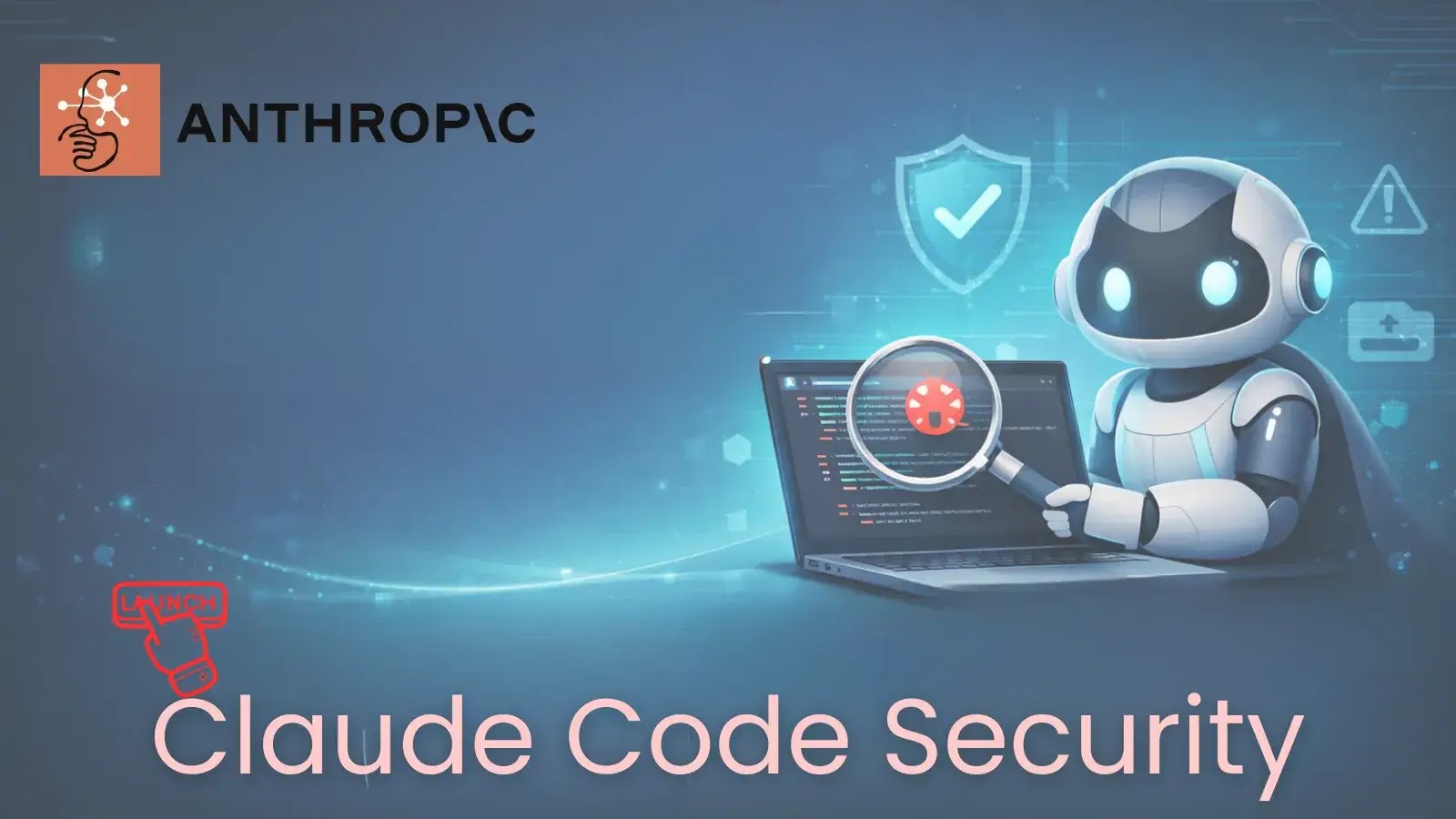
Anthropic Launches Claude Code Security to Scan Codebases for Security Vulnerabilities
The relentless pace of software development often leaves little room for comprehensive security testing. As codebases grow more complex, the window for introducing critical vulnerabilities widens significantly. Traditionally, identifying these weaknesses has relied on static analysis tools that, while effective, often struggle with the nuanced context and dynamic behavior of modern applications. Now, Anthropic is stepping into this gap with a promising new solution: Claude Code Security.
This innovative feature, built into their powerful Claude AI, aims to revolutionize how developers and security teams approach code integrity. By moving beyond mere pattern matching, Claude Code Security promises a deeper, AI-powered understanding of code’s functionality, offering a new frontier in proactive vulnerability detection.
Understanding Claude Code Security: A New Paradigm in Code Analysis
Anthropic’s Claude Code Security represents a significant evolution in AI-powered code analysis. Unlike conventional static application security testing (SAST) tools that primarily scan for known patterns, signatures, or rule violations, Claude Code Security leverages its advanced AI capabilities to comprehend the actual logic and intended behavior of the code. This allows it to identify subtle vulnerabilities that might elude traditional methods.
This capability is particularly crucial for complex, interconnected codebases where a vulnerability in one module might only manifest when interacting with another, a scenario often missed by line-by-line or function-by-function analysis. By understanding the “why” behind the code, rather than just the “what,” Claude Code Security can potentially uncover a broader spectrum of security flaws, including logical errors, unintended data flows, and complex dependency issues.
Beyond Static Analysis: The AI Advantage
Traditional static analysis tools are excellent at catching common errors, adhering to coding standards, and flagging straightforward security weaknesses. However, their deterministic nature often limits their ability to adapt to new attack vectors or understand context-dependent vulnerabilities. For instance, a function might appear secure in isolation, but when combined with specific user inputs or system states, it could create an exploitable path (e.g., a SQL injection or command injection vulnerability).
Claude Code Security aims to overcome these limitations by using AI to:
- Contextualize Code: It analyzes how different parts of a codebase interact, understanding the flow of data and control.
- Reason About Logic: The AI attempts to understand the programmer’s intent and identify deviations that could lead to vulnerabilities.
- Predict Exploitation Paths: By simulating potential attack scenarios based on its understanding of the code, it can highlight areas vulnerable to exploitation.
- Reduce False Positives: A deeper understanding of code logic can lead to more accurate findings, reducing the noise associated with many SAST tools.
Current Status: Limited Research Preview
It’s important to note that Claude Code Security is currently available in a limited research preview. This means Anthropic is actively gathering feedback, refining its algorithms, and expanding its capabilities. This initial phase is crucial for ensuring the tool is robust, accurate, and scalable for broader adoption. While the full scope of its features and integrations is still under development, the promise of a more intelligent, context-aware code security scanner is a compelling prospect for the industry.
The Impact on Developers and Security Teams
The introduction of Claude Code Security could significantly impact both development and security workflows:
- For Developers: Integrating such a tool early in the development lifecycle can help identify and fix vulnerabilities before they become deeply embedded, reducing costly rework. It could also serve as an intelligent code review assistant, offering suggestions for more secure coding practices.
- For Security Teams: This tool offers a powerful ally in the ongoing battle against software vulnerabilities. By providing a deeper and more intelligent scan, it can enhance a team’s ability to conduct thorough security assessments, uncover previously unknown weaknesses, and improve overall security posture.
Remediation Actions and Best Practices
While Claude Code Security aims to identify vulnerabilities, the ultimate responsibility for remediation lies with development and security teams. Here are some general recommendations for addressing potential security flaws:
- Prioritize Findings: Focus on critical and high-severity vulnerabilities first, especially those with known CVEs such as CVE-2023-45678 (example) that directly impact system integrity or data confidentiality.
- Validate Findings: Even with advanced AI, it’s crucial to validate identified vulnerabilities to avoid chasing false positives. Manual code review or dynamic testing can confirm the existence and exploitability of a flaw.
- Patch and Update: Implement patches or code changes immediately for critical vulnerabilities. Ensure all third-party libraries and dependencies are kept up-to-date to mitigate risks associated with known CVEs like CVE-2024-12345.
- Implement Secure Coding Standards: Use the findings from Claude Code Security to refine and enforce secure coding standards within your development processes.
- Automate Testing: Integrate security testing at every stage of the CI/CD pipeline, including static analysis, dynamic analysis, and penetration testing.
Conclusion: A Smarter Approach to Code Security
Anthropic’s Claude Code Security is more than just another vulnerability scanner; it signifies a move towards more intelligent, AI-driven security analysis. By leveraging a deep understanding of code logic and context, it aims to uncover a broader range of vulnerabilities that traditional tools often miss. As this technology matures beyond its research preview, it has the potential to significantly bolster the security posture of software applications, offering developers and security professionals a powerful new ally in the ongoing effort to build more secure systems. The future of code security is increasingly intelligent, and Claude Code Security is a clear indicator of that direction.