Anthropic Launches Projects Feature for Claude Cowork Desktop
Anthropic, a leading AI safety and research company, has unveiled a significant enhancement to its Claude Cowork Desktop application: the new Projects feature. This update directly addresses a common challenge in AI-assisted workflows – maintaining context and organization across multiple tasks. For IT professionals, security analysts, and developers relying on AI for complex problem-solving, this integrated workspace promises a substantial boost in efficiency and accuracy.
Organizing AI Workflows with Claude Cowork Desktop’s Projects Feature
The core of the new Projects feature is its ability to centralize all relevant information within a single, dedicated workspace. Imagine tackling a security incident analysis, a code review, or a complex system design. Previously, juggling multiple chat threads, external documents, and specific instructions could lead to fragmented efforts and context loss. Anthropic’s solution is to aggregate these elements, ensuring Claude maintains a consistent understanding of the overarching task.
This organizational leap is particularly valuable in cybersecurity. Analysts often deal with swathes of data – incident logs, threat intelligence feeds, malware analysis reports – all needing careful consideration. By housing all these inputs within a Project, Claude can act as a more informed and cohesive assistant, reducing the need for constant re-explanation and increasing the accuracy of its responses.
Enhanced Efficiency for Paid Users
For paid subscribers of Claude Cowork Desktop, the Projects feature unlocks several critical functionalities designed to streamline daily operations:
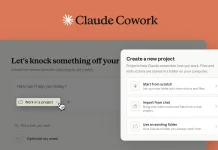
- Starting from Scratch: Users can initiate entirely new projects, providing a clean slate for fresh problems or explorations. This is ideal for R&D tasks or initial vulnerability assessments where a broad scope is required.
- Importing Existing Chats: The ability to import previous conversations into a Project is a game-changer. This ensures continuity, allowing users to pick up where they left off without losing the intricate details of past discussions. Consider a multi-stage penetration test; earlier findings and assumptions can seamlessly transition into subsequent phases.
- Connecting Local Folders: This is a powerful integration. By linking a local folder to a Project, Claude gains direct access to a repository of documents, code snippets, or configuration files. This eliminates the manual uploading of individual files and allows Claude to pull information as needed, providing dynamic and context-aware assistance. For example, a developer could link their project’s codebase, enabling Claude to intelligently answer questions about specific functions or architectural choices.
This integration of local files directly into the AI’s working context is a significant step towards more fluid human-AI collaboration, minimizing friction and maximizing productivity.
Maintaining Context: A Critical Advantage
The “losing the thread” phenomenon is a common frustration when interacting with AI over extended tasks. As conversations evolve, previous instructions or constraints can be forgotten, leading to irrelevant or inaccurate outputs. The Projects feature specifically targets this issue by establishing a persistent context.
For security professionals, this means Claude can remember the details of a specific attack chain, the configuration of a target system, or the compliance requirements of a particular regulation throughout an entire project. This sustained understanding allows for more sophisticated analysis, better-informed recommendations, and ultimately, a higher quality of output. It moves Claude from being a reactive chatbot to a proactive, context-aware collaborator.
Future Implications for AI-Assisted Workflows
Anthropic’s move to integrate structured project management into Claude Cowork Desktop signals a broader trend in AI development: a shift towards more intelligent, organized, and persistent AI assistants. As AI models become more capable, the bottleneck increasingly becomes the user’s ability to effectively manage and provide context for complex tasks.
Features like Projects are crucial for leveraging AI’s full potential in demanding fields like cybersecurity, where precision and comprehensive understanding are paramount. This iterative development promises to make AI tools not just powerful, but also practical and seamlessly integrated into professional workflows.
Conclusion
Anthropic’s new Projects feature for Claude Cowork Desktop represents a significant leap forward in optimizing AI-assisted productivity. By centralizing files, instructions, and contextual information within dedicated workspaces, it addresses the critical challenge of maintaining context in complex, multi-stage tasks. For paid users, the ability to initiate new projects, import existing chats, and connect local folders promises unparalleled efficiency and accuracy. This development not only enhances Claude’s utility but also sets a new standard for how AI can be integrated into high-stakes professional environments, ensuring that the AI never loses sight of the big picture.