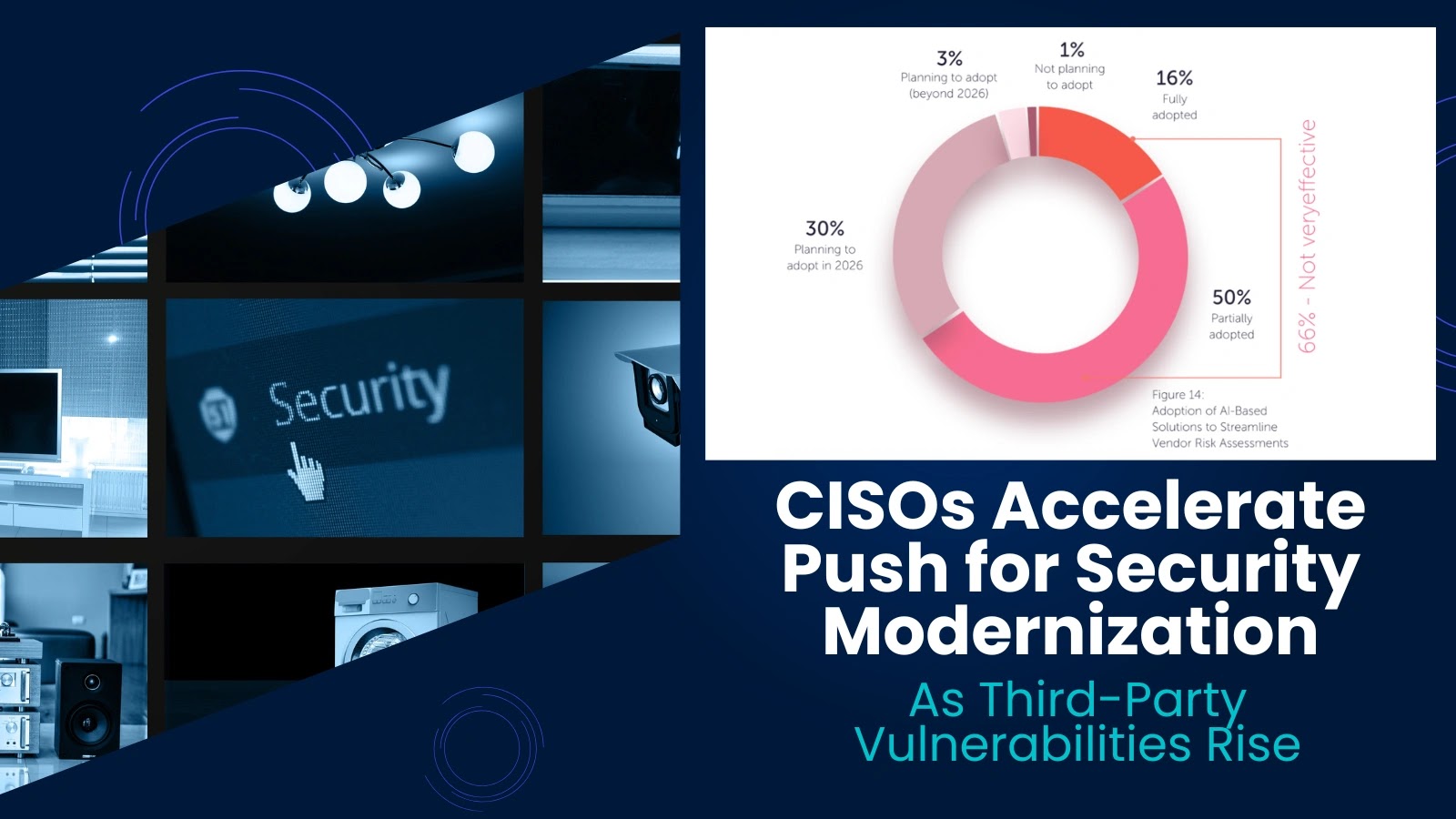
As Third-Party Vulnerabilities Rise, CISOs Accelerate Push for Security Modernization
The Unseen Threat: Why Third-Party Vulnerabilities Are Forcing a Security Modernization Sprint
The digital landscape is a complex tapestry woven from interconnected systems, applications, and services. While this interconnectedness drives innovation and efficiency, it also introduces a significant and growing vector for cyberattacks: third-party vulnerabilities. No longer an abstract concept, software supply chain attacks are escalating, exploiting the intricate dependencies organizations have on external vendors. Recent findings, particularly from the latest Panorays annual CISO Survey for Third-Party Cyber Risk Management, paint a stark picture: CISOs are not just recognizing this threat; they’re accelerating a critical push for security modernization.
The Rising Tide of Third-Party Compromises
The cybersecurity community has long understood the risks associated with third-party components. However, the sheer scale and sophistication of recent attacks have brought these concerns to the forefront. Cybercriminals are increasingly targeting the weakest link in an organization’s defense perimeter – its supply chain. This strategy leverages the complexity and often opaque nature of third-party integrations, identifying and exploiting vulnerabilities that may reside deep within shared libraries, open-source components, or outsourced services.
The Panorays survey underscores this trend, highlighting a resurgence in software supply chain attacks. This isn’t merely a cyclical phenomenon; it’s an adaptation by threat actors to the evolving cybersecurity posture of many enterprises. As internal defenses harden, attackers shift their focus to the less-controlled external ecosystem. Imagine a perfectly fortified castle, but with an unguarded back gate opened by a trusted supplier. That’s the reality many organizations face.
Why Third-Party Risks are a CISO’s Top Priority
For Chief Information Security Officers (CISOs), managing third-party cyber risk has become an all-consuming challenge. The implications of a breach originating from a vendor are multifold:
- Data Compromise: Sensitive customer data, intellectual property, and internal records can be exposed through a compromised third party.
- Operational Disruption: Attacks like ransomware, originating from a vendor, can ripple through supply chains, halting operations for multiple dependent organizations.
- Reputational Damage: A breach, regardless of its origin, ultimately impacts the victimized organization’s reputation and customer trust.
- Compliance and Regulatory Penalties: Increasing regulatory scrutiny (e.g., GDPR, CCPA, HIPAA) means organizations are held accountable for data breaches, even if the initial compromise occurred with a third-party vendor.
The complexity stems from the sheer number of third parties, the varying security maturity levels among vendors, and the often-limited visibility an organization has into its suppliers’ security practices. A single critical vulnerability, such as CVE-2021-44228 (Log4Shell), demonstrated the cascading impact of a widely used, vulnerable component across countless organizations.
The Imperative for Security Modernization
Given the escalating threat landscape, CISOs are not just reacting; they are proactively driving significant changes in their security strategies. Security modernization, in this context, is not just about updating tools; it’s a holistic shift in approach, process, and culture. Key aspects of this modernization include:
- Enhanced Vendor Risk Management (VRM): Moving beyond annual questionnaires to continuous monitoring and real-time assessment of third-party security postures. This includes deeper dives into their software development lifecycle (SDLC) and supply chain security.
- Software Bill of Materials (SBOM) Adoption: Implementing and requiring SBOMs from vendors provides crucial transparency into the components used within software. This allows organizations to quickly identify exposure to known vulnerabilities.
- Zero Trust Architecture (ZTA): Applying Zero Trust principles to third-party access, ensuring that every request, regardless of origin, is authenticated, authorized, and continuously validated.
- Attack Surface Management (ASM): Actively discovering, inventorying, and classifying all digital assets, including those exposed by third parties, to identify potential entry points for attackers.
- Security Culture and Training: Fostering a security-aware culture not only internally but also extending best practices and educational resources to key third-party partners.
Remediation Actions for Managing Third-Party Cyber Risk
Proactive and continuous engagement is paramount when addressing third-party vulnerabilities. Here’s an actionable breakdown:
- Comprehensive Vendor Assessment: Implement a robust due diligence process for all new and existing vendors. This should include security questionnaires, audits, and penetration tests where appropriate.
- Contractual Clarity: Ensure all vendor contracts include explicit security clauses, detailing expectations for incident response, data protection, and adherence to security standards (e.g., ISO 27001, SOC 2).
- Continuous Monitoring: Utilize automated tools to monitor the security posture of third parties in real-time or near real-time. Don’t rely solely on static assessments.
- Supply Chain Mapping: Understand your complete software supply chain. Know not just your direct vendors, but also their vendors (N-th party risks).
- Incident Response Planning: Develop and regularly test incident response plans that specifically address third-party breaches, including communication protocols and recovery strategies.
- Regular Communication and Collaboration: Establish clear channels for security-related communication with vendors. Foster a collaborative environment to address vulnerabilities swiftly.
- Internal Education: Train procurement, legal, and operational teams on the importance of security in vendor selection and management.
Tools for Third-Party Risk Management and Supply Chain Security
| Tool Name | Purpose | Link |
|---|---|---|
| Panorays | Third-party security risk management platform | https://panorays.com/ |
| Black Duck Software (Synopsys) | Software Composition Analysis (SCA) for open-source risk management | https://www.synopsys.com/software-integrity/solutions/software-composition-analysis.html |
| OWASP Dependency-Track | Open-source supply chain component analysis platform | https://dependencytrack.org/ |
| RiskRecon (Mastercard) | Continuous vendor risk monitoring | https://www.riskrecon.com/ |
| Tenable.io (External Attack Surface Management) | Discovery and assessment of external assets, including those exposed by third parties | https://www.tenable.com/products/tenable-io/external-attack-surface-management |
The Path Forward: Sustained Vigilance and Strategic Investment
The message from CISOs is clear: relying on outdated security paradigms is no longer sustainable. The increasing frequency and impact of third-party vulnerabilities necessitate a strategic shift toward proactive, comprehensive security modernization. This involves embracing new technologies, fostering transparency throughout the supply chain, and integrating security deeply into every aspect of vendor relationships. Organizations that prioritize this evolution will be better positioned to withstand the inevitable challenges of an interconnected digital economy.