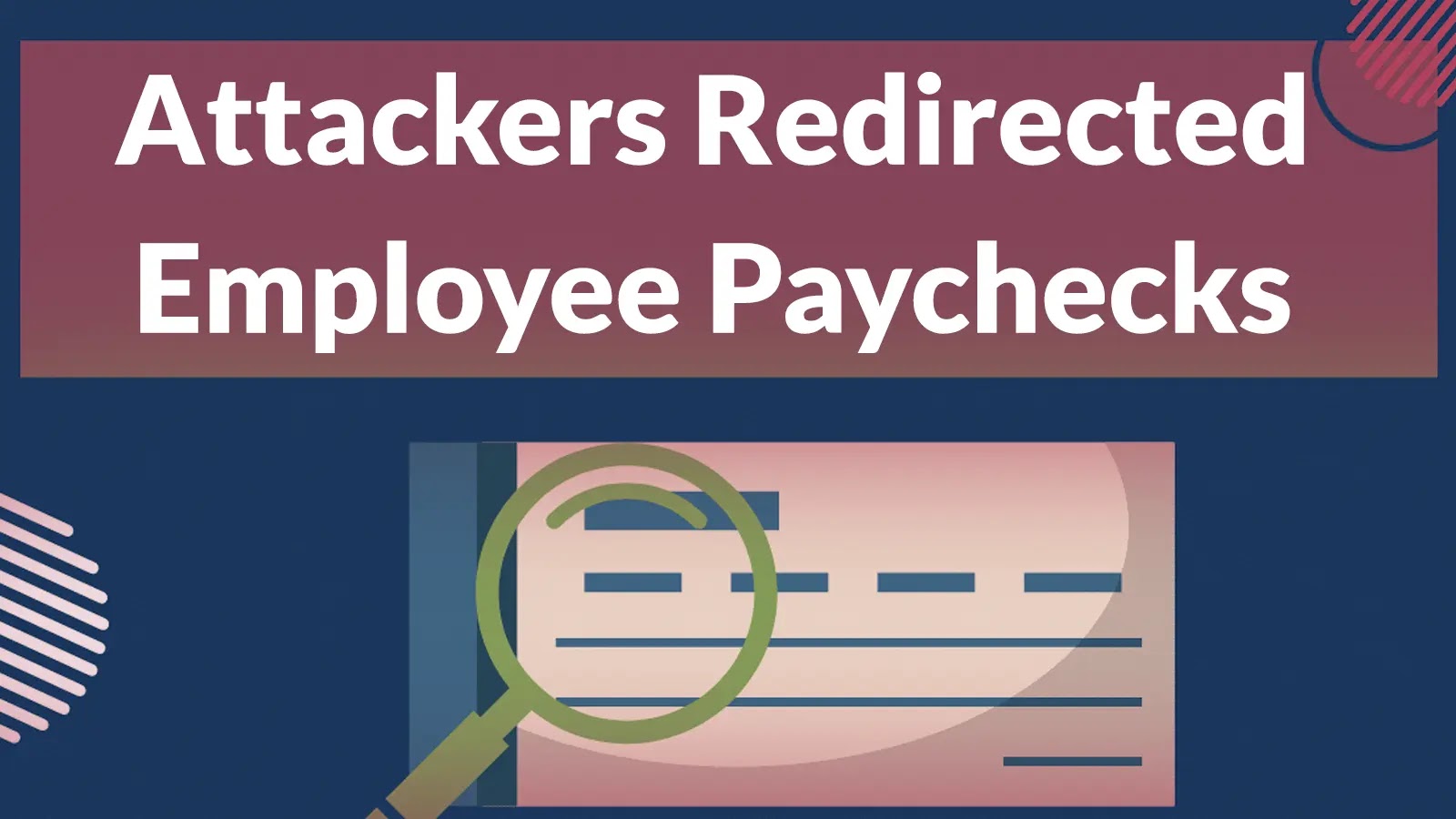
Attackers Redirected Employee Paychecks Without Breaching a Single System
The Silent Heist: When Paychecks Vanish Without a Data Breach
Imagine your employees, diligent and trustworthy, logging into their bank accounts on payday only to find their expected salary missing. Now, imagine discovering this wasn’t due to a system glitch, a malware infection, or a network intrusion. Instead, a seemingly innocuous phone call became the sophisticated weapon used to divert their hard-earned money. This isn’t a hypothetical scenario; it’s a growing threat organizations face, where attackers bypass traditional security measures to perform a “silent heist” right under our noses. This article dissects how such an attack unfolds and, critically, how to fortify your defenses against this insidious form of social engineering.
The Anatomy of a Non-Breach Payroll Redirect Attack
The incident detailed in Cyber Security News highlights a particularly troubling trend: financial fraud executed without breaching any IT infrastructure. The core mechanism is deceptively simple:
- Impersonation: Attackers typically impersonate an employee, often targeting larger organizations where direct, personal contact between HR and every employee might be less frequent. They leverage publicly available information, often from social media, to craft believable identities.
- Social Engineering: The primary tool is social engineering. A phone call, an email, or even a fake internal portal request is used to convince the human resources (HR) or payroll department to update an employee’s direct deposit information. They exploit trust and procedural gaps.
- Direct Deposit Modification: Once convinced, the payroll department unwittingly modifies the employee’s direct deposit instructions, rerouting future payments to an account controlled by the attacker.
- Delayed Detection: The fraud often goes undetected until the employee notices the missing pay, by which time the funds have usually been withdrawn and are irrecoverable. The lack of a system breach means security information and event management (SIEM) systems or intrusion detection systems (IDS) will not flag any suspicious activity on the network.
These attacks exploit the human element, turning trusted personnel into unwitting accomplices. They bypass endpoint detection and response (EDR) solutions and perimeter firewalls, rendering traditional cybersecurity tools ineffective against the initial vector.
Understanding the Vulnerability: The Human Element
Unlike traditional cyberattacks that exploit software bugs, misconfigurations, or network vulnerabilities (such as those documented by specific CVEs like CVE-2023-38831 for WinRAR or CVE-2023-34039 for VMware vulnerabilities), payroll redirection schemes exclusively target the human element. There are no patches to install for human susceptibility to deception. The vulnerabilities lie in:
- Identity Verification Processes: Weak or non-existent multi-factor authentication (MFA) for identity verification during changes to sensitive financial information.
- Employee Training and Awareness: A lack of comprehensive training for HR and payroll staff on social engineering tactics.
- Procedural Gaps: Absence of mandatory secondary verification steps for payroll changes, especially when initiated remotely.
- Information Silos: Limited cross-departmental communication that could flag unusual requests.
This type of attack doesn’t generate a CVE ID because it doesn’t represent a software flaw. Instead, it’s a testament to the persistent effectiveness of well-executed social engineering.
Remediation Actions: Fortifying Your Payroll Defenses
Protecting against payroll redirection requires a multi-layered approach that prioritizes human vigilance and robust process enforcement.
- Mandatory Multi-Factor Authentication (MFA) for Payroll Changes: Implement strong MFA for any system that allows employees or HR to modify direct deposit information. This could involve biometric verification, hardware tokens, or one-time passcodes sent to a registered, verified personal device.
- Dual Verification Protocol: Establish a strict policy requiring a secondary, out-of-band verification for all direct deposit changes. If a request comes via email, the verification must be a phone call to a pre-registered, known employee number (not a number provided in the email). Conversely, if the request is by phone, email verification to a known address is necessary.
- Comprehensive Employee Training: Conduct regular, mandatory training for all employees, especially HR and payroll staff, on identifying and thwarting social engineering attempts. Focus on red flags such as unusual urgency, unexpected requests, or slight discrepancies in sender details.
- Dedicated Payroll Change Portal: Utilize a secure, employee self-service portal for direct deposit modifications that integrates with strong MFA and audit trails. Discourage changes initiated via email or phone.
- Regular Audits and Reconciliation: Perform frequent audits of payroll records to identify any unauthorized changes. Implement reconciliation procedures to match bank account details with employee records.
- Internal Awareness Campaigns: Continuously remind employees (including top executives, who are also targets) about the risks of social engineering and the importance of secure procedures for sensitive data.
- Simulation Exercises: Conduct simulated phishing and social engineering exercises specifically targeting payroll change requests to test employee resilience and identify areas for improvement.
Essential Tools for Preventing Social Engineering Attacks
While no tool can eliminate the human element, several solutions can significantly bolster your defenses against social engineering and facilitate secure payroll processes.
| Tool Name | Purpose | Link |
|---|---|---|
| Security Awareness Training Platforms | Educate employees on social engineering, phishing, and cybersecurity best practices. | KnowBe4, Proofpoint (Wombat) |
| Multi-Factor Authentication (MFA) Solutions | Add an extra layer of security for identity verification, critical for payroll portals. | Duo Security, Okta, Microsoft Azure MFA |
| Identity and Access Management (IAM) Systems | Manage and secure digital identities, ensuring only authorized users access sensitive payroll data. | Okta, Ping Identity, SailPoint |
| HR Payroll Software with Strong Security | Secure platforms designed for payroll processing that often include built-in MFA and audit trails. | ADP, Workday, Gusto |
Conclusion: The Enduring Importance of Human-Centric Security
The incident of attackers diverting employee paychecks without a system breach serves as a stark reminder that even the most advanced technological defenses are insufficient without a vigilant and well-trained workforce. These sophisticated social engineering attacks underscore the critical need for robust identity verification processes, continuous employee education, and a culture of security awareness. By prioritizing human-centric security measures alongside technological safeguards, organizations can significantly reduce their susceptibility to financial fraud and protect their employees’ livelihoods from the silent, yet devastating, impact of payroll redirect schemes.