AuraAudit – Open-Source Tool for Salesforce Aura Framework Misconfiguration Analysis
Unmasking Hidden Threats: Introducing AuraAudit for Salesforce Security
In the expansive and often complex landscape of enterprise cloud solutions, Salesforce stands as a foundational pillar for countless organizations. Its agility and comprehensive features, while powerful, also introduce intricate security considerations. A critical yet often overlooked area of concern lies within the Salesforce Aura framework, particularly concerning access control misconfigurations. These missteps can inadvertently expose highly sensitive data—from credit card numbers and identity documents to health information—creating significant compliance and reputational risks. Recognizing this pervasive vulnerability, Mandiant has released AuraAudit, an open-source command-line tool designed to empower security professionals in precisely identifying and rectifying these critical weaknesses within Salesforce Experience Cloud deployments.
The Pervasiveness of Salesforce Aura Misconfigurations
Salesforce Experience Cloud, formerly Community Cloud, allows organizations to build connected digital experiences for customers, partners, and employees. At its core, the Aura framework underpins many of these dynamic interfaces. While robust, its flexibility can become a security Achilles’ heel when not configured with meticulous care. The challenge isn’t with Aura itself, but with how developers and administrators implement access controls, often leading to unintended data exposure. These misconfigurations frequently stem from a misunderstanding of the least privilege principle or an oversight in complex permission sets and sharing rules.
The implications of such vulnerabilities are severe. Without proper access controls, seemingly internal components or data points can become accessible to unauthorized external users, leading to data breaches that can have catastrophic consequences for user trust and regulatory compliance.
Introducing AuraAudit (formerly AuraInspector): A New Ally for Defenders
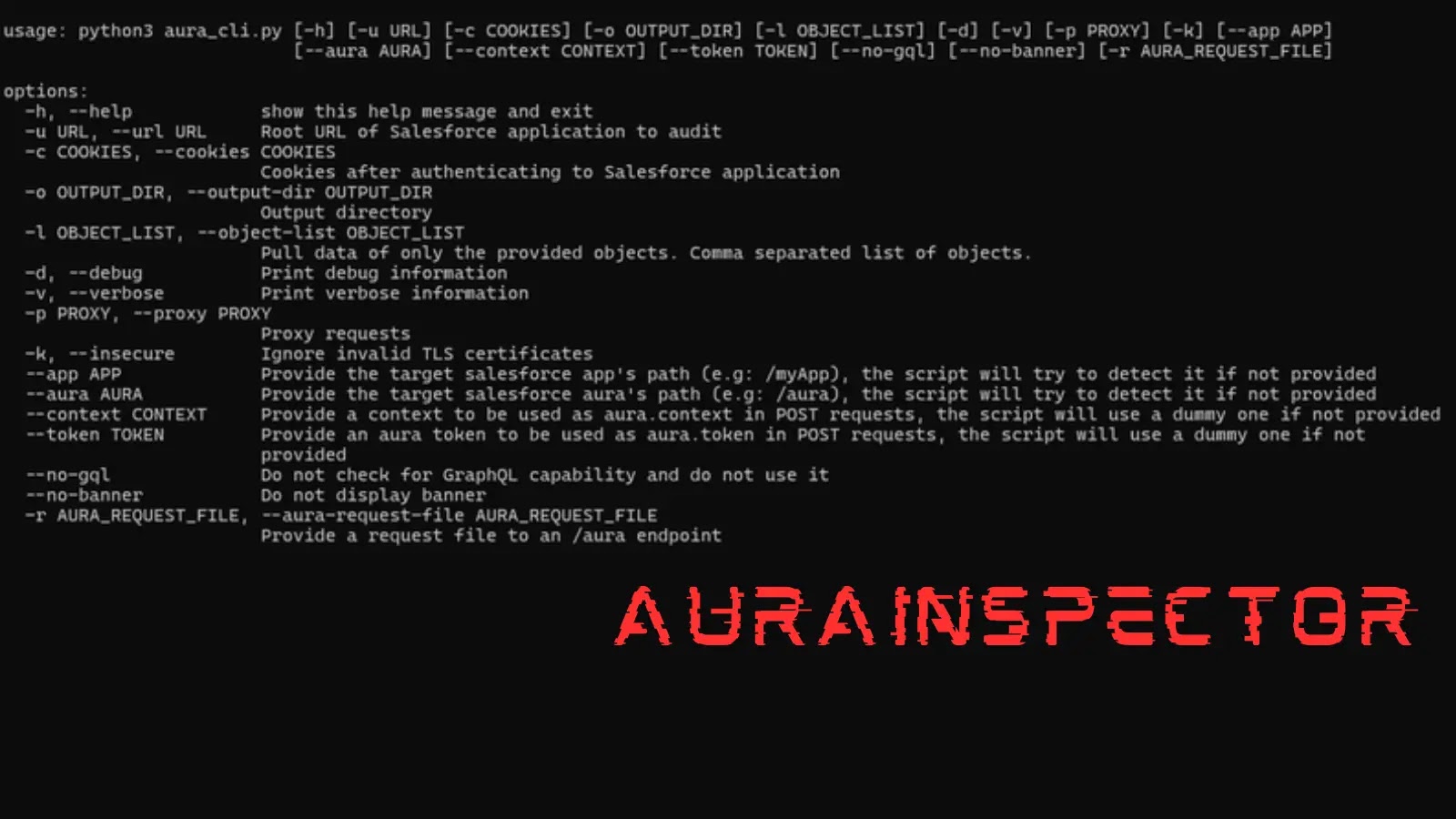
Mandiant’s open-source release, now known as AuraAudit (previously referred to as AuraInspector as per some references), directly addresses this critical security gap. This command-line tool offers a structured and automated approach to analyzing Salesforce Aura framework misconfigurations. Rather than relying on manual, labor-intensive review processes that are prone to human error, AuraAudit provides a systematic way to audit access controls, helping defenders pinpoint where sensitive data might be exposed.
The tool specifically focuses on the Aura endpoint, a fundamental component responsible for handling data interactions within the framework. By scrutinizing these endpoints, AuraAudit can identify instances where permissions are overly permissive, allowing unauthorized access to confidential information. This proactive analysis capability is invaluable for organizations looking to strengthen their Salesforce security posture and avoid potential data exposure incidents.
Key Features and Benefits of AuraAudit
- Automated Misconfiguration Detection: AuraAudit automates the often-complex process of auditing Aura framework access controls, significantly reducing manual effort and increasing accuracy.
- Focus on Critical Data Exposure: The tool is designed to highlight misconfigurations that could lead to the exposure of highly sensitive information, such as financial data, personally identifiable information (PII), and protected health information (PHI).
- Open-Source Accessibility: As an open-source tool, AuraAudit benefits from community collaboration, fostering continuous improvement and transparency in its development. This also makes it freely available to any organization facing these Salesforce security challenges.
- Command-Line Interface (CLI): Its CLI nature allows for easy integration into existing CI/CD pipelines and security workflows, enabling automated and regular security assessments.
- Proactive Security postura: By identifying misconfigurations before they are exploited, organizations can move from a reactive to a proactive security stance, significantly reducing their risk profile.
Remediation Actions: Securing Your Salesforce Aura Deployments
Discovering misconfigurations with AuraAudit is the first step; effective remediation is the key to true security. Here are actionable steps organizations should take:
- Implement Least Privilege: Ensure all Aura components, Apex classes, and related data access are configured with the principle of least privilege. Users and guest profiles should only have access to the absolute minimum data and functionality required for their role.
- Review Sharing Settings: Meticulously review Salesforce Sharing Settings, including organization-wide defaults (OWDs), role hierarchies, and sharing rules, to ensure they align with your data security policies.
- Audit Permissions Sets and Profiles: Regularly audit permissions sets and profiles associated with Experience Cloud users and guest users. Remove any unnecessary object, field, or Apex class access.
- Secure Apex Controllers: For Apex controllers invoked by Aura components, ensure proper security measures are in place, such as using
with sharingkeywords, field-level security (FLS) checks, and custom access checks where necessary. - Regular Scans with AuraAudit: Integrate AuraAudit into your regular security assessment schedule, especially after any significant development or configuration changes, to continuously monitor for new misconfigurations.
- Developer Training: Educate developers on secure coding practices within the Salesforce Aura framework, emphasizing secure access control implementation and understanding the implications of different sharing options.
Tools for Salesforce Security Audits
While AuraAudit focuses specifically on Aura framework misconfigurations, a comprehensive Salesforce security strategy often involves other tools. Here’s a table outlining relevant tools:
| Tool Name | Purpose | Link |
|---|---|---|
| AuraAudit | Identifies access-control misconfigurations in Salesforce Aura framework. | GitHub Repository |
| PMD for Apex | Static analysis tool to detect common coding errors, including security vulnerabilities in Apex. | PMD Official Site |
| Salesforce Health Check | Native Salesforce tool providing a baseline security assessment against standards. | Salesforce Help |
| Checkmarx SAST (Commercial) | Static Application Security Testing for source code, including Salesforce Apex. | Checkmarx SAST |
Conclusion
Salesforce’s pervasive use necessitates a robust security posture, particularly for Experience Cloud deployments. The release of AuraAudit by Mandiant marks a significant advancement in empowering security teams to proactively identify and mitigate critical access-control misconfigurations within the Aura framework. By leveraging this open-source tool and adhering to best practices like the principle of least privilege, organizations can dramatically reduce the risk of sensitive data exposure. Integrating AuraAudit into a regular security assessment regimen is not just recommended; it’s essential for maintaining the integrity and confidentiality of data within the Salesforce ecosystem.